
Now that I have some experience driving the Road to Hana, I wanted to share practical tips for anyone planning to tackle this famously winding route in Maui. With about 600 turns, narrow stretches, and occasional one-lane sections, it can be challenging—but also incredibly rewarding. These suggestions helped our trip go smoothly and should make yours more enjoyable.
- If you plan to complete the entire loop, rent a Jeep or a 4WD vehicle. Many standard cars struggle with the rough dirt stretches, potholes, and uneven sections. If you’re staying at a resort, check their rental options—hotel-affiliated rentals often offer guest discounts and can be cheaper. We rented through our hotel’s rental partner and it made the drive much easier.
- Avoid sitting in the backseat if you’re prone to motion sickness. Non-drowsy Dramamine can be a lifesaver. Don’t read or stare down at your phone while riding—watch the road instead. We were skeptical at first, but both of us agreed that anyone in the back would likely get carsick.
- Consider starting the route from the Seven Sacred Pools end and driving the road in reverse. This strategy helped us beat crowds at the most popular stops, encounter less opposing traffic, and get the roughest, one-lane dirt sections out of the way early. We drove north to Hana and then worked our way back toward Twin Falls.
- Bring food and snacks. There are very few full-service dining options along the route. We stopped at Hotel Hana and enjoyed a meal with a great view, but otherwise choices are limited. You’ll find a handful of fruit and banana bread stands—make sure to stop when you see one. Local fruit, banana bread (including vegan options), and fresh iced tea are common and delicious roadside picks. Don’t expect a town center with cafés and shops when you reach Hana; it’s more rural than many visitors assume.
- Pack an AUX cord for your rental car so you can play your own music. Listening to familiar playlists makes the long stretches of road more fun and comfortable.
- Leave early. We departed at 5:30 a.m. and returned by mid-afternoon, since we limited our stops and skipped hikes. Starting at dawn helps you avoid the peak crowds and daytime tour buses, and gives you more flexibility for stops or hikes if you choose to take them.
- Download an audio guide app like Shaka Guide before you go. These apps work with GPS to provide narrated information about spots along the route and can enhance your experience. We didn’t use one on this trip because we discovered it afterward, but it’s worth considering.
- Drive defensively. Sections of the road can be narrow, bumpy, and sometimes reduce to one lane. You may encounter livestock like goats and cows crossing unexpectedly, and local drivers often take tight corners quickly. Use caution, signal early, and don’t hesitate to use your horn when approaching blind turns to alert oncoming traffic.
- Pack for the whole day depending on your plans. Bring swimwear, a couple of outfit options if you plan to take photos, comfortable shoes for hikes, sandals for beaches, and enough food and water. Also be mindful of car security—don’t leave valuables visible in the car if you plan to hike or swim, as rental cars can be targets for break-ins.
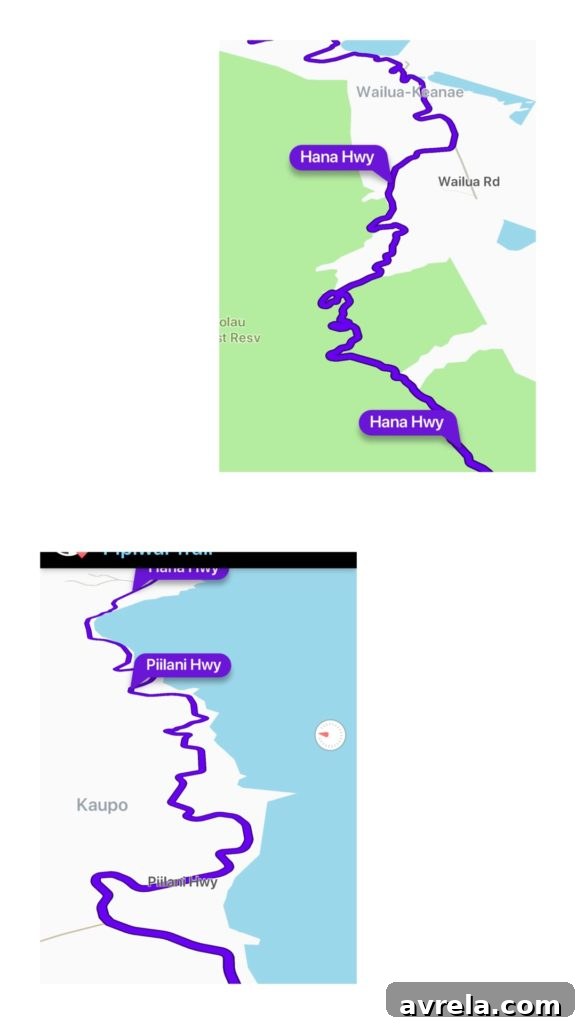
(Actual screenshots from our GPS of the Road to Hana)