
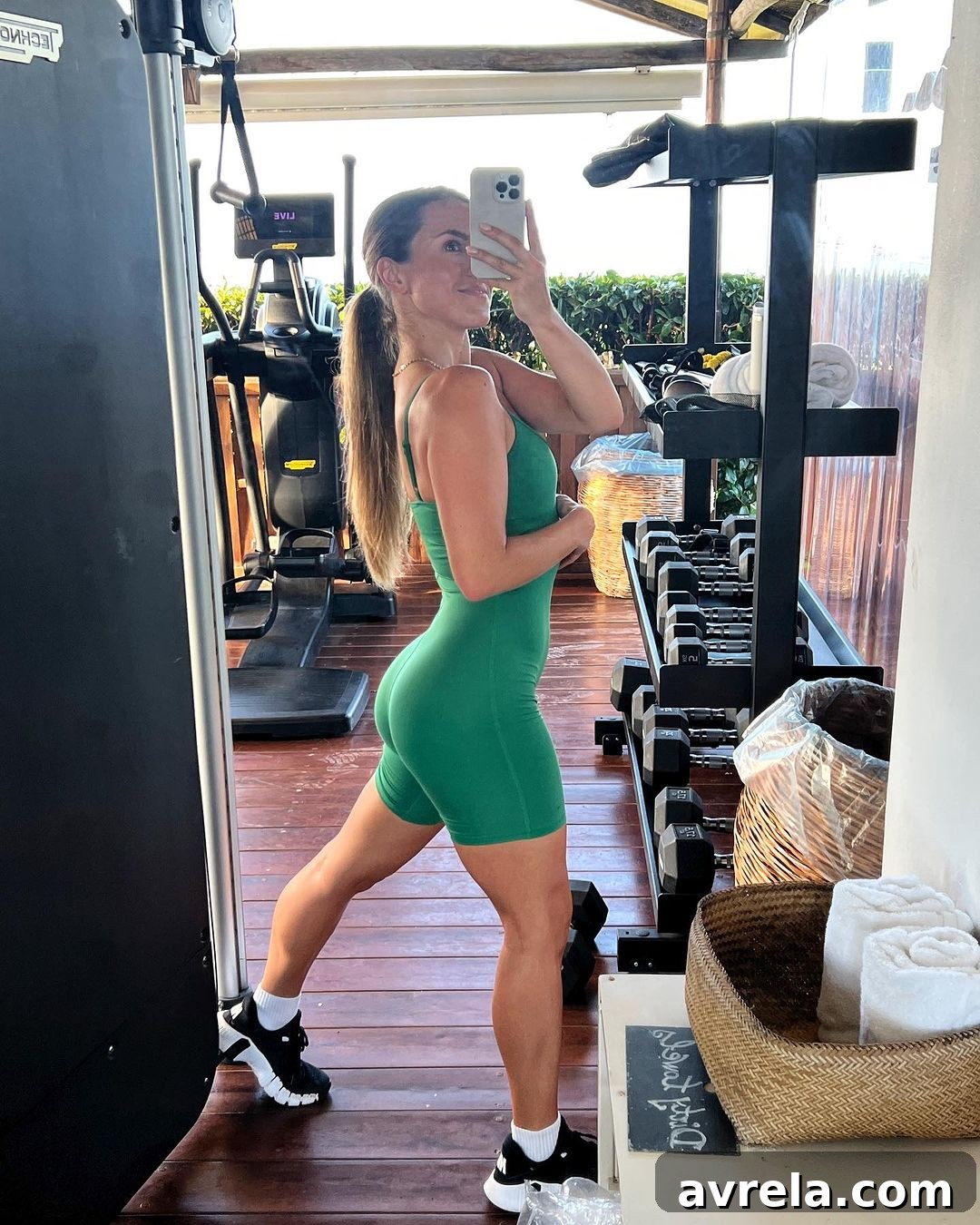
Are you searching for an effective, travel-friendly lower body workout that fits seamlessly into your busy schedule, even during a holiday weekend? Look no further! This comprehensive guide offers a dynamic, quick, and highly effective routine, perfect for Memorial Day or any time you need to squeeze in a powerful session without extensive equipment. Whether you’re traveling, at home, or simply short on time, this workout ensures you maintain your fitness momentum. We’re revisiting a fan-favorite, inspired by last summer’s Italian adventures – a testament to its effectiveness and portability. This routine proves that you don’t need a fully equipped gym to achieve significant results.
The beauty of this workout lies in its adaptability. While incorporating light weights can amplify your results, every exercise can be performed using just your body weight and a set of resistance bands. This flexibility makes it an ideal choice for anyone, regardless of their access to gym equipment. Prepare to engage your glutes, sculpt your legs, and boost your overall lower body strength with a workout that’s short, spicy, and incredibly rewarding. Get ready to embrace a strong, active long weekend!
P.S. If you’re constantly on the hunt for more efficient and adaptable workouts like this one, you’ll be thrilled to discover the source of this incredible routine: Rec Sweat’s Banded Body Guide. This invaluable resource features 30 unique workouts, each under 30 minutes, specifically designed to utilize only resistance bands. It’s the ultimate companion for quick, on-the-go summer workouts, or indeed, any time you need a high-impact session with minimal equipment. The guide is packed with diverse exercises that target various muscle groups, ensuring a comprehensive and engaging fitness journey.
The Ultimate Travel-Friendly Lower Body Workout: Strengthen & Sculpt On-the-Go
This lower body workout is designed for maximum impact in minimal time, focusing on activating and strengthening your glutes, hamstrings, and quads. Before diving into the main circuits, a proper warm-up is crucial to prepare your muscles, increase blood flow, and prevent injury. Aim for a dynamic warm-up that gets your heart rate up and activates the target muscle groups.
Warm-Up: 10-15 Minutes of Dynamic Movement
Begin your session with 10-15 minutes of light cardiovascular activity to gradually increase your heart rate and warm up your muscles. Options include:
- Incline Walking: If you have access to a treadmill, an incline walk is excellent for pre-activating your glutes and hamstrings. Vary the incline and speed to challenge yourself.
- Outdoor Walk/Jog: A brisk walk or light jog outside is a fantastic way to get fresh air and awaken your body.
- Dynamic Stretches: Incorporate leg swings (forward/backward and side-to-side), hip circles, bodyweight squats, and lunges without weights. These movements prepare your joints and improve range of motion for the exercises to come.
The goal is to feel warm and mobile, not fatigued. Listen to your body and adjust the intensity as needed.
Circuit 1: Metabolic Boost & Muscle Activation (2-4 Rounds)
This circuit is structured to elevate your heart rate and deeply activate your lower body muscles with short bursts of effort followed by brief recovery periods. Perform each exercise for 30 seconds, followed by 15 seconds of rest, then immediately move to the next exercise. Complete 2-4 rounds of the entire circuit, taking a 60-90 second break between rounds.
- Banded Lateral Slides: 30 seconds on, 15 seconds rest
- Banded Pulse Squats (4) to Heel Raise (1): 30 seconds on, 15 seconds rest
Circuit 2: Strength & Sculpt (2-4 Rounds)
This circuit shifts focus to building strength and sculpting your lower body with controlled movements. Perform the prescribed repetitions for each exercise before moving to the next. Once you’ve completed all exercises in Circuit 2, rest for 60-90 seconds before starting the next round. Aim for 2-4 rounds for a comprehensive strength challenge.
- Deadlifts x14: Focus on controlled movement and form.
- Lateral Lunge To Curtsy Pulse Squat (2) x8 each leg: Emphasize depth and stability.
- Single Leg Glute Bridge x12 each leg: Drive through the heel for maximum glute activation.
- Banded Goblet Squats x14: Maintain core engagement and chest upright.
Exercise Spotlight: Banded Lateral Slides
The Banded Lateral Slide is an excellent exercise for targeting the gluteus medius and minimus, crucial muscles for hip stability and overall lower body strength. These muscles often get neglected but are vital for athletic performance and injury prevention. To perform this exercise:
Execution:
- Place a resistance band around your ankles or just above your knees. The higher the band, the easier it generally feels. Start with a moderate resistance band.
- Stand with your feet hip-width apart, knees slightly bent, and chest up. Get into a low, athletic stance, as if you’re about to jump.
- Take a controlled step to one side, leading with your hip and pushing against the band’s resistance.
- Bring your trailing foot towards the lead foot, but crucially, do not let your feet come completely together. The goal is to maintain constant tension on the band throughout the entire movement.
- Continue stepping laterally for the prescribed duration, then switch directions or complete the set on one side before moving to the other.
Form Tips:
- Maintain Tension: The most important cue is to keep tension on the band at all times. This means your feet should never fully meet.
- Stay Low: Avoid standing up between steps. Staying in a low squat position maximizes glute engagement.
- Engage Core: Keep your core tight to stabilize your torso and prevent excessive swaying.
- Knees Out: Ensure your knees track over your toes and don’t collapse inward, especially when you step.
Benefits: Enhanced hip stability, stronger glutes, improved agility, and reduced risk of knee pain. This exercise is fantastic for runners and anyone looking to improve lateral movement.
Modifications: Use a lighter band or step less wide for an easier version. For a greater challenge, use a heavier band, take wider steps, or increase the duration of the set.
Exercise Spotlight: Banded Pulse Squats (4) To Heel Raise (1)
This dynamic compound movement combines deep muscle activation with a metabolic kick, ensuring your quads, glutes, and calves get a thorough workout. The pulsing action keeps your muscles under tension for longer, while the heel raise adds a challenge for your calf muscles and balance.
Execution:
- Place a resistance band just above your knees. Stand with your feet shoulder-width apart, toes slightly pointed out.
- Lower into a squat, ensuring your chest stays upright, and your knees track over your toes. Descend as low as comfortable, ideally until your thighs are parallel to the ground or lower.
- From the bottom of the squat, perform four small, controlled pulses, moving just a few inches up and down. Maintain tension in the band, actively pushing your knees out.
- After the fourth pulse, push through your heels to stand up fully. As you reach the top, immediately transition into a heel raise, lifting onto the balls of your feet and squeezing your calves.
- Lower your heels with control and immediately prepare for the next set of pulses.
Form Tips:
- Deep Squat: Aim for a full range of motion in your squat to maximize glute and quad engagement.
- Knees Out: Actively push your knees against the band throughout the squat pulses to keep tension on the glutes.
- Controlled Pulses: The pulses should be small and controlled, not bouncy.
- Squeeze Calves: Fully extend and squeeze your calves at the top of the heel raise.
- Rhythm: Once you find your rhythm, you can increase the pace slightly to boost your heart rate, but always prioritize form over speed.
Benefits: Strengthens glutes, quads, and calves; improves muscular endurance; enhances balance and coordination; provides a cardiovascular challenge.
Modifications: To make it easier, remove the band, reduce the squat depth, or perform fewer pulses. For a greater challenge, use a stronger resistance band, hold a weight in a goblet squat position, or increase the number of pulses.
Exercise Spotlight: Deadlifts (Bodyweight or Weighted)
The deadlift is one of the most effective full-body strength exercises, especially for the posterior chain (glutes, hamstrings, and lower back). It’s crucial for building strength, improving posture, and enhancing functional movement. Even without heavy weights, the deadlift pattern is incredibly beneficial.
Execution (General Deadlift Form):
- Stand with your feet hip-width apart, knees slightly bent, and core engaged. If using weights, hold them in front of your thighs.
- Hinge at your hips, pushing your glutes backward as if reaching for a wall behind you. Keep your back straight, chest proud, and gaze neutral.
- Allow a slight bend in your knees, but the primary movement should come from the hips. Lower the weights (or your hands, if bodyweight) towards the ground, keeping them close to your shins.
- Feel a stretch in your hamstrings. Only go as low as you can while maintaining a flat back.
- Engage your glutes and hamstrings to reverse the movement, driving your hips forward to return to the standing position. Squeeze your glutes at the top.
Form Tips:
- Hinge, Don’t Squat: The movement is a hip hinge, not a squat. Your hips should move back, not straight down.
- Flat Back: Maintain a neutral spine throughout the movement. Avoid rounding your back at all costs to prevent injury.
- Core Engagement: Brace your core tightly to support your spine.
- Control: Move slowly and with control, especially on the eccentric (lowering) phase.
Benefits: Builds exceptional posterior chain strength, improves grip strength (with weights), enhances posture, and boosts overall athletic performance.
Modifications:
- Bodyweight Deadlift: Focus purely on the hip hinge movement with excellent form. This is a great starting point.
- Single-Leg Deadlift: To significantly increase the challenge for balance, core stability, and hamstring activation without heavy weights, perform single-leg deadlifts. Keep a slight bend in the standing leg, extend the other leg straight back, and hinge forward, maintaining a flat back.
- Weighted Deadlift: If weights are available, opt for dumbbells or kettlebells. Start with a lighter weight to master the form before progressing.
Whichever variation you choose, prioritize slow, controlled movements and impeccable form over heavy weight or speed.
Exercise Spotlight: Lateral Lunge To Curtsy Pulse Squat (2)
This compound exercise is a fantastic way to challenge your legs and glutes from multiple angles, improving mobility, strength, and coordination. It combines frontal plane (lateral lunge) and transverse plane (curtsy lunge) movements, which are often neglected in traditional workouts. Adding the pulse at the end further increases time under tension for the working leg.
Execution:
- Stand tall with your feet hip-width apart and hands at your chest or holding a weight.
- Lateral Lunge: Take a large step directly out to your side with one leg, keeping the other leg straight. Send your hips back and lower into a lunge, bending the stepping knee to about 90 degrees while keeping your chest up.
- Push off the stepping foot to return to the starting position.
- Curtsy Lunge: Immediately step the same leg back and across your body, behind the standing leg, as if you are doing a curtsy. Lower your hips until your front thigh is parallel to the ground or as low as comfortable, maintaining balance.
- From this curtsy lunge position, perform two small, controlled pulses, moving just a few inches up and down.
- Push off the back foot to return to the starting position. That completes one repetition on one leg.
Form Tips:
- Large Range of Motion: Aim for deep lunges to fully engage your glutes and inner thighs.
- Keep Chest Up: Maintain an upright torso throughout both lunge variations.
- Knees Aligned: In the lateral lunge, ensure your bent knee tracks over your toes. In the curtsy lunge, ensure your front knee doesn’t collapse inward.
- Core Engaged: Keep your core tight to maintain balance and stability, especially during the curtsy lunge and pulses.
- Optional Resistance Band: If adding a resistance band (placed above the knees), choose the lightest resistance you have to avoid compromising your range of motion. The focus here is on dynamic movement and stability.
Benefits: Improves hip mobility, strengthens inner and outer thighs, targets gluteus medius and maximus, enhances balance and coordination, and builds unilateral leg strength.
Modifications: To make it easier, remove weights and focus on bodyweight, or reduce the depth of the lunges. For a greater challenge, add dumbbells, use a resistance band (light), or increase the number of pulses.
Exercise Spotlight: Single Leg Glute Bridge
The Single Leg Glute Bridge is a highly effective exercise for isolating and strengthening the glutes, particularly the gluteus maximus, while also challenging core stability and balance. It’s an excellent way to address muscle imbalances between legs and improve hip extension strength.
Execution:
- Lie on your back with your knees bent, feet flat on the floor, hip-width apart, and arms by your sides.
- Extend one leg straight up towards the ceiling or keep it bent with the foot lifted off the floor.
- Engage your core and press through the heel of your grounded foot. Lift your hips off the floor until your body forms a straight line from your shoulders to your knees.
- At the top of the movement, squeeze your glutes intensely. Ensure you’re driving through your heel and not arching your lower back.
- Slowly lower your hips back down to the starting position with control. Avoid letting your hips completely rest on the floor before the next repetition to maintain tension.
- Complete all repetitions on one leg before switching to the other.
Form Tips:
- Drive Through Heel: Focus on pressing through the heel of your grounded foot to maximize glute activation and minimize hamstring involvement.
- Squeeze Glutes: A powerful squeeze at the top of the bridge is key to fully engaging the gluteus maximus.
- Avoid Arching Back: Do not overextend your lower back at the top. The movement should come from your glutes and hips, not your spine.
- Core Engagement: Keep your core braced throughout to stabilize your pelvis and prevent rotation.
- Controlled Movement: Avoid using momentum. Lift and lower slowly.
Benefits: Isolates and strengthens glutes, improves hip extension, enhances core stability, corrects muscular imbalances, and can help alleviate lower back pain by strengthening supporting muscles.
Modifications: To make it easier, perform a standard two-leg glute bridge. To increase the challenge, place a dumbbell or weight plate across your hips (ensure it’s stable and safe), or slow down the tempo, pausing for 2-3 seconds at the top of the movement. You can also place the grounded foot on an elevated surface for a greater range of motion.
Exercise Spotlight: Banded Goblet Squats
The Banded Goblet Squat is a phenomenal exercise for building lower body strength, particularly in the quads and glutes, while also improving squat mechanics and core stability. The resistance band provides constant tension, forcing your glutes to work harder to keep your knees pushed out, and holding a weight in the goblet position helps maintain an upright torso.
Execution:
- Place a resistance band just above your knees. Stand with your feet slightly wider than shoulder-width apart, toes pointed slightly out.
- If using a weight, hold a dumbbell or kettlebell vertically against your chest, cupping the top end with both hands. Keep your elbows tucked in.
- Initiate the squat by pushing your hips back and bending your knees, as if sitting into a chair. Simultaneously, actively push your knees out against the resistance band.
- Lower yourself down until your thighs are parallel to the ground or as low as comfortable while maintaining good form and an upright chest.
- Drive through your heels and squeeze your glutes to stand back up to the starting position. Maintain tension in the band throughout the entire movement.
Form Tips:
- Knees Out: Continuously push your knees out against the band. This engages your glutes and prevents knee collapse.
- Upright Torso: The goblet hold naturally helps you keep your chest up and back straight. Maintain this posture throughout.
- Depth: Aim for depth while keeping your heels flat on the ground. The deeper the squat, the more glute and quad activation.
- Core Engaged: Brace your core to stabilize your spine and maintain control.
- Controlled Movement: Descend slowly and explosively drive up, squeezing your glutes at the top.
Benefits: Builds strong quads and glutes, improves squat depth and mechanics, enhances core strength, increases hip mobility, and is easily scalable for various fitness levels.
Modifications: This exercise can easily be a bodyweight-only movement if you don’t have access to weights; simply focus on pushing your knees out against the band. To increase the challenge, use a heavier resistance band, a heavier dumbbell/kettlebell, or slow down the eccentric phase of the squat to increase time under tension.
Cool-Down & Stretch: 5-10 Minutes
After completing your workout, dedicate 5-10 minutes to cooling down and stretching. This helps to reduce muscle soreness, improve flexibility, and signal to your body that the workout is over.
- Light Cardio: A gentle walk for 2-3 minutes.
- Static Stretches: Hold each stretch for 20-30 seconds, focusing on the muscles you just worked. Examples include:
- Hamstring Stretch (e.g., standing toe touch or seated forward fold)
- Quad Stretch (e.g., standing quad pull)
- Glute Stretch (e.g., figure-four stretch or pigeon pose)
- Calf Stretch (e.g., leaning against a wall)
- Inner Thigh Stretch (e.g., seated butterfly stretch or wide-legged forward fold)
Unlock Your Full Potential with Rec Sweat
This travel-friendly lower body workout demonstrates that effective fitness can be achieved anywhere, anytime, with minimal equipment. By incorporating resistance bands and strategic bodyweight movements, you can build impressive strength, enhance your physique, and stay active no matter where your adventures take you.
Remember, consistency is key. Even short, intense workouts like this one contribute significantly to your long-term fitness goals. Embrace the versatility of resistance bands and the power of compound movements to transform your lower body and boost your overall well-being. Don’t let travel or a lack of gym access be an excuse to skip your workout.
For more innovative, time-efficient, and equipment-minimal routines designed to fit your dynamic lifestyle, explore the full Banded Body Guide from Rec Sweat. It’s an investment in your health that promises engaging workouts and noticeable results, perfect for keeping you active and strong all year round.