
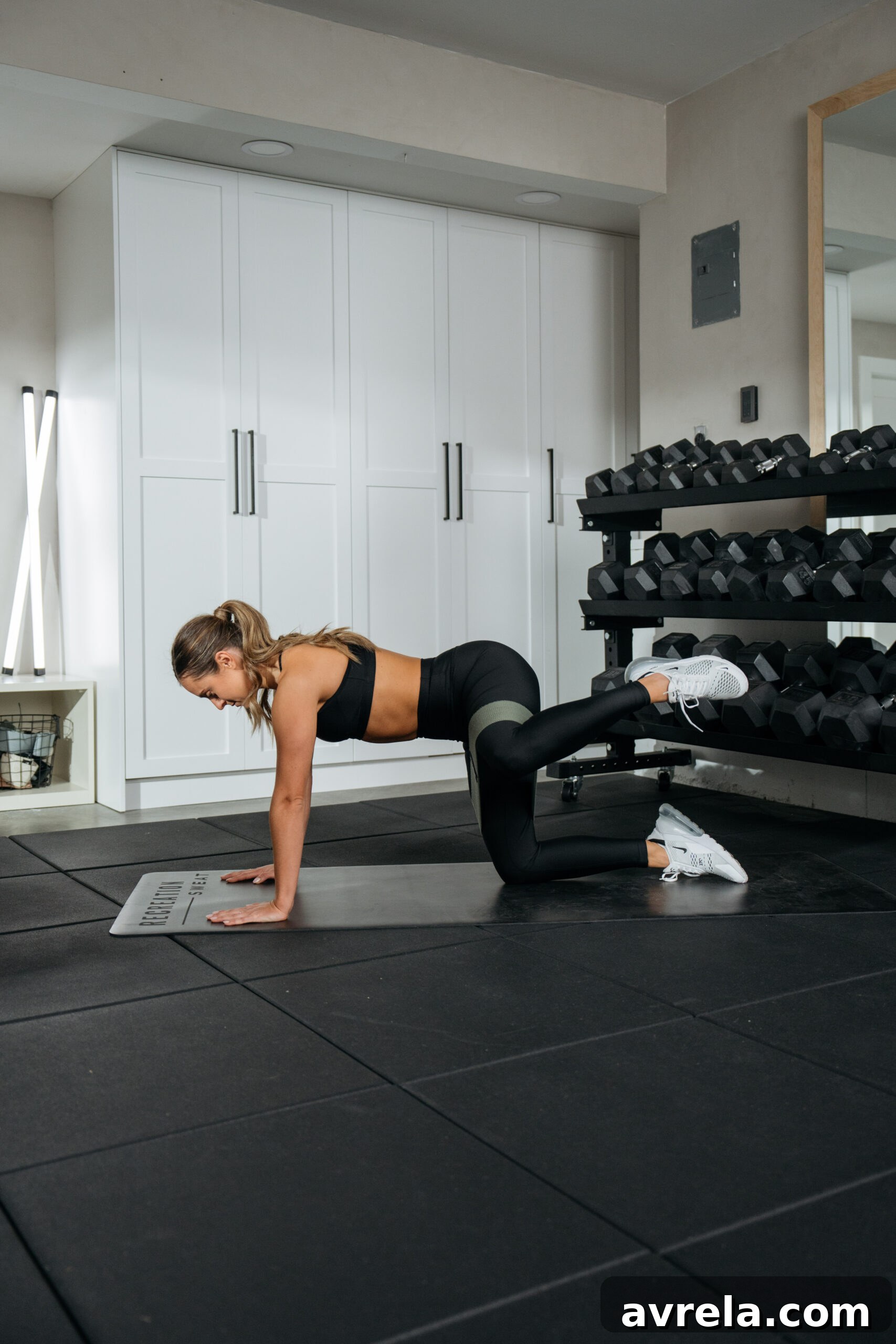
Unlock Your Strongest Core: The Ultimate 5-10 Minute Resistance Band Workout at Home
Ready to sculpt a stronger, more resilient core from the comfort of your home? Forget endless crunches and uncomfortable gym visits. This comprehensive guide introduces you to a dynamic 5-10 minute resistance band core workout that delivers incredible results without requiring much time or equipment. Utilizing the often-underestimated power of resistance bands, we’ll target your entire core, including those crucial deep core muscles, ensuring stability, improved posture, and enhanced overall fitness.
While resistance bands frequently steal the spotlight for glute workouts, their potential for revolutionizing core training is immense. They provide constant tension, increasing muscle activation and allowing for a deeper, more effective engagement than bodyweight exercises alone. If you’re looking for a quick, impactful routine that fits seamlessly into your busy schedule, grab your resistance bands and let’s dive into a transformative core experience.
Why Deep Core Work Matters: Beyond the Six-Pack
Before we jump into the exercises, let’s understand why focusing on your deep core is paramount to your overall wellness. Many people associate “core work” with visible abs, but the deep core musculature plays a far more critical role in health and functional movement. Your deep core comprises several interconnected muscles, including the transverse abdominis, multifidus, pelvic floor muscles, and the diaphragm. Together, these muscles act as a natural corset, providing essential stability to your spine and pelvis.
Strengthening your deep core offers a myriad of benefits that extend far beyond aesthetics. It significantly improves posture, reducing back pain and preventing injuries by creating a strong foundation for all movements. A robust deep core enhances balance, coordination, and athletic performance, supporting everything from running and lifting to everyday tasks like bending and reaching. It’s the powerhouse that connects your upper and lower body, facilitating efficient movement and protecting your internal organs. For a more in-depth exploration of this vital muscle group and its importance, we highly recommend reading this insightful blog post on the subject.
Introducing the Banded Body Guide: Your Fitness Companion
The innovative exercises featured in this workout are inspired by Rec Sweat’s renowned Banded Body Guide. This comprehensive guide is a game-changer for anyone seeking efficient and effective fitness solutions. It boasts 30 unique workouts, each designed to be completed in under 30 minutes, using only bodyweight and resistance bands.
The Banded Body Guide was meticulously crafted for those moments when hitting the gym isn isn’t an option – whether you’re traveling, short on time, or simply prefer working out at home. It embodies the essence of “grab-and-go” fitness, ensuring you can maintain consistency with your routine regardless of your schedule or location. Each workout is a testament to the power of targeted, efficient movements that maximize results in minimal time.
Your Dynamic 5-10 Minute Banded Core Workout
This quick and effective core routine is designed to challenge and strengthen your core muscles, providing significant benefits in just a few minutes. Follow the structure below to get the most out of each movement:
Workout Structure: 30 seconds on, 15 seconds off. Repeat 3-4 rounds.
1. Squat To Oblique Crunch
This dynamic exercise combines lower body strength with rotational core power, effectively targeting your obliques and improving hip mobility. It’s an excellent way to warm up your entire body while initiating core engagement.
How to Perform:
- Begin in a wider stance than shoulder-width, toes slightly pointed out, with your resistance band placed just above your knees for added tension (optional, but recommended).
- Bend your knees and lower your hips down into a squat, ensuring your chest remains lifted, back straight, and arms extended up at head level or clasped in front of you. Focus on pushing your hips back as if sitting into a chair.
- As you powerfully return to a standing position, simultaneously drive your opposite knee towards your chest and your opposite elbow towards that knee. This action emphasizes a strong twisting and crunching motion through your core, engaging your obliques intensely.
- Return smoothly to the squat position, then repeat the oblique crunch on the opposite side, alternating with each repetition.
- Maintain control throughout the movement, focusing on the quality of the crunch rather than speed.
Muscles Engaged:
- Primary: Obliques (internal and external), Rectus Abdominis, Transverse Abdominis.
- Secondary: Quadriceps, Glutes, Hamstrings, Erector Spinae.
Benefits:
- Enhances rotational core strength and stability.
- Improves hip mobility and lower body power.
- Increases cardiovascular endurance due to its dynamic nature.
- Strengthens the connection between your upper and lower body.
Tips for Proper Form:
- Keep your chest proud and shoulders relaxed during the squat.
- Focus on exhaling forcefully as you crunch, drawing your belly button towards your spine.
- Avoid pulling on your neck with your hands if they are behind your head.
- Ensure a full range of motion in both the squat and the crunch.
Common Mistakes to Avoid:
- Rounding your back during the squat or crunch.
- Using momentum instead of controlled muscle engagement.
- Neglecting the deep core during the twisting motion.
2. Deep Core Superman Band Rotations
This exercise is a fantastic way to engage your entire posterior chain while challenging your core stability and rotational control. The resistance band adds an extra layer of tension, intensifying the work on your upper back, shoulders, and deep core stabilizers.
How to Perform:
- Lie on your belly with a neutral spine, gazing towards the floor. Your forehead can gently rest on the ground in the starting position.
- Hold a resistance band tautly with both hands, arms extended overhead, ensuring a slight tension in the band.
- Engage your core, glutes, and lower back to simultaneously lift your head, neck, shoulders, and feet a few inches off the ground, forming a “Superman” position. Keep your gaze down to maintain neck alignment.
- While maintaining this lifted position, bring both arms in an arc motion towards your lower back, passing the band from one hand to the opposite hand behind your back.
- Reverse the motion, bringing the arms back overhead and transferring the band to the original hand.
- Continue to alternate the direction of the band transfer, focusing on controlled movement and minimizing rocking of the torso.
Muscles Engaged:
- Primary: Erector Spinae, Glutes, Hamstrings, Deltoids, Rhomboids, Trapezius, Transverse Abdominis.
- Secondary: Rotator Cuff muscles, Lats.
Benefits:
- Strengthens the entire posterior chain, crucial for posture and preventing back pain.
- Improves core stability and anti-rotation capabilities.
- Enhances shoulder mobility and strength.
- Develops coordination and body awareness.
Tips for Proper Form:
- Keep your neck in line with your spine; avoid craning your neck up.
- Focus on squeezing your glutes to help lift your legs.
- Maintain constant tension on the resistance band throughout the rotation.
- Perform slowly and with control, emphasizing muscle engagement over speed.
Common Mistakes to Avoid:
- Lifting your head too high and straining your neck.
- Allowing your hips to rock excessively during the band transfer.
- Losing tension in the band or letting your limbs drop too low.
3. Supported Side Plank Hip Dips With Leg Lift
This advanced side plank variation targets your obliques, hip abductors, and glute medius, providing comprehensive lateral core strength and stability. The hip dip adds a dynamic element, while the leg lift further challenges your balance and glute activation.
How to Perform:
- Start in a supported side plank position: Lie on your side with your bottom knee bent and placed on the ground, your bottom forearm pressed firmly into the ground directly under your shoulder, and your top leg extended straight. Your body should form a straight line from head to knee.
- Engage your core to lift your hips off the ground, ensuring your body is stable.
- Slowly dip your hips towards the ground in a controlled motion, without fully resting them.
- As you return your hips to the elevated side plank position, simultaneously use your core and glutes to lift your top leg directly upward, leading with your heel. Keep the leg straight and avoid swinging.
- Lower your leg back down with control as you begin the next hip dip.
- Repeat for the given number of reps on one side, then carefully switch to the opposite side and perform the exercise.
Muscles Engaged:
- Primary: Obliques (internal and external), Gluteus Medius, Gluteus Minimus, Transverse Abdominis, Adductors (of the bottom leg for stability).
- Secondary: Deltoids, Triceps (stabilizing the forearm).
Benefits:
- Dramatically improves lateral core strength and stability, crucial for preventing injuries.
- Strengthens the glute medius, which is vital for hip stability and proper gait.
- Enhances balance and proprioception.
- Tones the obliques and gives a sculpted waistline.
Tips for Proper Form:
- Keep your body in a straight line from head to knee (and heel when the leg is lifted).
- Press through your forearm and elbow to support your upper body.
- Control the hip dip and leg lift; avoid jerky movements.
- Focus on squeezing your glute as you lift your top leg.
Common Mistakes to Avoid:
- Allowing your hips to sag or rotate forward/backward.
- Using your neck or shoulder to compensate for core weakness.
- Swinging the top leg instead of lifting it with controlled muscle engagement.
- Not fully engaging the core throughout the movement.
Elevate Your Fitness Journey Today!
This 5-10 minute banded core workout is just a glimpse into the incredible potential of resistance band training. By consistently incorporating these movements into your routine, you’ll not only build a stronger, more stable core but also enhance your overall physical performance and well-being. The beauty of resistance bands lies in their versatility, portability, and effectiveness, making high-quality workouts accessible to everyone, everywhere.
Ready for a complete fitness transformation?
Don’t stop here! Dive deeper into the world of efficient, effective fitness with the Banded Body Guide. It offers an extensive collection of 30 workouts, each under 30 minutes, utilizing only bodyweight and bands. Perfect for travel, busy days, or anyone seeking a powerful workout solution without the need for a gym. Unlock your full potential and achieve your fitness goals with convenience and confidence!