
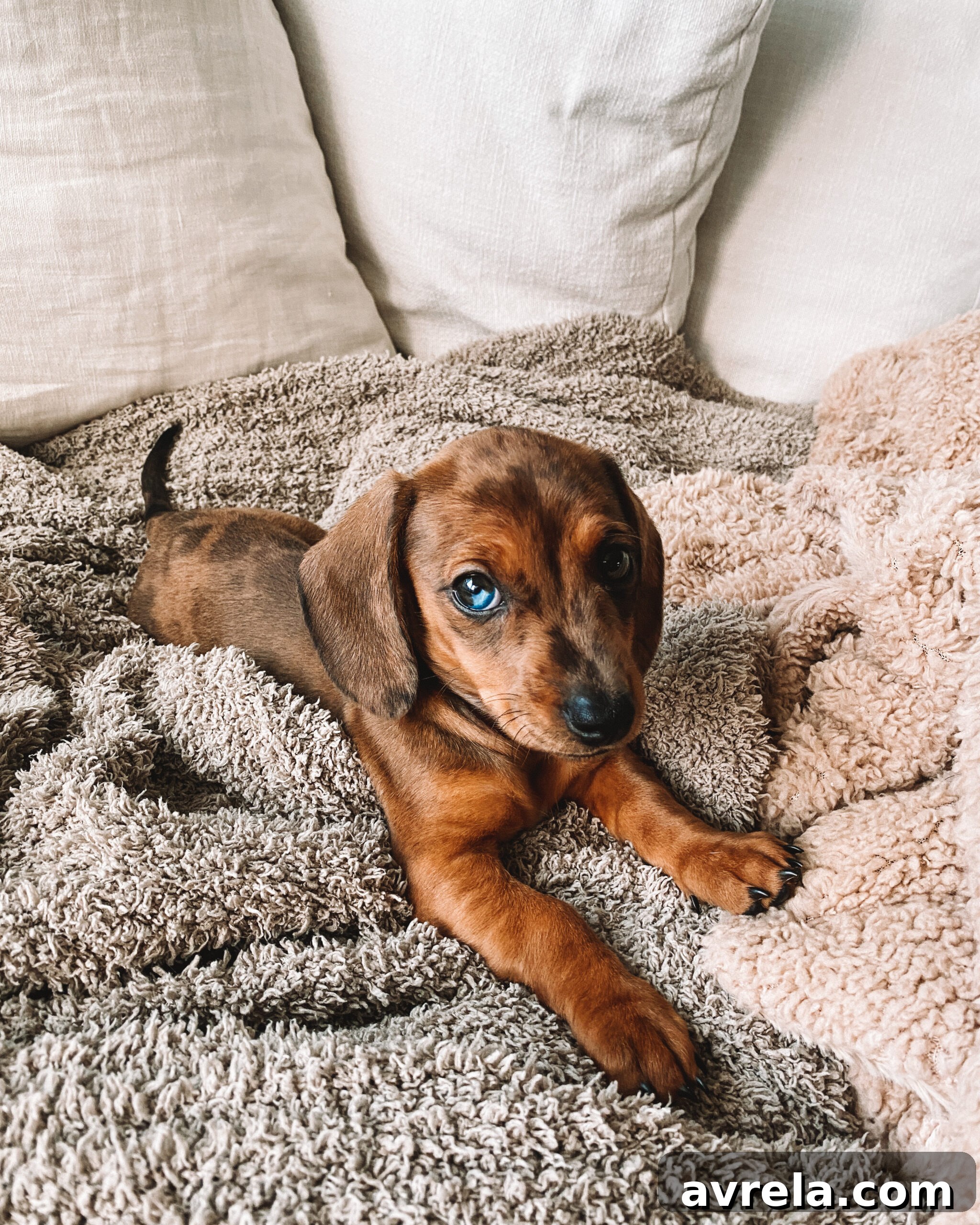
It’s hard to believe it’s already been over a month since our little Coco bean joined our family! We welcomed her home the week before my birthday in February, and she has truly been the perfect addition to our lives. Yes, it’s been a significant adjustment with new sleep schedules and the constant need for attention during the day, but every moment with her is undeniably worth it. If you’re familiar with dachshunds, you know they are renowned for their stubborn yet incredibly cuddly nature, possessing personalities far larger than their small stature. This is precisely why we’re so utterly smitten with our “weenie dogs.” When we first picked her up, Coco was just 8 weeks old and a tiny 3 pounds. In such a short time, she’s already gained a couple of pounds and grown several inches, making me wish I had taken even more photos and videos of her earliest days. This post aims to document our first month with a new dachshund puppy, share valuable tips that have proven effective for us in crate training and general puppy care, and, of course, include more adorable photos of our beloved Coco. Should you have any specific questions about our journey or these training methods, please feel free to leave them in the comments below, and I’ll do my best to provide helpful answers!

My connection with dachshunds goes way back. I got my first dachshund, Ellie, when I was just 12 years old. For those curious about the pronunciation, you can click here – it’s often a common query! Ellie will be celebrating her 16th birthday this May, a testament to her long and full life. She’s truly lived quite the adventure, from taking turns living with Bridger and me during our college years, to navigating our first 700 sq. ft. apartment in the bustling city. Now, she reigns as the serene queen of our home, spending the majority of her days enjoying peaceful naps. Over the past year, we frequently discussed the idea of getting another doxie, hoping to provide Ellie with a sibling and to help keep her spirits high and youthful during the latter half of her life. However, our attempts to find a suitable match through various adoption and rescue organizations were unsuccessful. We also harbored some hesitation about bringing home an older dog, fearing they might not get along with Ellie, given her age and established routine. It was a difficult decision for us as devoted dog lovers who would cherish the opportunity to adopt or rescue multiple animals. Yet, considering our current living situation without a yard and Ellie’s advanced age, we ultimately decided that a puppy would be the best fit for our family. I was incredibly fortunate to discover Coco through a lovely couple whose two cherished pet dachshunds had a litter, offering us the perfect chance to welcome a new, tiny companion.

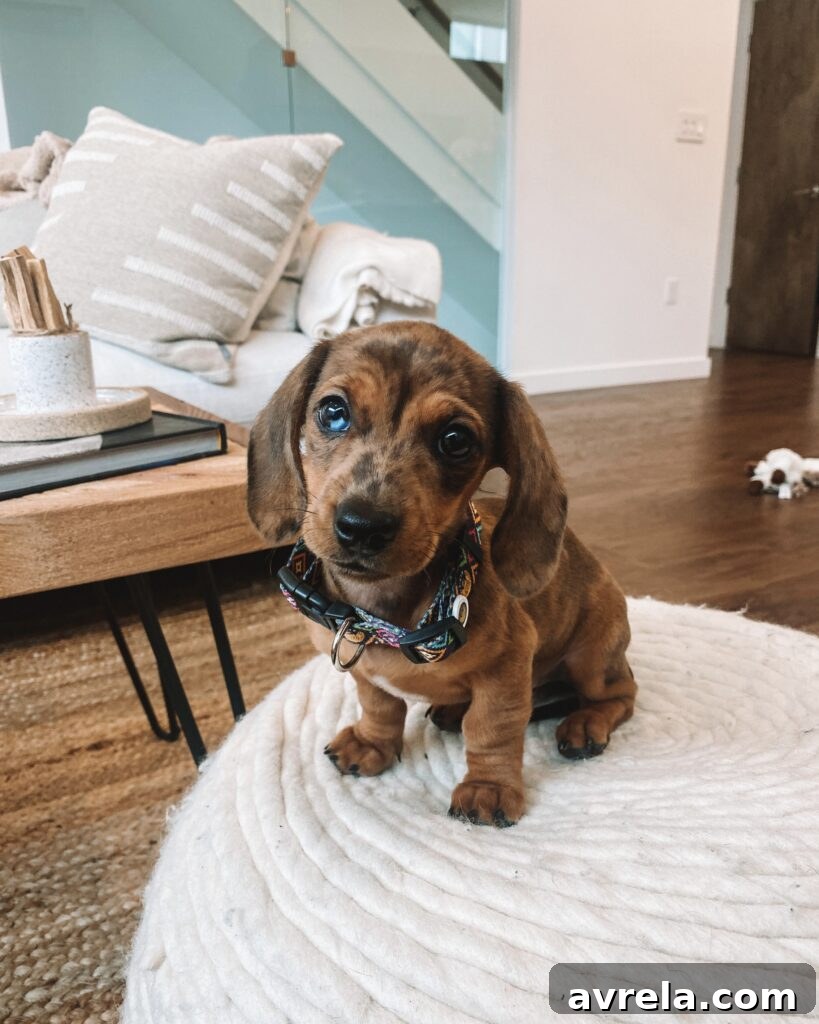
Among her litter of brothers and sisters, who all displayed unique characteristics, Coco immediately stood out. Her striking quarter-blue eye and beautiful chocolate dapple coat made her absolutely captivating. She truly was the cutest little puppy we had ever seen!
As I mentioned, it has been a considerably long time since I last raised a puppy – or since my parents raised one for that matter. This meant our journey with Coco involved extensive research, countless hours of reading, and seeking advice from other experienced dog owners. During Coco’s first week or so with us, we allowed her to sleep in our bed to help her acclimate and feel secure in her new environment. However, knowing the immense benefits of crate training from my childhood experiences, I understood it was an essential next step for her development and our household’s harmony. Let me tell you, embarking on crate training was no easy feat, proving to be one of the most challenging aspects of her early training.
Celebrating Coco on My Birthday
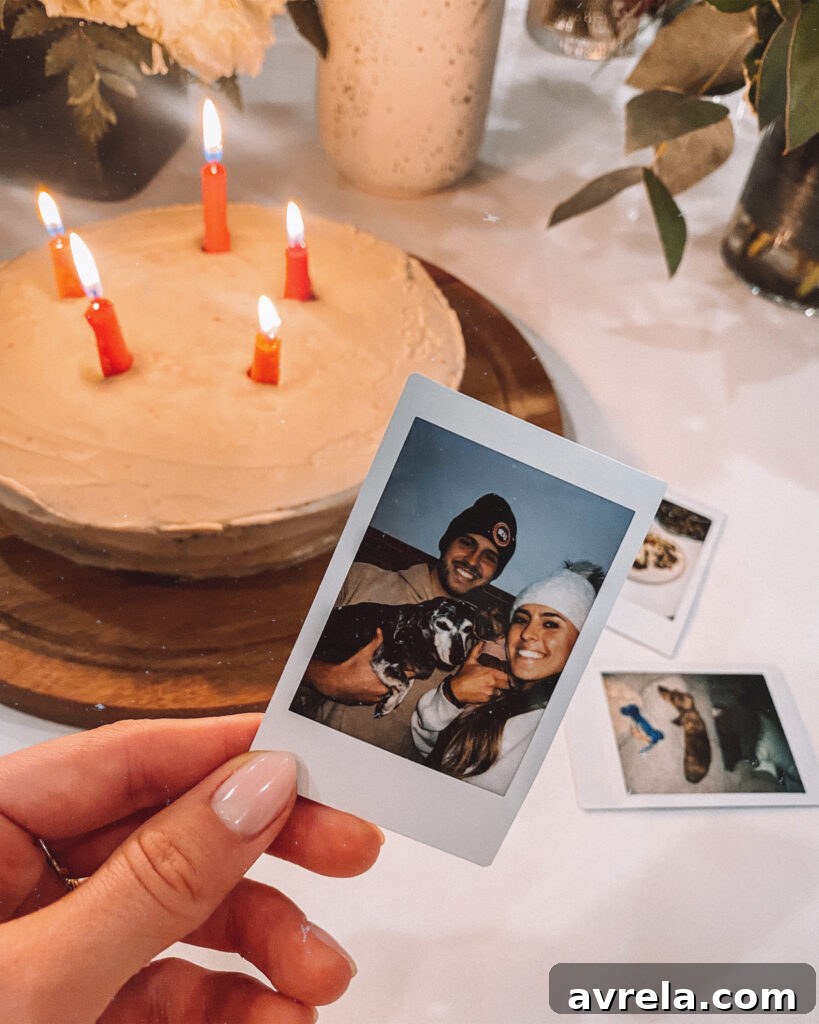
I feel incredibly lucky that we welcomed Coco into our home just around the time of my birthday in February. She truly was the best gift I could have ever asked for! That particular day, Seattle surprised us with a rare snowfall, transforming our plans into a perfectly cozy and memorable celebration. We embraced the unexpected weather with a lazy day filled with movies, enjoyed playful romps in the snow on our rooftop with Coco sporting her brand-new pink jacket, and I even baked a delicious cake. It was an absolutely perfect day, marking the start of a wonderful new chapter with our sweet puppy.
Crate Training: A Foundation for Success
I understand that crate training can be a controversial topic for some dog owners, but in our experience, the benefits of training a puppy early on to comfortably use a crate are immense and long-lasting. If you’re unfamiliar with the advantages, I’ll share some of the key benefits we’ve observed below. First, I want to preface this entire discussion by emphasizing that I am by no means an expert. Our approach has been guided by extensive research, advice from seasoned dog owners, and a willingness to adapt based on what works best for Coco. Here are some compelling reasons why we advocate for crate training:
- Fosters Independence and Reduces Separation Anxiety: A crate helps your dog become more independent and less reliant on your constant presence. It provides them with a secure den, which can significantly alleviate separation anxiety by teaching them that being alone in their safe space is normal and temporary.
- Assists with Potty Training: Crate training is an invaluable tool for potty training. Dogs naturally don’t want to soil their sleeping area, so a properly sized crate teaches puppies to hold their bladder for longer periods, speeding up the housetraining process.
- Provides a Safe and Comfortable Sanctuary: The crate becomes their personal haven, a secure and comfortable retreat where they can go to sleep, relax, or simply feel safe whenever they need to. It’s their own private den in your home.
- Prepares for Travel: If you ever plan to travel with your dog, whether by car or air, familiarity with a carrier or travel crate makes the experience much less stressful for them. They’ll already associate confined spaces with safety.
- Ensures Comfort at the Vet/Hospital: Dogs often need to stay in kennels or crates at the vet or during hospital stays. Crate training can prevent anxiety and stress in these unfamiliar environments, making their veterinary experiences much smoother.
I’m certain there are even more benefits I’m forgetting, but these highlight why we felt so strongly about crate training Coco. While the first few nights were undeniably brutal with her crying and yelping, I am incredibly grateful we persevered and didn’t give in to the temptation of letting her out. It’s crucial to remember that this short-term discomfort leads to significant long-term benefits for your dog’s well-being and your peace of mind. We’ve also been advised that once a dog is solidly crate trained, typically around 8-10 months of age, and it has become second nature, you can begin to let them sleep wherever they prefer at night – for us, that will eventually be in our bed.
To give you a full picture of how Day 1 of crate training unfolded: Coco cried, barked, and yelped for an hour and 45 minutes straight before finally falling asleep. My partner, Bridger, managed to fall asleep around the hour mark – thanks, honey! Night two was a dramatic improvement, with only about 5 minutes of crying, and by night three, it was probably just a few minutes. She initially slept through the entire night until around 6:30 AM for those first few nights. However, a few days later, she started crying during the middle of the night to signal she needed to go potty. This is when I strategically set two alarms: one at midnight and another at 3 AM. Each subsequent night, we gradually pushed the alarm back by 20-30 minutes, eventually eliminating the midnight alarm entirely and settling on the 3 AM potty break. A critical rule with crate training is that you absolutely cannot open the crate while they are crying. You must wait until they stop, even for a few seconds, otherwise, they will quickly associate crying with being let out. We typically wait a few minutes after she quiets down before letting her out. We successfully eliminated the 3 AM alarm when Coco was 11 weeks old, and she now sleeps through the entire night, which is a huge victory!
It took about 6-7 days until Coco started willingly running into her crate to get her treat when we were ready for bed. For the most part, she now goes to sleep without a single peep! I’ve noticed that having my alarm set around 6 AM has effectively trained her internal alarm clock to consistently wake up at that time now. So, on some mornings, Bridger and I tag-team: one of us takes her out for a potty break, then brings her downstairs to play if it’s still a bit too early for everyone else to be fully awake.
Things That Helped Us with Crate Training:
- Positive Mealtime Association: Feed them every meal inside their crate with the door open initially. This helps them associate the crate with positive experiences and delicious food.
- Gradual Door Closure: After a few days of open-door meals, start closing the door for short intervals while they eat – perhaps 10 seconds at first, then 30 seconds, and gradually increase the duration. This slowly desensitizes them to the door being closed. Remember, if they cry, it’s okay, but wait until they stop before letting them out.
- Reward Voluntary Entry: Any time your puppy freely walks into their crate, praise them enthusiastically and immediately give them a treat! You can also strategically leave treats inside for them to discover on their own.
- Create a Cozy Den: Make the crate an inviting and comfortable space. While I’ll link some specific blankets below, we received many recommendations to place a piece of dirty clothing (like a shirt you’ve exercised in) inside the crate. This provides your scent, making them feel more secure as if you are nearby. We also invested in a Snuggle Puppy, which comes with a simulated heartbeat, and had both Coco and Ellie lay with it on the couch nightly while we watched TV. This allowed it to absorb all our family scents before we transferred it into Coco’s crate when she started sleeping there. We followed a similar process with her primary blanket.
- Appropriate Crate Size: Ensure the crate is just large enough for your puppy to comfortably stand up, turn around, and lie down. If there’s too much room, they might be tempted to use one end as a bathroom. Most wire crates come with dividers that allow you to adjust the space as your puppy grows.
- Never Use as Punishment: It’s crucial to understand that the crate should never be used as a form of punishment. It should always be seen as a safe, positive space.
- Strategic Placement: For nighttime crate training, we kept Coco’s crate right next to my side of the bed, covered with a large blanket over the top. This allowed her to feel close to us while still being in her own space.
- White Noise/Sound Machine: Utilizing white noise or a sound machine can help soothe your puppy and block out distracting household noises, promoting better sleep.
- Anticipate Treats: Always leave a treat inside the crate before bedtime. This creates a positive expectation and encourages them to enter willingly. I often hid small pieces of treats throughout her blanket, which helped distract her as she settled in for the night.
- Earplugs for You: The first few nights can be incredibly challenging, and earplugs can genuinely help you get some much-needed rest while still being aware of your puppy’s cries. This is a painfully true tip!
- Soothing Music: While I’m unsure if this goes against strict trainer rules, several people suggested playing calming music softly to help her fall asleep, and I truly believe it worked! I used a specific “puppy playlist” on Spotify, placing my phone on top of her crate with the volume low until she drifted off to sleep.
- Pre-Bedtime Routine: To prevent middle-of-the-night accidents and frequent potty breaks, we made it a point to take away her food and water approximately 2 hours before her final bedtime potty break.
Potty Training: Consistency is Key
I anticipated that potty training would be one of the most challenging aspects of raising a puppy, especially with dachshunds, who are notorious for their occasional stubbornness in this area. We placed a huge emphasis on taking Coco out immediately after she woke up from any nap; otherwise, she would invariably take a few steps and then go inside. Their bladders are incredibly small when they are young puppies, so we were realistically taking her out anywhere from 8-10 times a day. It took several weeks, and with the invaluable assistance of crate training, for her to become more proficient at waiting to go to the bathroom until we took her outside. Now, she only has accidents maybe once every few days, which is a significant improvement from where we started. We also purchased a dog bell that hangs from a doorknob, intended to teach her to ring it when she needs to go outside. We’re still diligently working on this – she seems a bit timid around it at the moment! However, we consistently ring it ourselves every single time we take her out for a bathroom break, hoping this association will eventually stick. It’s particularly challenging living in a townhouse with no direct outdoor access from the main floor, requiring quick trips down and out.
We’ve found that spraying white vinegar in areas where accidents have occurred can also help prevent them from returning to that spot in the future. To tackle various puppy issues, I ordered two mini spray bottles: one filled with water, which we use as a last resort if she’s biting too hard or being overly rough with Ellie, and the other with vinegar specifically for addressing potty accidents.
Coco now seems to be about 90% reliable in not going inside the house, largely because we are constantly vigilant, watching for her specific cues that indicate she needs to go out. She has had a few accidents on the couch, which is less than ideal, so we are striving to maintain as much consistency as possible in her routine.
We’ve also observed that she tends to have “excited piddle” accidents whenever new people come over, so we’ve learned to make sure to take her out for a potty break just before guests arrive. We are really hoping this behavior doesn’t become a permanent habit as she grows up!
Building Skills: Tricks and Socialization
I began introducing simple tricks to Coco when she was about 9-10 weeks old. For our training sessions, I typically use her regular kibble, which allows me to avoid limiting the number of treats she receives and ensures I can keep her focused for longer periods. I aim for 10-minute training sessions daily to maintain consistency. Already, she can proudly sit, stay, twirl, and shake! Dachshunds, despite their playful demeanor, are remarkably intelligent dogs and can pick up new commands and tricks quite quickly with patience and positive reinforcement.
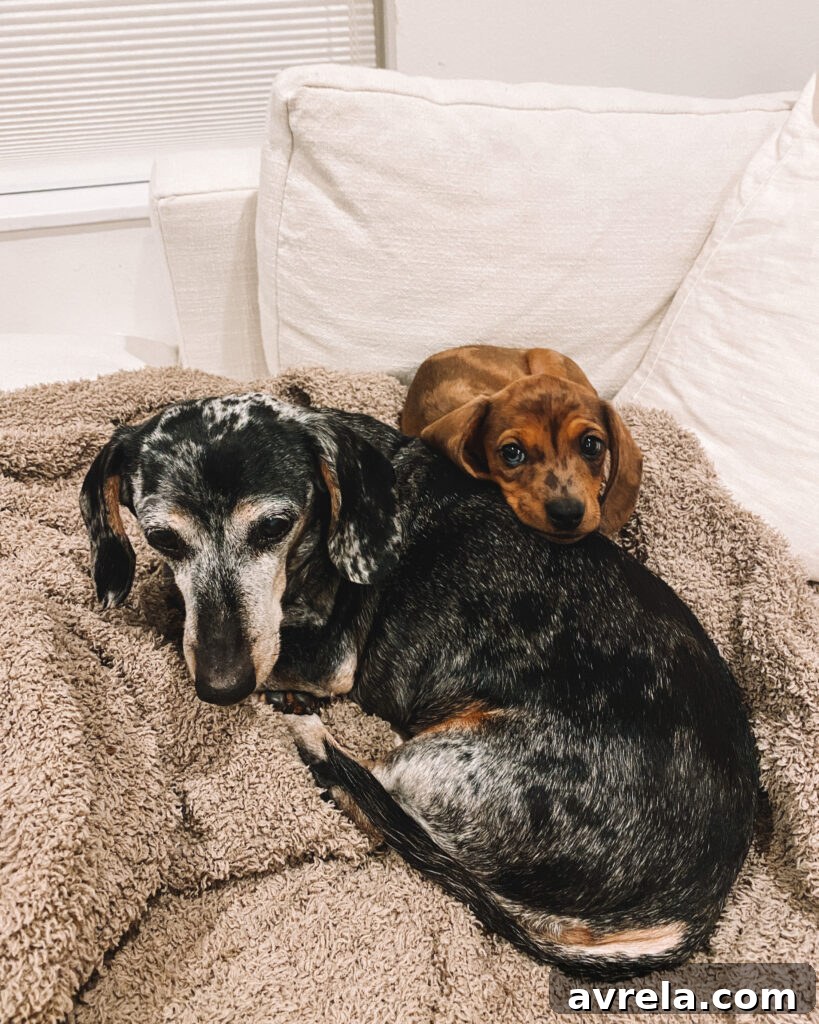
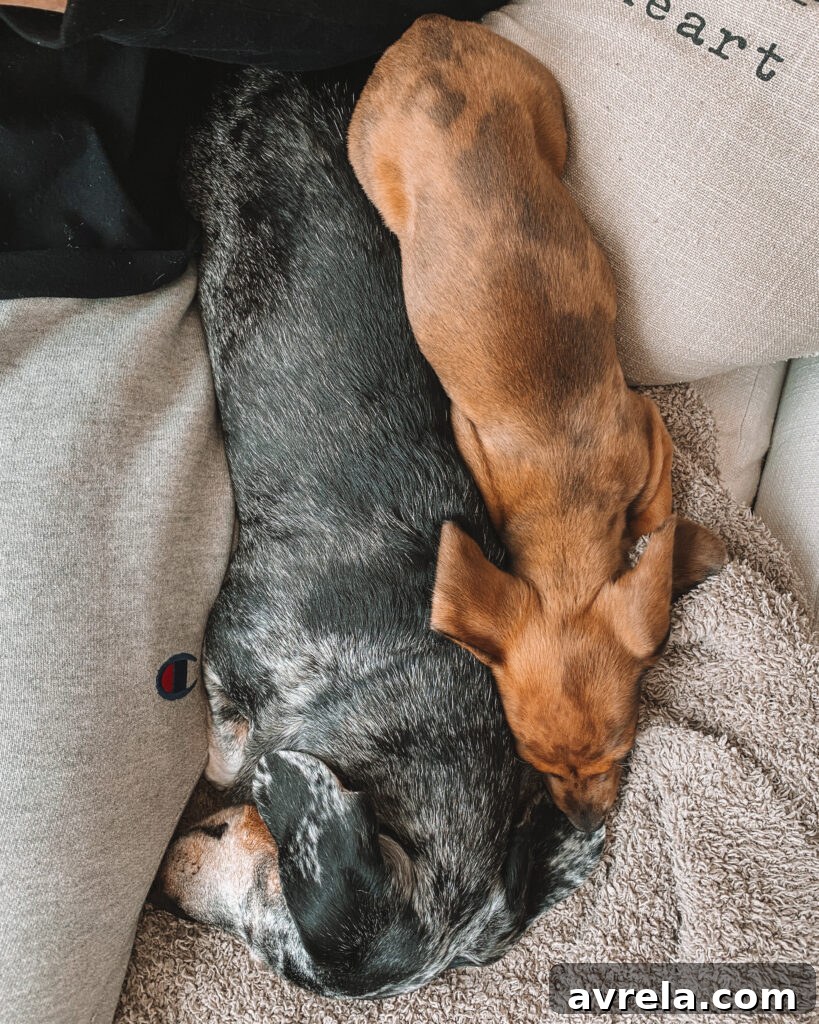
Coco has bursts of incredible energy and loves to playfully “sneak attack” Ellie – a behavior we are diligently working on to moderate. Ellie, our older dachshund, generally tolerates Coco’s puppy antics for the majority of the time, but naturally, she doesn’t possess the same boundless energy as Coco throughout the day. While they do play together sometimes, I’ve noticed they truly bond and enjoy each other’s company most when they are both tired and settle down for naps together. Coco, being a typical puppy, hasn’t quite grasped the concept of personal space yet, which often results in Ellie gracefully getting up and relocating! We are hopeful that as Coco matures a little more, they will develop an even stronger and more fully bonded relationship.
One particular issue we’re currently grappling with is getting her harness and sweaters on. Initially, Coco didn’t seem to have any problem with us putting them on her. However, recently, she has developed a strong aversion, almost as if she’s traumatized by the process. I suspect the main culprit is the sound of the Velcro fasteners on both harnesses we own, which seems to startle her, especially when we take them off. To address this, we’ve initiated a focused desensitization process, reintroducing the harness twice a day with an abundance of treats. I start by making the distinct Velcro sound right in front of her while she’s sitting calmly, immediately offering her a high-value treat. Then, I’ll make the clip sound, followed by another treat. Next, I’ll gently place the harness on the ground right next to her. After repeating this sequence about three different times, the Velcro sound noticeably bothered her much less. We plan to continue this slow, positive reinforcement approach until we can eventually reach the point where she willingly allows me to put her harness on without distress. Wish us luck!
She also bites *all* the time with her sharp, tiny “dagger chiclet” teeth, which has certainly been an experience to navigate! We started very early on by making a firm “AH” or “EH” sound whenever she was doing something wrong, and this command is finally starting to stick. The same goes for the “leave it” command. We understand that she’s primarily teething, so our strategy is to immediately redirect her attention by swapping her target for an appropriate chew toy as much as possible. I’m happy to share some of her current favorite toys below!
Toys Coco Loves:
- Mini Kong: I put a little drizzle of peanut butter inside, and she remains delightfully distracted for a long time, providing us with some much-needed quiet moments.
- Blue Bone with Tassels: She is absolutely obsessed with this one, carrying it around everywhere.
- Nylabones: We do have to supervise her with these because she’s quite an aggressive chewer and can get through them pretty fast. We take them away once they get close to the bottom to prevent her from ingesting small pieces.
- Mini Squeaky Kong Balls: These are perfect for playtime and provide great mental stimulation.
- Last but not least, all of Ellie’s hand-me-down toys that our older dog doesn’t play with much anymore. Her favorites among these are the ones with the stuffing already removed, like this one and this one, which are ideal for tugging and gentle chewing.
Treats Coco Adores:
- These everyday treats: We started using these from day one for various purposes – from encouraging her into the crate to rewarding her after successful potty breaks outside. They’re her consistent motivators.
- These flavorful treats: She absolutely loves these, and I believe it’s because they are more potent in flavor. Consequently, I reserve these higher-value treats specifically for our more intensive training sessions, especially when working on challenging tasks like the Velcro harness desensitization.
Our Puppy Food Choice:
For Coco’s diet, we’ve chosen to use Blue Buffalo Natural Puppy Dry Food. Our veterinarian specifically advised us that grain-free diets can, in some cases, be linked to heart disease in dogs, so we opted for a grain-inclusive formula to ensure her optimal health and development.
I also recently created my very first real YouTube video, chronicling the first two weeks of having Coco! Make sure to subscribe to my channel and check that out for more adorable puppy content!
SHOP WHAT WE GOT FOR COCO HERE:
I believe that pretty much covers our first month with Coco and all our initial experiences and tips! If you have any further specific questions about puppy care, training, or anything else related to our dachshunds, please don’t hesitate to drop them in the comments section below, and I’ll be happy to answer. Thanks so much for reading and joining us on this exciting puppy journey! xx Rachael