
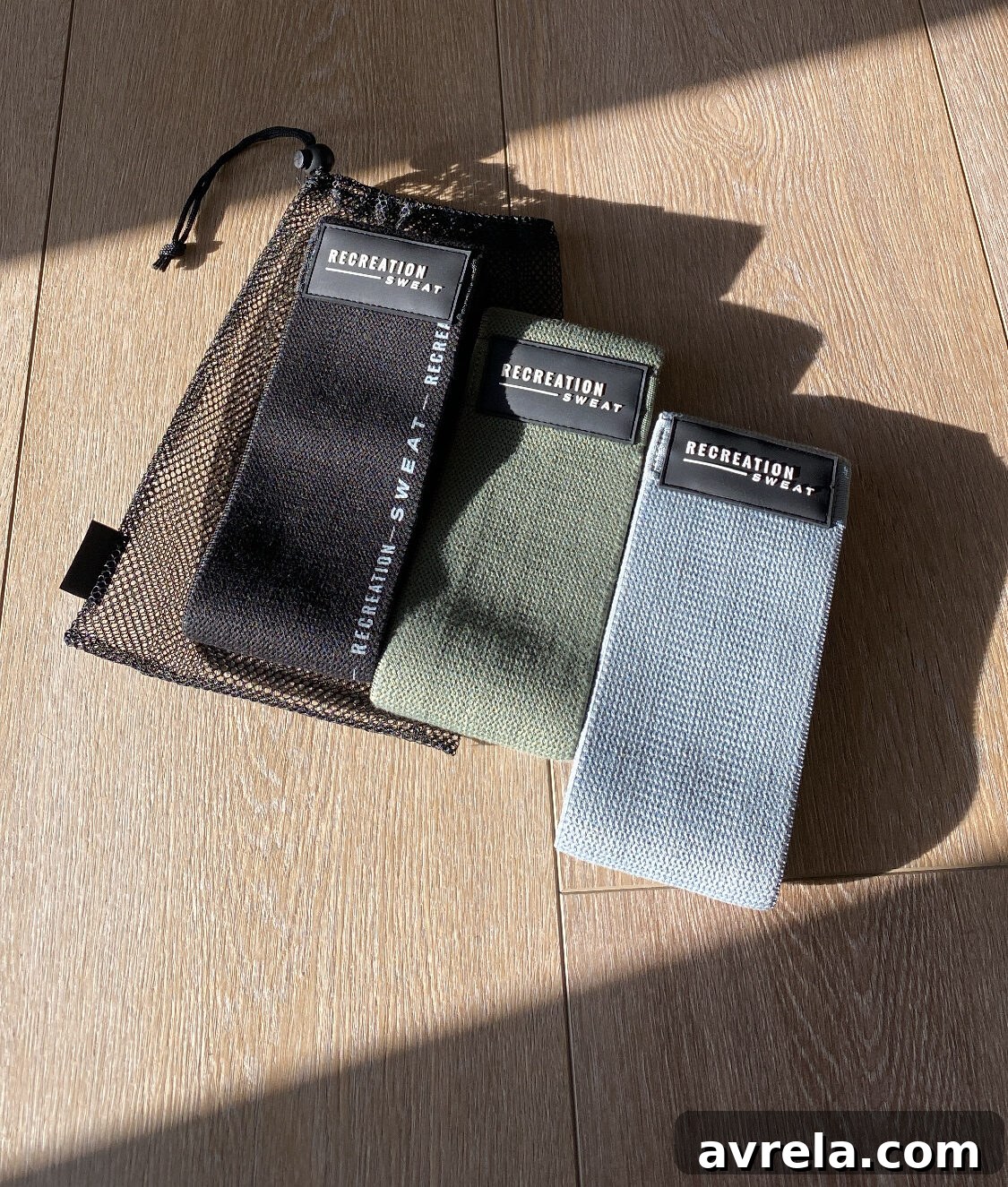
In the vast landscape of fitness tools, few boast the versatility, accessibility, and sheer effectiveness of resistance bands. I will champion their countless benefits until my very last breath. Having recently returned to my fitness routine after a six-week hiatus, my Rec Sweat resistance bands have proven to be indispensable companions. These remarkable tools offer a multitude of advantages for anyone looking to enhance their physical well-being. From rebuilding foundational strength to cultivating improved stability and expanding your range of motion, resistance bands are truly transformative. Their unique ability to provide consistent tension throughout an exercise makes them particularly outstanding for specific demographics, especially for individuals navigating the delicate yet powerful journey of postpartum recovery. For new mothers, in particular, resistance bands emerge as a gentle yet incredibly potent ally in regaining physical strength and confidence after childbirth, making them an essential component of any postnatal fitness regimen.
Rebuilding Your Core & Pelvic Floor Strength
One of the most critical focuses during any postpartum recovery phase, and indeed for overall long-term health, is the meticulous work of restrengthening the core and pelvic floor muscles. The profound physiological changes experienced during pregnancy and childbirth – from the growth of a baby to the intensity of delivery – can significantly impact these vital muscle groups. Consequently, approaching their recovery with gentle, consistent, and mindful engagement is paramount. Overworking these muscles prematurely can hinder healing and potentially lead to further complications. This is precisely where resistance bands shine brilliantly. They are uniquely suited for gradually increasing strength in these areas, providing controlled resistance that helps activate deep core muscles, even during seemingly simple exercises. The constant tension from a band acts as a powerful proprioceptive cue, encouraging the correct muscles to fire and engage throughout the movement. For instance, incorporating a resistance band into exercises like glute bridges or clam shells can deepen the activation of the pelvic floor and transverse abdominis, fostering a strong, stable foundation. Unlike free weights, which rely heavily on gravity, bands provide resistance in multiple planes of motion, making them ideal for targeting and rehabilitating these often-neglected yet crucial muscle groups without placing excessive strain on healing tissues. This gradual, controlled approach to core and pelvic floor work is not just beneficial; it’s essential for a safe and effective postpartum fitness journey.
Enhancing Mobility & Expanding Range of Motion
While resistance bands are often celebrated for their ability to intensify a workout and add a challenging layer to strength training, their role in enhancing mobility and supporting range of motion is equally profound and often underestimated. In many scenarios, resistance bands act as a sophisticated guide, facilitating controlled movements that are crucial for injury prevention and rehabilitation. This is especially pertinent during the postpartum period, where hormonal changes (like relaxin) can leave joints feeling looser, and new movement patterns (like carrying a baby) can lead to postural imbalances. By utilizing a band, your body is encouraged, or sometimes limited, to move within a safe and effective range. For example, placing a resistance band around your legs just above the knees during squats serves as an excellent physical reminder to maintain proper knee alignment, actively pushing them outwards away from the center. This subtle cue can prevent knees from caving inwards, a common issue, and ensures that you descend to a depth that is both safe and beneficial for your current fitness level. This controlled limitation of range of motion is incredibly helpful during postpartum recovery, preventing overexertion and safeguarding healing joints and muscles. Furthermore, bands can assist in increasing flexibility by providing gentle, sustained tension during stretches, helping to lengthen tight muscles and improve overall joint health. They offer a unique blend of support and challenge, allowing individuals to explore and expand their movement capabilities safely and progressively. Whether you’re working on hip abduction, shoulder external rotation, or simply improving the integrity of your squat, resistance bands help you move smarter, not just harder.
Unmatched Ease & Convenience for Busy Lifestyles
Perhaps the most crucial, and often overlooked, aspect of any postpartum workout routine is its inherent convenience. For new parents, time is a precious commodity, often fragmented into unpredictable bursts. You might find yourself with a blissful hour while the baby naps, or perhaps a mere fifteen minutes before a diaper change or feeding session demands your attention. In such a dynamic environment, the workout routine that thrives is the one that is the most accessible and least demanding in terms of setup and logistics. This is precisely where resistance bands emerge as an unparalleled champion. Their compact size means they require virtually no storage space; they can be discreetly tucked under a couch, stashed in a drawer, or even kept in your purse or car for those serendipitous moments when you find a few extra minutes of quiet time. Unlike clunky gym equipment, resistance bands are wonderfully quiet, allowing you to exercise without disturbing a sleeping baby or disrupting the peaceful atmosphere of your home. This quiet, unobtrusive nature significantly increases the likelihood that you’ll actually squeeze in a workout, transforming fitness from a daunting commitment into an easily achievable daily habit. The sheer convenience of resistance bands removes significant barriers to exercise, allowing you to prioritize your physical and mental well-being even amidst the chaos of new parenthood. It’s about taking the pressure off yourself to achieve a “perfect” workout and instead embracing the power of consistent, manageable movement. Whether it’s a quick set of glute activations in the living room or a full-body circuit during naptime, resistance bands empower you to integrate fitness seamlessly into your life, on your terms.
Versatility: A Tool for Every Fitness Journey
While their benefits for postpartum recovery are exceptional, the utility of resistance bands extends far beyond this specific life stage. They are, in essence, a universal fitness tool, capable of adapting to nearly any workout goal or fitness level. For strength training, bands can add progressive resistance to traditional bodyweight exercises like squats, lunges, push-ups, and rows, effectively turning your living room into a fully functional gym. They are also incredibly valuable for activating specific muscle groups during warm-ups, ensuring your body is primed and ready for more intense activity. Conversely, they can be incorporated into cool-downs to aid in stretching and muscle recovery, promoting flexibility and reducing post-exercise soreness. Physical therapists frequently utilize resistance bands for rehabilitation purposes, guiding patients through controlled movements to restore strength and function after injury. Athletes use them for speed and agility drills, improving explosive power and dynamic stability. The spectrum of exercises possible with a simple set of bands is vast, making them an excellent investment for anyone committed to a holistic approach to fitness. From enhancing muscular endurance to improving joint stability and aiding in functional movement patterns, resistance bands offer an all-encompassing solution for diverse fitness needs.
Choosing the Right Bands & Integrating Them into Your Routine
Navigating the world of resistance bands can seem daunting at first, given the variety available, but understanding the basics makes selection straightforward. Generally, you’ll encounter loop bands (often used for lower body and glute work), long tube bands with handles (great for upper body and compound movements), and fabric bands (known for comfort and durability, especially for glutes). The most crucial factor is resistance level, which is usually indicated by color or explicit weight equivalents. For postpartum recovery, it’s advisable to start with lighter resistance and gradually progress as your strength improves. Listen to your body and never push through pain. When integrating bands into your routine, start with fundamental movements. Begin with 10-15 repetitions for 2-3 sets, focusing intently on slow, controlled execution and proper form. Gradually increase repetitions, sets, or move to a band with higher resistance as you get stronger. Consistency is far more important than intensity, especially in the initial phases of recovery. Even 10-15 minutes of banded exercises a few times a week can yield significant results, helping to rebuild strength, improve posture, and boost overall well-being. Consider integrating bands into your existing walks or stroller outings – a quick set of banded squats or hip abductions at the park can make a significant difference. The key is to make them an accessible and enjoyable part of your daily life.
Safety Tips & The Importance of Listening to Your Body
While resistance bands are incredibly safe and effective, especially for gentle recovery, adherence to safety guidelines is essential. Always consult with your healthcare provider, particularly your doctor or a pelvic floor physical therapist, before starting any new exercise regimen postpartum. They can provide personalized advice based on your individual recovery status and any specific concerns, such as diastasis recti or pelvic floor dysfunction. When using bands, ensure they are in good condition, free from tears or excessive wear, as a snapped band can cause injury. Always perform a quick check before each use. Focus meticulously on proper form over the number of repetitions or the intensity of the resistance. If you’re unsure about the correct technique for an exercise, seek guidance from a certified fitness professional or refer to reputable online resources. Most importantly, cultivate a deep awareness of your body and its signals. Pain is your body’s way of communicating that something is wrong; never push through it. Differentiate between muscle fatigue and actual pain. Postpartum recovery is a marathon, not a sprint. Embrace a mindset of patience, self-compassion, and gradual progression. Celebrate small victories and acknowledge your body’s incredible strength and resilience. By prioritizing safety and tuning into your body’s needs, resistance bands can become a truly transformative and empowering tool on your journey to renewed strength and vitality.
In conclusion, the transformative power of resistance bands cannot be overstated. From facilitating a gentle yet effective postpartum recovery journey to offering unparalleled versatility for all fitness levels, these simple yet ingenious tools are a game-changer. They empower individuals to strengthen their core and pelvic floor, enhance mobility and range of motion, and integrate consistent exercise into even the most demanding schedules. Their ease of use, convenience, and quiet operation make them an indispensable ally for anyone, especially new mothers navigating the beautiful, challenging landscape of parenthood. Embrace the humble resistance band, and unlock a world of safe, effective, and accessible fitness that supports your body, mind, and spirit on every step of your wellness journey.