
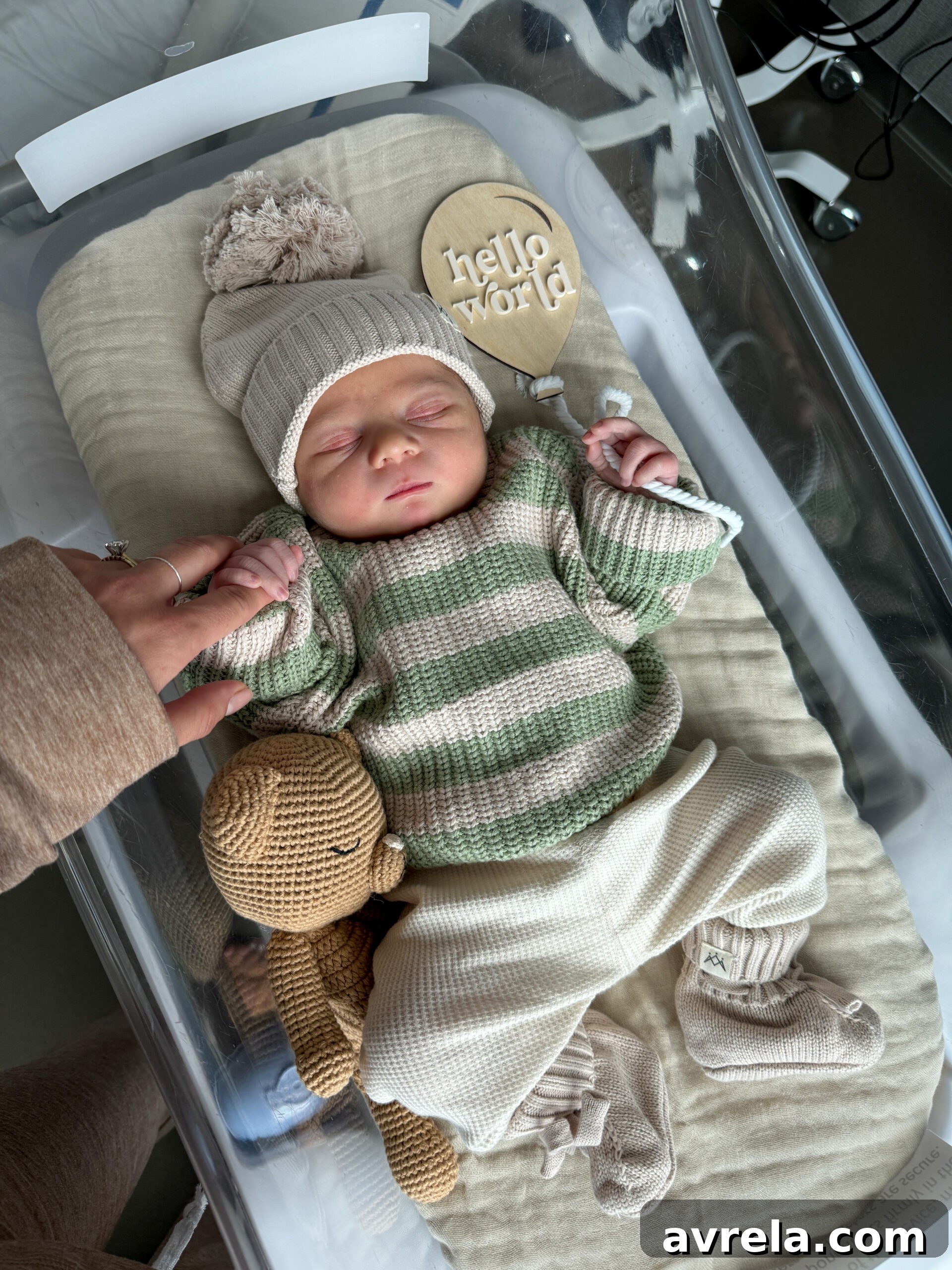
As our sweet Hayes approaches his three-month milestone, I felt it was the perfect time to share our intricate and deeply personal birth story. It feels surreal to think that just a few months ago, I was navigating the final weeks of pregnancy, and now our little one is already growing so fast. Time truly does fly, and I’m cherishing every single moment with our newest family member.
Photos by Jordan Voth
Embracing the Journey: A Positive Pregnancy Experience
First, I want to emphasize how much I cherished my pregnancy journey. While every woman’s experience is unique, especially when it comes to birth, I genuinely loved carrying our first baby and embracing all the physical and emotional transformations that came with it. I maintained an active lifestyle right up until four days before Hayes arrived, feeling remarkably strong throughout. I even completed my 8-week Strength Level Up program one and a half times and then dedicated time to testing workouts for my upcoming Pregnancy Program. I was incredibly fortunate to experience very little nausea – perhaps only two or three days in total – which allowed me to continue my regular training and enjoy my usual balanced diet of quality protein, healthy fats, complex carbohydrates, and fiber. For those interested in my approach to nutrition, many of my recipes can be found in my cookbook.
Of course, fatigue was a constant companion, so I learned that morning workouts were essential – if I didn’t train then, it simply wouldn’t happen. Afternoon naps became a crucial part of surviving the day. Overall, I consider my pregnancy a very positive and empowering experience. However, the last few weeks leading up to birth brought their own set of challenges and unexpected turns.
The Waiting Game: Beyond the Due Date
My sister delivered her baby niece eight days early, which, for some reason, instilled in me the expectation that I would also give birth about a week ahead of my May 24th due date. Hitting 40 weeks, on my actual due date, felt significantly later than I had mentally prepared for. My sister even flew from Vegas to stay with us, planning to help with the baby, just as Bridger and I had done for her. In retrospect, her presence, combined with a constant influx of well-meaning texts and Instagram DMs asking if the baby had arrived, created immense pressure and stress. Each morning, I would wake up and walk into the living room with a wave of disappointment that labor hadn’t begun. Unfortunately, my sister eventually had to return home due to work commitments and prior travel plans with our niece before Hayes made his grand entrance. Next time, we’ll definitely be waiting until the baby arrives before inviting family to travel!
As the days passed, I began to explore natural ways to encourage labor. I booked my first-ever acupuncture appointment for Monday, May 27th. I had heard positive anecdotes about its ability to stimulate blood flow and promote labor. I found the session incredibly relaxing and beneficial, especially given my stress levels at the time. It was such a calming experience that I scheduled a follow-up for that Wednesday, just in case.
Navigating Medical Interventions: Membrane Sweeps and Induction Decisions
My next OB appointment was on Wednesday, May 29th, marking 40 weeks and 5 days of pregnancy. I opted for a membrane sweep to naturally encourage labor, an experience that proved quite uncomfortable, and for which I was not mentally prepared. Before performing the sweep, my OB checked my cervix, informing me I was only 1cm dilated and 60% effaced. I quickly learned that dilation isn’t always a reliable indicator; a body can remain at 1cm for weeks or dilate rapidly in hours. Effacement, referring to the thinning and softening of the cervix, signifies its preparation for childbirth, with 100% effacement indicating readiness.
Following the membrane sweep, I was moved to a separate room for fetal heart rate monitoring. The monitor detected very minor contractions, sparking hope that labor would commence within the next day or so. My OB also mentioned they had scheduled an induction for that Saturday morning, as they generally prefer patients not to go beyond 41 weeks. This news, however, added another layer of pressure. My intuition strongly suggested that my body would go into labor naturally when it was truly ready. Reluctantly, I requested a second membrane sweep in 48 hours, if labor hadn’t started, to give my body another chance to progress naturally. She kindly agreed.
For the rest of that day, I experienced cramps and was convinced labor was imminent. Our hospital bags were packed, and we were mentally braced for anything. Later that day, I even went for another acupuncture session, desperately trying every possible natural induction method: bouncing on a yoga ball, performing various stretches, and long walks.
Forty-eight hours later, with no significant progress, I returned for my second membrane sweep. This time, while still very uncomfortable, it was more manageable as I knew what to expect. My OB stated she would “give it her best shot” to kickstart labor, which involved a more vigorous procedure – I’ll leave the details to your imagination! At this point, I had progressed to 3cm dilated and 70% effaced. After careful consideration over the past few days, I informed her of my decision to cancel the scheduled induction for the following morning. Firstly, I preferred to avoid induction if possible, and secondly, I wanted to allow a few days for the second sweep to work its magic. She was incredibly understanding, only requesting that we return Monday morning if nothing happened, for a routine check to ensure the baby was still doing well.
Throughout this week of anticipation, I kept our doula updated daily on all developments. Initially, at the beginning of my pregnancy, hiring a doula wasn’t something Bridger and I had considered. However, after close friends raved about the invaluable support their doula provided during their hospital birth and with 24/7 availability for questions, our perspective shifted. We interviewed and ultimately hired a doula in Seattle when I was around six or seven months pregnant – which, in hindsight, is a little late in the game to start looking. I am profoundly grateful we had her. I wholeheartedly recommend a doula to any first-time parents seeking comprehensive support. With my sister’s planned presence not working out, having another experienced individual who could guide both Bridger and me through the third trimester, labor, and immediate postpartum period was truly a blessing.
Our doula offered much-needed reassurance, reminding me that the average first-time mom delivers around 41 weeks and 3 or 4 days. Her advice was to stay calm, continue exercising, eating nourishing foods, stretching, and prioritizing rest.
Saturday came and went, leaving me feeling a little discouraged as another day passed without progress.
Sunday: Labor Begins and the Hospital Dash
Then came SUNDAY. At precisely 4:50 AM, I woke up to my water breaking. It wasn’t a dramatic gush, but rather a small, intermittent leak that initially left me unsure. However, after it happened again 30 minutes later, and then once more, I knew it was real. Bridger and I immediately began our preparations for the hospital. We showered, gathered our bags, made smoothies (a surprisingly calm moment amidst the anticipation!), and packed our essential snack bag. I texted our doula, who advised us to take it easy, relax, try to nap, and eat nutrient-dense food until contractions became consistent. This seemed counter-intuitive to me, as I was still mentally comparing my experience to my sister’s, whose contractions had started intensely just 30 minutes after her water broke, leading to a rapid delivery. I was ready to rush to the hospital immediately.
The surprising truth was, I had no contractions. So, we followed her sage advice. For the next few hours, I climbed stairs multiple times, took a nap, answered more questions for my Prenatal Training Certification exam (I still question my decision to do this during my third trimester!), filmed a new recipe (you can find my delicious PB chocolate chip bliss balls for breastfeeding support HERE), performed a series of exercises our doula texted me, and we had dinner. I even pumped one or two more times to build up my colostrum supply. (I had been using my portable breast pump from week 39 onwards to try and induce labor, which, clearly, didn’t work for that purpose! However, it allowed me to save 60ml of colostrum in the freezer, a valuable reserve for Hayes’ first few days or whenever he might need an immunity boost). Throughout the entire day, I continued to leak amniotic fluid – it was quite incredible.
It wasn’t until 9 PM that night that consistent contractions finally began. They started mild but intensified noticeably around 11 PM. I began using the TENS unit our doula had given us on my back, a device I found remarkably effective and continued to use for most of my labor, even at the hospital.
Bridger diligently timed my contractions, and we eventually left for the hospital around 12:15 AM. We met our doula there and were admitted to triage at 12:55 AM. Upon checking my cervix, I was still only 3cm dilated. They also had to perform a test to confirm my water had indeed broken, which was a tad frustrating as my verbal confirmation wasn’t sufficient. Using a Q-tip (another uncomfortable moment), they tested the fluid, and we waited another 30 minutes for official confirmation.
By 1:45 AM, I was moved to the birthing center, and the full check-in process, including a blood panel, was completed by 3:15 AM. Our doula wisely suggested we all try to nap at this point, as there was no telling how long active labor would last. Her advice proved invaluable; I confidently say we wouldn’t have thought to rest on our own. We managed to sleep from 3:30 AM to 5:30 AM, waking up to contractions that were now intensely painful.
Navigating Labor: Pain Management and Unexpected Turns
Going into labor, I was determined to remain flexible with my choices. A few weeks before my due date, our doula and I meticulously reviewed my birth plan. She was exceptional, visiting our home to discuss every conceivable scenario, intervention, and option that might arise in the delivery room. Without her guidance, we would have felt far less prepared – or so we thought! I distilled my preferences into a general plan, printed it, and handed it to the nurses upon checking into our birthing suite. Nevertheless, I entered with a fluid mindset, understanding that anything could happen and open to trying various interventions before resorting to an epidural as a last option.
Our hospital offered nitrous oxide, which was the first thing I requested. For some reason, it took a while to set up, and it proved to be less helpful than I had anticipated. It required slow, deep breaths into the mask with each contraction, and felt rather cumbersome, adding to the three or four other cords already attached to me. By this point, the pain was significant. I only lasted about 30-45 minutes with it before wanting to explore other options. I then moved to the warm bath in our bathroom and immediately disliked it. I’m not typically a bath person, but our doula suggested it might help ease contraction pain. While it may have offered some minor relief, I was in such intense pain that after another 30-40 minutes, I was ready for an epidural.
At this juncture, my IV on my forearm had come out, necessitating a re-insertion into the top of my hand while I was still in the bath. I’m not afraid of needles, but repeated insertions are certainly not ideal! I made my way out of the tub, changed into a new sports bra with a gown over it, and waited for the anesthesiologist to arrive.
At 8:30 AM, they checked me again. Despite my hope and expectation of being around 8cm, my OB informed me I was only 3.5cm dilated. The mood among our entire team – Bridger, our doula, the nurse, and myself – plummeted. After 3.5 hours of intensely painful contractions, discovering I had only dilated an additional 0.5cm since arriving at the hospital was an absolute punch to the gut.
I received the epidural just after that, around 9 AM. Once administered, the nurse and doula gently turned my body from side to side for about 15 minutes, allowing the medication to fully distribute through my lower body. I went into this knowing epidurals don’t always work perfectly; I’d heard stories and didn’t feel 100% confident even as it was being administered.
My right side remained somewhat numb, so I pressed the button for more medication. In the meantime, I managed to get another much-needed nap from 9:30 AM to 12 PM, which offered some welcome relaxation. Throughout my entire labor, I experienced intermittent full-body shakes, a common phenomenon I only learned about a few weeks before birth.
Complications, Pitocin, and the Marathon to Delivery
Meanwhile, my doctor grew concerned. My water had been broken for well over 24 hours, increasing my risk for chorioamnionitis (pronounced “korio”), a serious bacterial infection of the membranes surrounding the fetus and amniotic fluid. She knew from past appointments and my birth plan that I preferred to avoid Pitocin, but given the circumstances, she highly recommended it to accelerate contractions and deliver the baby. They also took two large vials of blood for testing to check for infection, though results wouldn’t be available for a few days. My doctor also advised a dose of antibiotics as a precautionary measure. This decision felt like a gamble – making an on-the-spot choice about antibiotics without knowing the blood test results. Despite my general reluctance towards antibiotics when alternatives exist, I was unwilling to risk anything for our baby’s health. Therefore, I agreed to both the Pitocin and a single round of antibiotics. The Pitocin worked so rapidly that they had to slow it down, as my contractions became almost too quick, roughly one minute apart. Thankfully, at this point, I was fully numb and felt nothing.
At 1 PM, another cervical check revealed I was finally 8.5cm dilated. I labored for the next two hours, with the epidural’s effectiveness fluctuating. At one point, my left hip became un-numb, and I could feel everything – it was one of the most intense pains, likely Hayes making his way down the birth canal. Throughout this active labor, our doula was instrumental, guiding me through various positions to aid the baby’s descent: side-lying, on all fours, and using the peanut ball.
Bridger’s support throughout this entire ordeal was unwavering. While our doula and nurse focused on guiding my positions and providing feedback, Bridger remained my constant anchor – holding my hand, fanning me with this amazing portable fan, and refilling my water. Sometime during these two hours, he even walked across the street to Whole Foods to grab more coconut water for me and a much-needed snack for himself, as he hadn’t eaten all day. While he was gone, the nurse performed a final check and confirmed I was 10cm dilated and ready to push! Unfamiliar with the intricacies of the process, I simply texted Bridger, “Get here now,” which, looking back, must have been a stressful message to receive. He returned immediately, and it was now 3:18 PM.
The Arrival of Hayes: An Unforgettable Delivery
At this critical moment, I could feel everything. The numbness from the epidural had completely worn off. The nurse asked if I wanted to call the anesthesiologist again to check the epidural – a process that could take a while due to their busy schedule – or if I wanted to start pushing. She emphatically assured me that I would feel a sense of relief once I began pushing. It sounded wild, but her conviction was enough for me to start.
Delivering a baby is an incredibly emotional experience. I had envisioned a somewhat magical birth, ideally with reduced pain thanks to an epidural, but my reality was the complete opposite. I was in excruciating pain, and with stories of mothers pushing for hours, there seemed to be no end in sight. I began to cry, and honestly, cried through the entire hour and 15 minutes of pushing. We tried multiple positions, which was incredibly challenging to maneuver with parts of my legs still numb and being tethered to machines by various cords. I had read or heard about avoiding “purple face pushing” – pushing so hard your face turns purple. I was pushing with all my might during contractions, releasing, and then catching my breath in between. My OB arrived after about 20 minutes, observed a few pushes, and remarked, “These are great starting pushes!” The word “starting” was incredibly deflating.
Once the nurse provided clear, direct instructions on how to push and hold the push for 7-8 seconds, we finally started to see progress. It was, without a doubt, the hardest and most physically exhausting thing I have ever done. I felt lightheaded to the point of nearly passing out multiple times due to the deep breaths and immense exertion. Towards the end, the nurses could clearly see my pain and offered to call the anesthesiologist again. I agreed. He arrived about 20 minutes later and checked my back for the epidural. He then lifted the end of the epidural catheter/tube, revealing that it had snapped into two pieces, meaning I hadn’t been receiving any epidural drip for the past two hours or more.
I vividly remember him stating he would need to insert an entirely new epidural, but that would require me to pause pushing and wait another 30 minutes for it to take effect. At that precise moment, the nurse exclaimed she could see the baby’s head. The anesthesiologist then declared, “OK, she’s going to have to do it on her own!” I focused intently, and three powerful pushes later, our baby was born at 4:27 PM. It’s funny now, but during those final pushes, the nurse twice shouted that I was experiencing the “ring of fire.” For those unfamiliar, the ring of fire is the most painful stage of childbirth, occurring when the baby’s head, the largest part, crowns. I probably could have done without that particular piece of information at the time!
First Moments and Post-Birth Care
For those who followed along, Bridger and I kept the baby’s gender a surprise until birth. So, as they handed him to me, the nurses asked Bridger, “Okay, Dad, is it a boy or a girl??” Bridger proudly announced, “It’s a boy!” Hayes was absolutely perfect. The nurses throughout my labor were wonderful; we had been playfully guessing the baby’s gender with them. Their kindness and enthusiasm made the reveal even more exciting. (A helpful tip: if you don’t connect with a nurse, you can always request a new one!) Our baby, 11 days “late” but perfectly on time in his own way, had arrived.
Following delivery, I experienced a mild hemorrhage, losing a bit more blood than typical. The doctor performed a manual removal of any remaining placental tissue and a uterine massage. This was uncomfortable, but honestly, nothing compared to the intensity of what I had just endured, so it was manageable. We were both healthy and stable. She then stitched me up for a 2nd-degree tear, which is quite common, but I was already enveloped in baby bliss, so it didn’t bother me much.
We had one girl’s name and a few boy’s names on our list. The moment we knew he was a boy, he immediately felt like a Hayes. He weighed a healthy 8 pounds, 6 ounces. After everything, I was utterly exhausted, to say the least. But before being transferred to the recovery room, we FaceTimed a few family members to share the joyous news. I remember my eyelids felt incredibly heavy, and I could have fallen asleep at any given second.
Our overnight and subsequent day at the hospital with the nursing staff were exceptional. They were truly amazing. Bridger ensured I stayed nourished with all the snacks we brought – you can find my comprehensive Hospital Snack Bag list here. We were discharged around 4 PM, eagerly driving home with our precious new addition.
The morning after birth, I felt an overwhelming sense of gratitude for what my body had just accomplished. It was truly humbling.
Hayes Michael Harlington. 8 pounds 6 ounces. 20.5 inches long.
Reflections on Our Birth Story and Parenthood
The final two weeks of pregnancy were an intense emotional rollercoaster. Now, looking back and understanding how everything unfolded, I anticipate I’ll approach our next baby’s arrival with a greater sense of patience, armed with the knowledge of the process. It took me several days to fully comprehend what had transpired and the fact that I essentially delivered him naturally, something I hadn’t explicitly planned or mentally prepared for. It was a powerful testament to my body’s innate capabilities.
Of course, my love for our baby Hayes is boundless, and I can unequivocally confirm that time truly does fly by way too fast! I am here, savoring and soaking in every single minute with him. Thank you for allowing me to share our birth story. I recognize and respect that everyone’s experience is unique and profoundly special in its own way.
Essential Takeaways for Expectant Parents
- Explore Pain Relief Options: Trying a variety of pain relief methods at the hospital was invaluable. It helped me understand what worked, what didn’t, and what I might prefer in the future.
- Timing Your Hospital Arrival: In hindsight, we could have waited even longer to go to the hospital. Contractions feel incredibly strong in the moment, but you often don’t realize their true intensity until much later in labor. Arriving too early can sometimes lead to earlier interventions to induce labor.
- Hospital Bag Essentials: Prepare wisely! My Amazon Storefront offers a comprehensive list of items I found helpful, specifically in my DELIVERY/POSTPARTUM folder and BABIES folder.
- The Invaluable Role of a Doula: I wholeheartedly recommend hiring a doula, especially for first-time parents. Their knowledge, support, and advocacy are truly transformative.
- Advocating for Your Birth Plan: Remember, you have the right to decline many things that your OB or hospital may present as definitive. For instance, I almost felt pressured into an induction, but I’m immensely grateful I canceled it, as my water broke naturally the very next morning. While medical professionals aim for safety, the average first-time mom delivers around 41 weeks and 3 or 4 days, so trust your body and ask questions.
- Fueling During Labor: Bring an abundance of snacks, bone broth, coconut water, and fresh orange juice (this was a game-changer post-birth!) for delivery. My Hospital Snack Bag has all my recommendations.
- Managing Birth Expectations: It’s incredibly challenging not to form expectations for your birth story. I truly believed mine would mirror my sister’s, but I was wonderfully wrong. Every birth experience is profoundly unique and special.
- Colostrum Harvesting: I brought two small colostrum collectors filled with pre-pumped and frozen colostrum to the hospital. Stored in a Ziploc/Stasher bag with a frozen ice block and our name, the nurses kept it refrigerated, and one even helped me feed it to Hayes the next morning.
- Limiting Hospital Visitors: Bridger and I chose not to have any visitors at the hospital after birth, and I’m so glad we did. It allowed us to remain in our own little bubble, bond as a new family of three, and get much-needed rest during our relatively short ~24-hour hospital stay. Visitors can be wonderful once you’re settled at home and the initial pressure has eased.