
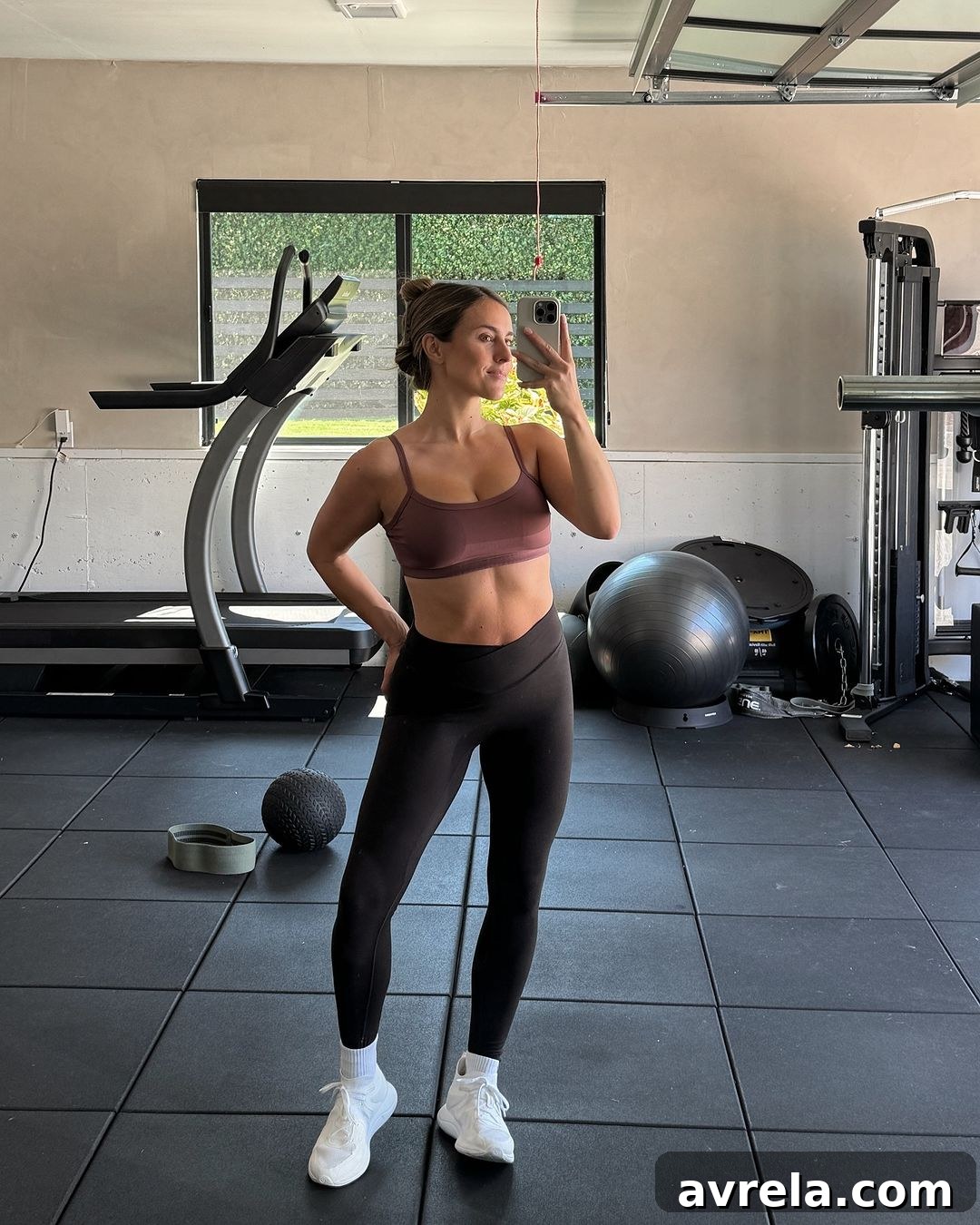
Life can be incredibly demanding, often leaving us feeling like there’s simply not enough time for everything, especially fitness. As someone navigating a particularly busy season, I understand the challenge of fitting workouts into an already packed schedule. The good news is, maintaining a strong, healthy body doesn’t require endless hours at the gym. It’s about maximizing your time and making every minute count. That’s precisely why I’ve designed this quick, yet incredibly effective, full-body workout circuit.
This routine is crafted for efficiency, allowing you to hit all major muscle groups in a shorter timeframe, perfect for those weeks when a daily gym visit isn’t feasible. Instead of pressuring ourselves to return to old routines, we can embrace where we are now and find joy in the journey. This workout isn’t just about moving your body; it’s about staying connected to your strength, boosting your energy, and feeling accomplished, even with limited time.
Mastering Your Fitness: The Power of a Quick, Full-Body Workout
In the whirlwind of modern life, balancing career, family, and personal commitments can make consistent fitness feel like an unattainable luxury. However, prioritizing your physical health is not just about aesthetics; it’s fundamental to your overall well-being, energy levels, and mental clarity. This article introduces a dynamic full-body workout circuit designed to deliver maximum results in minimal time, making it an ideal solution for anyone with a demanding schedule. Whether you’re a new parent, a busy professional, or simply looking for an efficient way to stay active, this routine is built to empower you to take control of your fitness journey without compromising other vital aspects of your life.
Forget the notion that you need to spend hours lifting weights or doing cardio to see progress. The key lies in strategic exercise selection and intelligent programming. Our full-body circuit integrates compound movements that engage multiple muscle groups simultaneously, leading to greater caloric expenditure, improved functional strength, and enhanced muscular endurance. It’s a holistic approach that respects your time while pushing your body to new levels of strength and vitality.
Why Full-Body Workouts Are Your Best Ally
For individuals with limited gym time, full-body workouts offer unparalleled advantages. Unlike split routines that focus on one or two muscle groups per session, a full-body approach targets all major muscle groups—legs, chest, back, shoulders, arms, and core—in a single session. This comprehensive engagement provides several significant benefits:
- Time Efficiency: By working every major muscle group in one go, you can achieve a complete workout in less time, often needing only 2-3 sessions per week for effective results. This drastically cuts down on the total time spent at the gym or exercising at home.
- Increased Calorie Burn: Compound movements inherent in full-body workouts require more energy expenditure. Engaging large muscle groups simultaneously elevates your heart rate and boosts your metabolism, leading to greater fat loss and calorie burn during and after your workout.
- Enhanced Hormonal Response: Stimulating multiple muscle groups triggers a more significant release of growth hormone and testosterone, both crucial for muscle growth and fat loss. This systemic response makes your workouts more effective for body composition changes.
- Improved Functional Strength: Full-body exercises often mimic real-life movements, improving your functional strength and making daily tasks easier. You’ll build practical strength that translates beyond the gym.
- Better Recovery: With fewer training days per week, your body gets more rest and recovery time between sessions for each muscle group, potentially reducing the risk of overtraining and enhancing muscle repair and growth.
- Consistency and Adherence: When workouts are less frequent and more efficient, it’s easier to stick to your routine. Consistency is the most critical factor in achieving long-term fitness goals, and full-body workouts support this by being more manageable.
Understanding Your High-Impact Circuit
This workout is structured as a circuit, meaning you’ll perform each exercise back-to-back with minimal rest in between. Once you complete one round of all six exercises, you’ll take a short rest period (typically 60-90 seconds) before starting the next round. The goal is to complete 3-4 rounds, pushing your body through a challenging sequence that keeps your heart rate elevated and muscles engaged.
Before you begin, remember the importance of a proper warm-up to prepare your muscles and joints, and a cool-down to aid recovery. Focus on maintaining excellent form throughout each movement. If a particular exercise feels too challenging, don’t hesitate to use the suggested modifications or listen to your body and adjust as needed. The aim is progression, not perfection.
Your Ultimate Full-Body Circuit: 3-4 Rounds
Perform the following exercises in sequence, resting briefly only after completing all exercises in a round. Aim for 3 to 4 complete rounds for a truly invigorating session.
- Curtsy Lunge To Y-Press x 12 each leg
- Ball Slams (feel free to modify with squats) x 10
- Deep Squat To Hamstring Stretch x 45 seconds
- Narrow Grip Press To Overhead Tricep Extension To Hammer Curl x 12
- Banded Reverse Lunge To Kickback With Pulse x 8 each leg
- Plank Jack (x2) To Pike Pushup x 6-8
Detailed Breakdown: Perfecting Each Movement
Curtsy Lunge To Y-Press
This compound exercise is a fantastic way to engage your lower body, core, and shoulders all in one fluid motion. It challenges your balance and coordination while building strength in your glutes, quads, and deltoids.
Muscles Worked: Glutes, quadriceps, hamstrings, obliques, deltoids, triceps, core stabilizers.
Benefits: Improves lower body strength and stability, enhances core control, builds shoulder definition, and promotes balance.
Proper Form: Begin standing with dumbbells at your sides. Step your right leg back and across behind your left leg, lowering into a curtsy lunge until your left thigh is parallel to the ground. As you push back up to standing, bring your right knee forward and up towards your chest, simultaneously pressing the dumbbells overhead in a “Y” shape, with your palms facing forward. Control the movement as you lower the weights and return to the starting position for the next repetition. Keep your chest open and core tight throughout.
Modifications: For beginners, perform the curtsy lunge without the Y-press or use lighter weights. To increase the challenge, use heavier dumbbells or add a resistance band around your thighs during the lunge.
Tips for Success: Focus on a slow, controlled lunge to activate the glutes properly. The “Y” press emphasizes shoulder health and stability; ensure your shoulders are relaxed and down, not shrugging towards your ears.
Ball Slams
Ball slams are a dynamic, full-body power exercise that helps build explosive strength, improve cardiovascular fitness, and release stress. It’s an excellent way to engage your core, back, and shoulders while also challenging your coordination.
Muscles Worked: Core (rectus abdominis, obliques), lats, shoulders, triceps, glutes, hamstrings, quads.
Benefits: Develops explosive power, increases cardiovascular endurance, strengthens the core and posterior chain, and acts as a fantastic stress reliever.
Proper Form: Stand with your feet shoulder-width apart, holding a medicine ball with both hands. Inhale deeply, engage your core, and raise the ball overhead, fully extending your body. Exhale forcefully as you powerfully slam the ball down towards the ground between your feet. Use your entire body, driving through your hips and engaging your core as you slam. Catch the rebound and immediately go into the next repetition. Ensure you’re not just using your arms; the power comes from your hips and core.
Modifications: If you don’t have a medicine ball or prefer a lower-impact option, perform traditional deep squats to engage similar muscle groups without the impact. Alternatively, use a lighter medicine ball for less intensity.
Tips for Success: Choose a non-bouncing medicine ball if possible. Focus on exhaling sharply as you slam to maximize core engagement. Protect your lower back by keeping your core braced and hinging at the hips.
Deep Squat To Hamstring Stretch
This movement combines a foundational strength exercise with a crucial flexibility component, offering both strength building and improved mobility. It’s excellent for warming up the lower body or as an active recovery movement.
Muscles Worked: Quadriceps, glutes, hamstrings, hip flexors, lower back, calves.
Benefits: Enhances hip and ankle mobility, strengthens the entire lower body, improves hamstring flexibility, and promotes better posture.
Proper Form: Start standing with feet shoulder-width apart, toes pointing slightly out. Lower into a deep squat, keeping your chest up and back straight, as if sitting into a chair. Aim to get your hips below your knees if possible. From the bottom of the squat, transition by straightening your legs and lifting your hips towards the ceiling, allowing your torso to fold over your legs for a hamstring stretch. Keep a slight bend in your knees if needed. Hold the stretch briefly, then return to the deep squat position. Control the transition between the squat and the stretch.
Modifications: If a deep squat is challenging, go as low as comfortable. For the hamstring stretch, you can use your hands to gently pull your torso closer to your legs. To deepen the stretch, try to keep your legs as straight as possible.
Tips for Success: Focus on maintaining a neutral spine throughout the squat. In the hamstring stretch, prioritize feeling the stretch in the back of your thighs rather than straining your lower back. Breathing deeply can help you relax into the stretch.
Narrow Grip Press To Overhead Tricep Extension To Hammer Curl
This triple-threat exercise is a highly efficient way to target your chest, triceps, and biceps in one continuous sequence. It’s perfect for upper body sculpting and strength building without needing multiple separate exercises.
Muscles Worked: Chest (inner pec), triceps, biceps, shoulders (anterior deltoids).
Benefits: Builds strength and definition in the chest, arms, and shoulders; improves muscular endurance; and maximizes time efficiency by combining three movements.
Proper Form: Lie on a bench or floor with dumbbells in hand, palms facing each other in a narrow grip over your chest. Perform a narrow grip press, pushing the dumbbells straight up. At the top, keep the dumbbells together and lower them behind your head in an overhead tricep extension, keeping your elbows tucked in. Extend back up to the starting press position. From there, lower the dumbbells to your sides, rotate your palms to face each other, and perform a hammer curl, bringing the weights up towards your shoulders. Slowly lower back down to complete one repetition.
Modifications: Use lighter dumbbells if performing all three movements smoothly is difficult. You can also perform each movement separately if you need to build strength in one specific area first.
Tips for Success: Control is key throughout this sequence to avoid injury and maximize muscle engagement. Focus on isolating each muscle group as you move through the press, extension, and curl. Maintain a stable core to protect your lower back.
Banded Reverse Lunge To Kickback With Pulse
This exercise adds resistance and an extra challenge to the traditional reverse lunge, specifically targeting the glutes and outer thighs. The pulse at the end further intensifies the muscle activation, making it a powerful glute and leg shaper.
Muscles Worked: Glutes (maximus, medius), quadriceps, hamstrings, hip abductors, core stabilizers.
Benefits: Strengthens and sculpts the glutes and legs, improves hip stability and balance, and increases muscular endurance.
Proper Form: Place a resistance band just above your knees. Stand tall, then step one leg back into a reverse lunge, ensuring both knees bend to roughly 90 degrees and your front knee stays over your ankle. Push off your back foot to return to standing, but instead of placing the foot down, immediately kick the leg straight back, engaging your glutes. Add a small “pulse” (a slight upward contraction) at the top of the kickback for added intensity. Control the movement as you bring the leg forward to repeat the lunge.
Modifications: Perform without the resistance band if you’re new to lunges or kickbacks. Use a lighter resistance band for less tension. If balance is an issue, hold onto a sturdy object for support.
Tips for Success: Keep your core tight and maintain an upright posture throughout the lunge and kickback. Focus on squeezing your glute at the top of the kickback and during the pulse to maximize muscle activation. Ensure the band stays taut throughout the movement.
Plank Jack (x2) To Pike Pushup
This dynamic duo combines core stability with upper body strength, delivering a powerful full-body challenge. It’s an effective way to elevate your heart rate while simultaneously working your shoulders, chest, and core.
Muscles Worked: Core (transverse abdominis, rectus abdominis, obliques), shoulders (deltoids), triceps, chest (pectorals), hip flexors.
Benefits: Boosts cardiovascular fitness, builds core strength and stability, strengthens the shoulders and triceps, and improves full-body coordination.
Proper Form: Begin in a high plank position, hands directly under your shoulders, body in a straight line from head to heels. Perform two plank jacks: keeping your core tight, jump your feet out wide, then jump them back together. After the second plank jack, immediately transition into a pike pushup. Lift your hips high towards the ceiling, forming an inverted V-shape with your body. Bend your elbows and lower the crown of your head towards the floor, pushing back up to the pike position using your shoulders and triceps. Return to the high plank to repeat the sequence.
Modifications: For beginners, perform knee taps instead of plank jacks or simply hold a plank. For the pike pushup, reduce the range of motion or perform standard push-ups on your knees if needed. To increase difficulty, elevate your feet for the pike pushup.
Tips for Success: Maintain a stable core throughout the plank jacks to prevent your hips from sagging or rocking. During the pike pushup, focus on driving through your hands and engaging your shoulders. Keep your neck neutral and gaze towards your feet.
Maximizing Your Workout: Tips for Busy Individuals
Beyond the exercises themselves, a few key strategies can help you make the most of your limited workout time and ensure long-term success:
- Prioritize Consistency Over Intensity: It’s better to get in a short, consistent workout a few times a week than to aim for one intense session that you can’t always maintain. Small, regular efforts add up significantly over time.
- Listen to Your Body: Rest days are just as important as active days. If you’re feeling overly fatigued or sore, don’t push through it. Modify your workout or take an extra rest day.
- Hydration and Nutrition are Key: Fuel your body appropriately. Proper hydration and a balanced diet support energy levels, recovery, and overall performance. You can’t out-train a poor diet.
- Set Realistic Goals: Understand that progress takes time. Celebrate small victories and avoid comparing your journey to others. Focus on personal improvements and feeling good.
- Warm-up and Cool-down: Don’t skip these crucial steps! A 5-10 minute dynamic warm-up prepares your body for exercise, while a 5-10 minute static stretch cool-down aids flexibility and recovery.
- Track Your Progress: Keep a simple log of your workouts—reps, sets, weights, or how you felt. This helps you see how far you’ve come and motivates you to keep going.
Embrace Your Fitness Journey
Taking care of your body is a continuous journey, not a destination. This full-body circuit offers a powerful, efficient, and adaptable solution for maintaining your fitness, no matter how hectic life gets. Remember, consistency and smart training are far more effective than sporadic, grueling sessions.
Don’t let a busy schedule derail your health goals. Embrace the challenge, modify as needed, and celebrate every step of your progress. Try this full-body workout circuit for your next session, and discover how much you can achieve with focus, determination, and a well-designed plan. Your body and mind will thank you.