
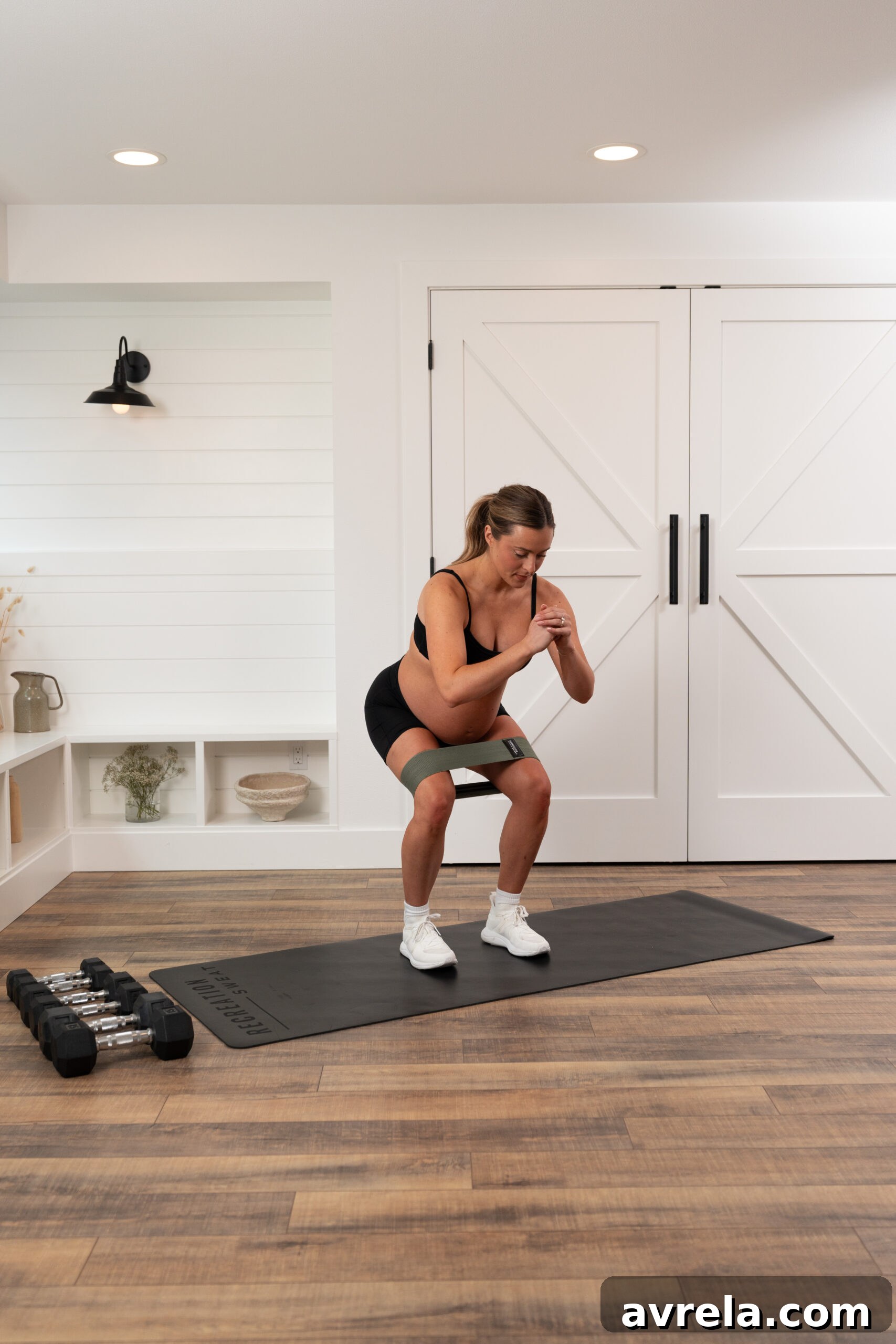
Unlock the full potential of your glutes with a surprisingly simple yet incredibly powerful tool: resistance bands. Whether you’re aiming to build strength, enhance muscle activation, or simply squeeze in an effective workout from the comfort of your home or on the go, these compact bands are a game-changer. Our experience, honed during times when gym access was a luxury, taught us that resistance bands are an indispensable hack for achieving real results. They turn even the most basic bodyweight movements into dynamic, muscle-sculpting exercises.
For unparalleled comfort and performance, consider opting for high-quality fabric resistance bands. Many users, including myself, find that robust fabric bands, such as the Recreation Sweat thick fabric bands, offer superior grip and stability. Unlike traditional latex bands that can roll or snap uncomfortably, fabric bands stay securely in place, allowing you to focus entirely on your form and muscle engagement without distraction. This comfort factor is crucial for consistent and enjoyable workouts.
The Unrivaled Effectiveness of Resistance Bands for Glute Training
Resistance bands aren’t just a convenient accessory; they are profoundly effective for targeting and strengthening the glute muscles. Their primary advantage lies in their ability to provide continuous tension throughout an exercise’s entire range of motion. This constant resistance forces your glutes to work harder, activating deeper muscle fibers more efficiently than bodyweight exercises alone. The result is superior muscle recruitment, leading to better strength gains, enhanced muscle definition, and improved functional fitness.
Beyond their unique tension delivery, resistance bands offer a host of other benefits that make them ideal for glute workouts:
- Lightweight and Portable: Imagine carrying an entire gym in your bag! Resistance bands are incredibly lightweight and compact, making them the ultimate travel companion. Whether you’re on vacation, need a quick workout at the office, or have limited space at home, these bands ensure you never miss a glute day. Their portability removes any excuse for not staying consistent with your fitness routine.
- Easy to Scale and Versatile: Resistance bands come in various strengths, from light to extra-heavy, allowing for seamless scalability. This means beginners can start with lighter bands to master form, while advanced users can layer bands or choose heavier options for progressive overload. This versatility supports continuous improvement, helping you to consistently challenge your glutes as they grow stronger without needing a full set of dumbbells.
- Excellent for Injury Prevention and Mobility: Strong glutes are foundational for overall body stability and preventing injuries, particularly in the knees, hips, and lower back. Resistance band exercises often engage smaller, stabilizing glute muscles (like the glute medius and minimus) that are crucial for hip stability and healthy movement patterns. Incorporating bands can improve joint mobility, correct muscular imbalances, and reduce the risk of common exercise-related injuries.
- Low Impact, High Reward: Many resistance band exercises are low-impact, making them gentle on your joints while still providing an intense muscle workout. This makes them suitable for individuals recovering from injuries, those new to exercise, or anyone looking for an effective workout without the jarring impact of heavy weights.
- Enhanced Mind-Muscle Connection: The constant tension provided by resistance bands helps to heighten your awareness of the muscles being worked. This improved mind-muscle connection is vital for effective glute training, ensuring that you’re actively engaging your glutes throughout each movement, rather than relying on momentum or compensatory muscles.
Mastering the 5 Best Glute Resistance Band Exercises
Ready to sculpt stronger, more defined glutes? Let’s dive into five highly effective, glute-focused movements that you can perform with just a single resistance band. These exercises are designed to target your glutes from multiple angles, ensuring comprehensive development.
1. Banded Squats
The banded squat is a fundamental lower-body exercise that becomes even more effective with the added resistance. By placing a band above your knees, you’re forced to actively press your knees outward, which dramatically increases the activation of your glute medius – a key muscle for hip stability and roundness. This subtle but powerful adjustment helps reinforce proper squat form, preventing knee valgus (knees caving inward) and maximizing glute engagement.
Muscles Worked: Primarily targets the Gluteus Maximus and Gluteus Medius, with significant involvement from the quadriceps and hamstrings.
How To:
- Begin by placing a resistance band just above your knees, ensuring it sits comfortably and securely without pinching.
- Stand with your feet positioned hip-width apart, toes pointing slightly outward (about 10-15 degrees). Maintain an upright posture with your shoulders back and chest lifted.
- Initiate the squat by pushing your hips back as if sitting into a chair. As you descend, actively press your knees outward against the band, ensuring they track in line with your toes. Aim for a depth where your hips are parallel to or slightly below your knees.
- Drive through your heels and squeeze your glutes to powerfully stand back up to the starting position. Maintain tension on the band throughout the entire movement.
Tip for Success: Keep your core engaged throughout the exercise to support your spine and prevent your lower back from arching. Focus on a controlled descent and an explosive, glute-driven ascent. Perform 3 sets of 10-15 repetitions.
2. Banded Kickbacks
Banded kickbacks are exceptional for isolating and directly targeting the gluteus maximus, which is the largest muscle in your glutes responsible for their shape and power. This exercise helps improve glute activation and can be a fantastic warm-up or a standalone movement to build strength and endurance in your posterior chain. By using a band, you add resistance at the peak contraction, forcing your glutes to work harder with each repetition.
Muscles Worked: Primarily the Gluteus Maximus, with secondary activation of the hamstrings and core stabilizers.
How To:
- Loop a resistance band around your ankles. If using a longer loop band, you might need to double it or opt for a smaller loop.
- Stand tall with a slight bend in your knees and a soft hinge forward at your hips (about 15-20 degrees) to better engage your glutes. You can hold onto a wall or chair for balance if needed.
- Keeping your core tight and your back straight (avoiding any arching), slowly kick one leg straight back behind you, squeezing your glute at the top of the movement. Imagine pressing your heel toward the ceiling.
- Control the movement as you slowly return your leg to the starting position, maintaining tension on the band. Avoid letting your foot fully touch the ground between reps if possible to keep continuous tension.
- Complete all repetitions on one side before switching to the other leg.
Tip for Success: Focus on slow, controlled movements. Avoid using momentum to swing your leg. The slower you go, especially on the eccentric (lowering) phase, the greater the muscle activation. Aim for 3 sets of 12-18 repetitions per leg.
3. All 4s Banded Hip Openers (Clamshell on All Fours)
This exercise is a powerhouse for targeting the gluteus medius and minimus, muscles critical for hip abduction, stability, and creating a rounded, strong glute appearance. By performing it on all fours with a resistance band, you enhance the challenge to these smaller but vital glute muscles, improving hip strength and reducing the risk of knee issues. It’s an excellent movement for warming up or integrating into a comprehensive glute workout.
Muscles Worked: Primarily the Gluteus Medius and Gluteus Minimus, with core muscles acting as stabilizers.
How To:
- Place a resistance band just above your knees.
- Start on all fours with your hands directly under your shoulders and your knees directly under your hips. Ensure your back is flat and your core is engaged.
- Keeping your knee bent at a 90-degree angle, slowly lift one leg out to the side, pressing against the band. Focus on opening your hip and squeezing your side glute at the top of the movement. Avoid shifting your weight to the opposite side or twisting your torso.
- Lower your leg back down with control, resisting the pull of the band, until your knee nearly touches the ground.
- Complete all repetitions on one side before switching to the other leg.
Tip for Success: Maintain a stable torso throughout the movement. Imagine a glass of water on your lower back – don’t let it spill! This ensures that your glutes are doing the work, not your core or lower back. Perform 3 sets of 15-20 repetitions per leg.
4. Resistance Band Hamstring Curls
While often associated with hamstrings, this exercise also strongly engages the glutes, particularly the lower glute fibers, through hip extension and knee flexion. Using a resistance band for hamstring curls provides constant tension, enhancing muscle activation and making it a fantastic low-impact alternative to machine-based hamstring curls. It’s excellent for building strength and endurance in the posterior chain, contributing to powerful glutes and healthy knees.
Muscles Worked: Primarily the hamstrings (biceps femoris, semitendinosus, semimembranosus) and the Gluteus Maximus.
How To:
- Lie face down on a mat or comfortable surface. Loop a resistance band around your ankles. For added stability, you can hook the band around a sturdy anchor point (like a table leg) or have a partner hold one end.
- Extend your legs straight out, keeping them hip-width apart.
- Keeping your hips pressed into the ground and core engaged, bend one knee, pulling your heel toward your glutes against the resistance of the band. Focus on squeezing your hamstring and glute at the top of the movement.
- Slowly and with control, lower your leg back to the starting position, resisting the pull of the band.
- Complete all repetitions on one side before switching to the other leg.
Tip for Success: To maximize glute activation, actively squeeze your glute at the peak of the curl. Avoid lifting your hips off the ground, as this can place strain on your lower back. Perform 3 sets of 12-18 repetitions per leg.
5. Banded Glute Bridge Openers
The banded glute bridge opener is a dynamic exercise that combines the powerful hip extension of a glute bridge with the hip abduction of a clamshell, creating a highly effective movement for comprehensive glute development. This exercise targets the gluteus maximus for hip extension and the gluteus medius/minimus for hip abduction, simultaneously improving glute strength, hip mobility, and core stability. It’s fantastic for activating your glutes before a workout or as a standalone finisher.
Muscles Worked: Comprehensive glute activation (Gluteus Maximus, Medius, Minimus), hamstrings, and core stabilizers.
How To:
- Lie on your back on a mat with your knees bent and feet flat on the floor, hip-width apart. Place a resistance band just above your knees.
- Engage your core and press your lower back into the floor. Then, drive through your heels and squeeze your glutes to lift your hips off the ground, forming a straight line from your shoulders to your knees.
- At the peak of the glute bridge, while keeping your hips elevated, actively press your knees outward against the band, widening them slightly. Hold this abduction for a moment, feeling the burn in your outer glutes.
- Slowly bring your knees back to the starting hip-width position, maintaining tension on the band.
- Finally, lower your hips back down to the ground with control, completing one full repetition.
Tip for Success: Focus on making each part of the movement slow and intentional. Avoid rushing the bridge or the knee opener. The goal is maximum muscle engagement, not speed. Ensure your core remains tight to prevent your lower back from arching excessively. Aim for 3 sets of 10-15 repetitions.
Maximizing Your Glute Gains with Resistance Bands
To truly get the most out of your resistance band glute workouts, remember these key principles:
- Consistency is Key: Incorporate these exercises into your routine 2-3 times a week, allowing for rest days in between.
- Progressive Overload: As you get stronger, don’t hesitate to move to a heavier band or increase your repetitions and sets. This constant challenge is essential for muscle growth.
- Mind-Muscle Connection: Actively think about squeezing your glutes with every rep. This focus enhances muscle fiber recruitment.
- Proper Form Over Weight (or Resistance): Always prioritize correct form. A lighter band with perfect execution is more effective than a heavy band with sloppy movements.
- Warm-Up and Cool-Down: Start with dynamic stretches and lighter band work, and finish with static stretches to improve flexibility and aid recovery.
Resistance bands are more than just a fitness fad; they are a legitimate, effective tool for building powerful, shapely glutes. Their accessibility, versatility, and ability to provide continuous tension make them an invaluable addition to any fitness regimen. By integrating these five exercises and applying the tips above, you’ll be well on your way to achieving your glute-strengthening goals. Embrace the band, and feel the burn!
Looking for more fitness content?
3 Lunge Variations To Spice Up Your Lower Body Workout
5 Ways To Build Muscle Mass in 2025
Upper Body Strength Workout