
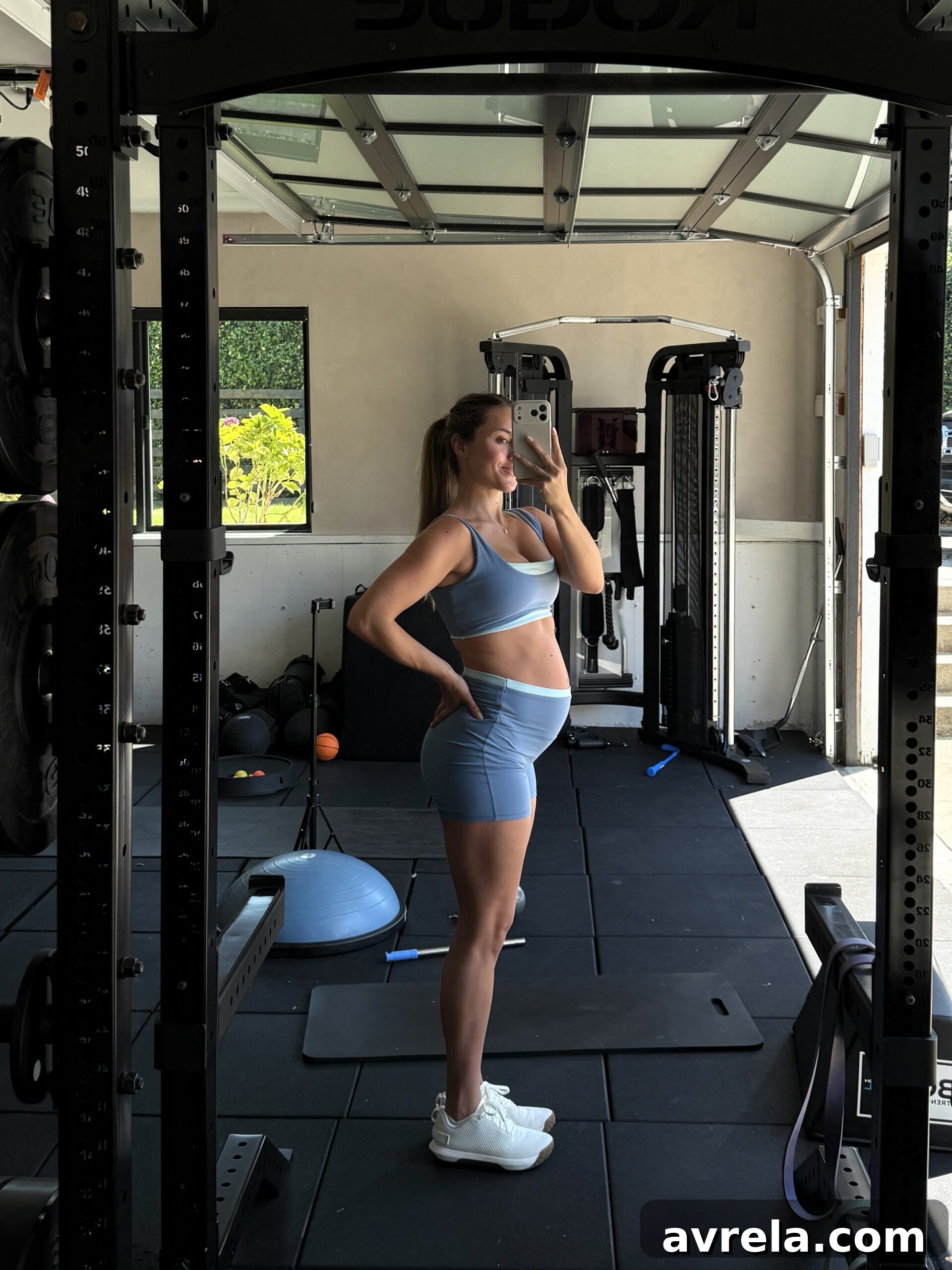
Exercise during early pregnancy doesn’t feel like working out at any other time in life — you can’t really understand it until you’re living it. And once you’re in it, figuring things out can feel overwhelming: the first trimester is a rollercoaster. This is my second time training through pregnancy, and I’m grateful to my past self for creating 26 weeks of pregnancy-safe workouts. I’ve been using them throughout this pregnancy and loving the structure and options they provide.
I want to share how I adapt my workouts, both from the perspective of a trainer and as someone who’s been through pregnancy personally. My goal is to offer practical, realistic guidance so other people can feel more confident making adjustments when they need to.
Why Early Pregnancy Throws Everything Off
Before I explain what I changed, it helps to understand why early pregnancy affects workouts so much. Hormonal shifts begin early and can loosen ligaments and change joint stability. At the same time, fatigue and nausea often come on fast and change how your body tolerates activity. This isn’t a matter of willpower — it’s biology. Your body is prioritizing building a pregnancy, and that can mean energy and comfort for exercise fluctuate day to day.
Many women I work with don’t fully regain their energy until around week 13, though everyone’s timeline is different. If a workout that used to feel manageable now feels like a huge effort, that response is normal and expected in early pregnancy.
How I Actually Approach My Workouts
My biggest change was scheduling: I learned to exercise earlier in the day, typically before noon. My energy and motivation drop significantly by the afternoon, so doing key sessions in the morning made workouts consistent and less stressful.
More broadly, my guiding principle became consistency over intensity. Some weeks I could complete a full strength session; other weeks I focused on breath work, mobility, or short walks. Both approaches supported my body and helped me stay active without pushing past what felt safe or sustainable.
The Specific Modifications I Made
Here are the practical changes I used during the early weeks of pregnancy:
- Scale back intensity. I prioritized slower progressions, controlled tempo, and impeccable form rather than increasing weights or volume. Focusing on technique felt productive and protecting.
- Prioritize stretching and mobility. Daily mobility work and gentle stretching made a big difference for comfort and recovery. I also took frequent neighborhood walks and used incline treadmill walks when I wanted low-impact cardio.
- Change how I train my core and pelvic floor. I avoided traditional crunches but didn’t stop training the core. Instead I used bird dogs, pelvic tilts, cat-cows, and other movements that support the abdominal wall and pelvic floor without undue strain.
- Swap, don’t skip. When an exercise felt uncomfortable, I substituted a safer variation. Small swaps kept workouts effective without depleting my energy or stressing my body.
- Listen to warning signs and stop when needed. If I felt dizziness, shortness of breath, or unusual discomfort, I paused and reassessed. Learning to stop and modify early is a habit I recommend for any pregnant person, regardless of fitness background.
Why I Built the GOOD // SWEAT Pregnancy Guide
I’m thankful to have a clear guide to follow during this pregnancy. The program includes 26 weeks of workouts made for the second and third trimesters, but the principles are useful in the first trimester too: structured plans with room to adapt based on daily energy and comfort.
The guide offers exercise modifications for each stage, pelvic floor education and guidance developed with input from a pelvic floor physical therapist, core-safe progressions aimed at reducing the risk of diastasis recti, and prenatal nutrition insight from my perspective as a dietitian. It’s the kind of all-in-one resource I wished I’d had spelled out in one place the first time around.
The Biggest Lesson From My Early Pregnancy Workouts
The most important takeaway: changing your workouts in early pregnancy is not a failure — it’s a thoughtful, supportive choice. Modifying intensity, timing, and exercise selection lets you keep moving in a way that respects how your body is changing.
Some days will allow a full strength session; other days will call for a walk, breath work, or gentle mobility. If you want a plan that removes the guesswork, a structured pregnancy program can help you adapt safely and confidently as your body changes.
To everyone navigating pregnancy right now: give yourself credit. You’re doing better than you probably realize, and adjusting your workouts is one of the kindest things you can do for yourself and your baby.