
One of the most common questions I receive—and a frequently asked topic in my upcoming GOOD // SWEAT Pregnancy Guide—is how to identify diastasis recti, how to reduce its risk, and how to support recovery. Pregnancy brings many physical and emotional changes, and it can feel overwhelming. My aim with the Pregnancy Guide is to remove confusion and fear around caring for your body so you feel confident exercising and preparing for birth. Below is a clear, practical overview of what you need to know about diastasis recti.
Understanding Abdominal Separation
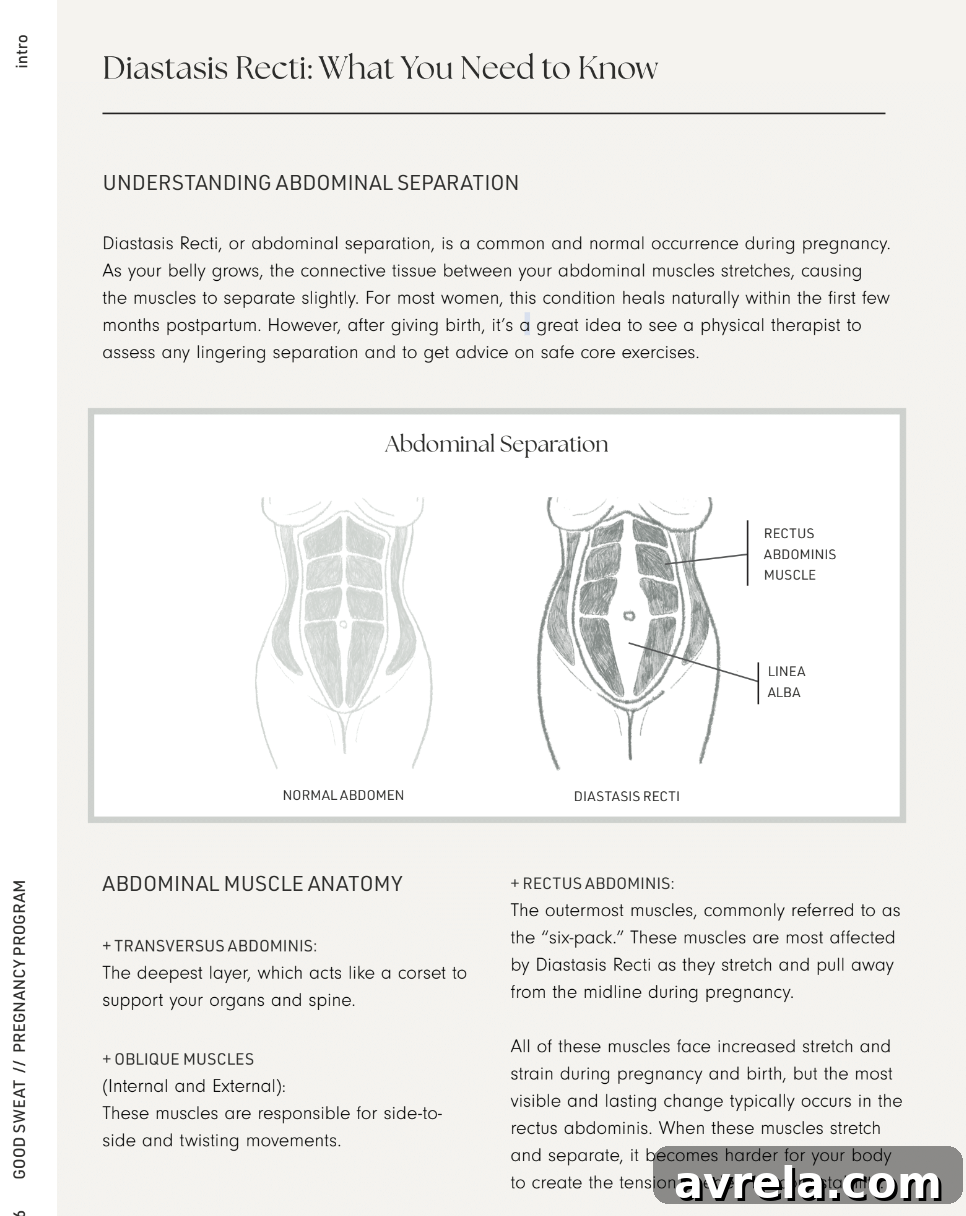
Diastasis recti, or abdominal separation, is a common and normal change during pregnancy. As your abdomen expands, the connective tissue (linea alba) between the two sides of the rectus abdominis stretches, which can cause a visible and palpable gap. For most people, this separation decreases naturally in the first months after birth, but some may benefit from assessment and guidance from a physical therapist to determine the degree of separation and to learn safe, effective core rehabilitation exercises.
Abdominal Muscle Anatomy
Your abdominal wall is composed of three main layers:
- Transversus abdominis: The deepest layer that acts like an internal corset, supporting the organs and spine.
- Oblique muscles (internal and external): These muscles enable rotation and side-to-side movement and help with trunk stability.
- Rectus abdominis: The outermost “six-pack” muscles that are most visibly affected by diastasis recti as they separate from the midline during pregnancy.
All layers are strained as the pelvis and abdomen adapt to pregnancy, but the most noticeable change tends to be in the rectus abdominis. When these muscles stretch and drift apart, the abdominal wall cannot produce the same level of tension, which undermines core stability.
The Importance of Core Stability
The main issue with diastasis recti is the loss of the abdominal wall’s ability to generate tension. Once the connective tissues are stretched beyond their optimal length, the core cannot function as effectively. Reduced core tension can contribute to:
- Back pain: A weakened core forces the back muscles to compensate, increasing fatigue and discomfort.
- Pelvic girdle pain: Instability in the trunk can affect pelvic alignment and mechanics, leading to pain around the pelvis and hips.
- Pelvic floor dysfunction: When the core cannot support intra-abdominal pressure properly, the pelvic floor may experience added strain, which can contribute to urinary leakage or other symptoms.
How To Prevent Diastasis Recti?
Diastasis recti is extremely common during pregnancy; some studies report near-universal occurrence in the late stages of pregnancy. Risk factors include multiple pregnancies, higher body mass index, and conditions like diabetes, but for most people separation improves significantly by eight weeks postpartum and continues to improve up to 12 months after birth. While you cannot guarantee prevention, you can take steps to support optimal recovery:
- Learn to engage your deep core (transversus abdominis) safely and consistently.
- Use progressive, controlled loading of the core to maintain strength without excessive intra-abdominal pressure.
- Maintain healthy trunk mobility to allow even tissue stretch and reduce focal strain.
- Monitor posture and movement patterns that influence how pressure is distributed across the abdomen.
What to Avoid
A common sign of diastasis recti is “doming” or “coning” of the midline when you try to engage your core; this indicates the abdominal wall is struggling to manage intra-abdominal pressure. To protect the abdominal wall during pregnancy and while recovering postpartum, avoid exercises that markedly increase intra-abdominal pressure or force the rectus abdominis to bulge outward.
Crunches, traditional sit-ups, and heavy oblique exercises are not recommended during pregnancy or early postpartum recovery because they can exacerbate separation. Instead, prioritize gentle, functional core exercises that support the abdominal wall without provoking doming or coning. Focus on breath-coordinated activation of the deep core, pelvic floor awareness, and progressive strengthening that respects how your body feels.
Throughout my guide I present workouts designed with pregnancy and postpartum safety in mind. Every pregnancy is different—listen to your body and modify as needed. For example, many people choose to stop exercises that place them flat on their back or in full plank positions around mid-pregnancy if they feel increased pressure through the core. Modifying movements is not only acceptable but recommended if something doesn’t feel right.
Being mindful of your core, maintaining good posture, and avoiding risky exercises supports the integrity of the abdominal wall and encourages better healing after birth. Incorporating these principles during pregnancy helps preserve abdominal strength and function, which contributes to a smoother postpartum recovery.
My GOOD // SWEAT Pregnancy Guide expands on these topics with practical exercise variations and programming tailored to each trimester. It will offer clear progressions and modifications so you can stay active and supported throughout pregnancy and beyond.