
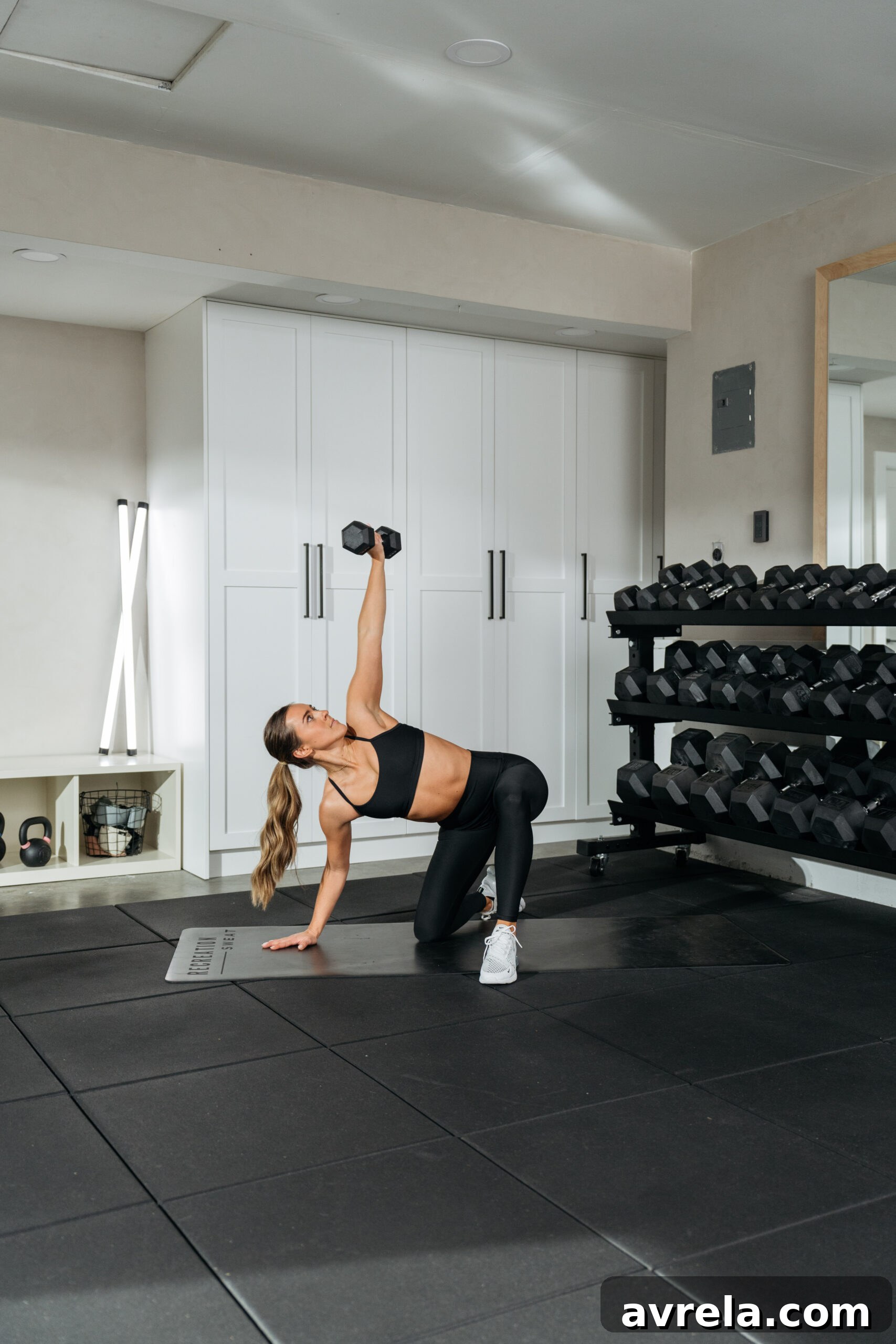
Building a robust and resilient core extends far beyond endless crunches or traditional sit-ups. In fact, true core strength and definition often come from a more strategic approach: incorporating weighted, low-impact movements that challenge your core in new and dynamic ways. This method emphasizes quality over quantity, allowing for deeper muscle engagement and superior functional benefits. Rather than exhausting your abdominal muscles with repetitive, unweighted exercises, a weighted approach encourages progressive overload, leading to greater strength, stability, and even improved posture and reduced risk of injury.
I’ve personally found immense progress by shifting focus to fewer, more effective core exercises performed with added resistance. This not only makes workouts more engaging but also targets the deep core muscles crucial for everyday movement and athletic performance. Below, I’ve curated a selection of highly effective, low-impact weighted core movements that I highly recommend. While each exercise offers unique benefits, I must admit a particular fondness for the Cable Core Rotations – they are an absolute game-changer for rotational power and anti-rotation strength, truly a must-try for anyone serious about core development.
Around The World To Front Press
The Around The World To Front Press is a fantastic compound exercise that effectively targets your core stabilizers, shoulders, and upper back, while also promoting full-body coordination. It’s a dynamic movement that helps build strength and endurance, making it a staple for functional fitness. To execute this exercise, begin by standing with your feet hip-width apart and a slight bend in your knees, maintaining an athletic stance. Hold a single dumbbell or weight plate with both hands at your chest, ensuring a firm grip.
Initiate the “Around The World” motion by engaging your core to stabilize your torso. Lift the weight up, over, and around your head in a controlled arc, emphasizing a smooth, fluid movement driven primarily by your arms and shoulders, while your core works to prevent any unwanted sway or arching in your lower back. Once the weight returns to chest level, immediately transition into the “Front Press.” Extend your arms straight out in front of you, pressing the weight forward with control, maintaining a strong, braced core throughout the extension. Avoid leaning back or using momentum; the power should come from your shoulders and chest, supported by a rock-solid core.
Slowly return the weight to your chest. For the next repetition, alternate the direction of the “Around The World” movement to ensure balanced muscle development. Focus on controlled breathing—exhale as you press and inhale as you return the weight. Aim for 3 sets of 8-12 repetitions, taking care to select a weight that allows you to maintain impeccable form throughout each rep. This exercise is excellent for improving overhead stability, core endurance, and overall coordination, making it a valuable addition to any strength training routine.
Cable Core Rotations
Cable Core Rotations, often referred to as Cable Trunk Rotations, are unparalleled for developing explosive rotational power and superior anti-rotational core strength. This exercise directly translates to improved performance in sports like golf, tennis, baseball, and any activity requiring a powerful twisting motion. It deeply engages the obliques and transverse abdominis, muscles critical for stabilizing your spine and generating torque. To set up, position yourself sideways to a cable machine, with the cable attachment set at chest height. Select a moderate weight; the focus here is on control and form, not lifting heavy.
Grasp the cable attachment with both hands, extending your arms straight out in front of you. Take a sturdy stance with your feet shoulder-width apart, slightly bent knees, and an athletic posture. Your core should be braced and engaged even before you begin the movement. Start the rotation by pulling the cable across your body, twisting your torso away from the machine. The movement should be initiated from your core, specifically your obliques, not just your arms. As you twist, allow your back foot to pivot naturally, facilitating a full range of motion through your hips and spine. Your arms should remain relatively straight throughout the rotation, acting as levers rather than pulling the weight.
Once you’ve reached the peak of your rotation, pause briefly, squeezing your obliques. Then, slowly and with controlled tension, unwind back to the starting position, resisting the pull of the cable. This eccentric phase is crucial for building anti-rotational strength and control. Ensure your movements are fluid and deliberate, avoiding any jerky motions that rely on momentum. Maintain a consistent core brace throughout the entire exercise. Perform 3 sets of 10-15 repetitions on each side. The key to maximizing the effectiveness of Cable Core Rotations is strict form and mindful engagement of your core muscles, making it an indispensable exercise for a truly functional and powerful core.
Kneeling Shoulder Press To Windmill
The Kneeling Shoulder Press to Windmill is a multi-joint, unilateral exercise that masterfully combines overhead pressing strength with dynamic core stability and hip mobility. This movement challenges your body to stabilize against rotational forces while simultaneously performing a shoulder press and a lateral flexion, making it exceptionally effective for improving spinal health, shoulder integrity, and overall functional strength. It’s particularly beneficial for enhancing core control and balance, as it requires intense focus to maintain form throughout the intricate movement pattern.
To begin, assume a staggered kneeling stance. For instance, if you are holding the dumbbell in your right hand, your left knee should be on the ground, positioned directly under your left hip, while your right foot is planted firmly on the ground, roughly in line with your left knee. Hold a dumbbell in your right hand at shoulder height, palm facing forward, with your elbow tucked in. Ensure your core is already braced, and your hips are squared forward. Initiate the movement by simultaneously pressing the dumbbell overhead with your right arm and reaching your left hand towards the ground on your left side. The goal is to hinge at your hips, allowing for a controlled side bend, rather than simply bending at the waist.
As your left hand makes contact with the ground or approaches it, your right arm should be fully extended overhead, creating a straight line from your left hand on the floor, through your shoulders, to the dumbbell overhead. Keep your gaze focused on the dumbbell to help maintain balance and spinal alignment. The core plays a crucial role here, preventing excessive lateral flexion and stabilizing your trunk. To return to the starting position, powerfully engage your obliques and use your core to draw your torso back upright, simultaneously bringing the dumbbell back down to shoulder height. Perform 3 sets of 8-12 repetitions on each side, focusing on slow, controlled movements and immaculate form. This complex exercise will significantly enhance your unilateral strength, shoulder stability, and deep core resilience.
Why Weighted Core Training Is Essential
Many individuals limit their core workouts to bodyweight exercises like crunches and planks, which are certainly beneficial for foundational strength. However, to truly progress and achieve a highly functional and robust core, incorporating resistance is paramount. Just like any other muscle group, your core muscles (rectus abdominis, obliques, transverse abdominis, and erector spinae) respond to progressive overload. Adding weight forces these muscles to work harder to stabilize your spine, resist external forces, and generate powerful movements. This increased demand leads to greater muscle hypertrophy, enhanced strength, and improved neurological efficiency, meaning your core becomes more responsive and effective in various situations.
Weighted core training moves beyond simply building a six-pack; it develops deep core stability, which is vital for preventing lower back pain, improving posture, and increasing overall athletic performance. A strong, resilient core acts as the central pillar for all bodily movements, transferring force between your upper and lower body. By challenging your core with weights, you prepare it for real-world demands, whether that’s lifting heavy objects, swinging a golf club, or simply maintaining balance during daily activities. It helps to bulletproof your body, making you less susceptible to injury and more capable in all physical endeavors.
Integrating Weighted Core Work into Your Routine
Incorporating weighted core exercises into your fitness regimen doesn’t mean you need to dedicate an entire workout session solely to abs. These powerful movements can be strategically placed within your existing routine to maximize their benefits. A good approach is to perform 2-3 weighted core exercises 2-3 times per week, allowing for adequate recovery. You can integrate them as part of your warm-up to activate core muscles, include them as main movements within your workout, or use them as a finisher to exhaust your core at the end of a session.
When starting with weighted core work, prioritize form over the amount of weight used. Begin with lighter weights to master the movement patterns and deeply connect with your core muscles. As your strength and control improve, gradually increase the resistance to ensure continued progression. Always remember to listen to your body; if you experience any pain, especially in your lower back, immediately stop the exercise and reassess your form. Proper warm-up before any intense core work, including dynamic stretches and light cardio, is also crucial to prepare your muscles and reduce injury risk. Consistency and proper technique are the cornerstones of effective weighted core training.
Safety and Form First: Mastering Your Weighted Core
When engaging in weighted core exercises, the emphasis should always be on safety and maintaining impeccable form. The goal is to strengthen your core, not to strain your back or compromise your spinal health. Here are essential considerations to ensure effective and safe training: always start with a lighter weight than you think you need. This allows you to focus purely on the mechanics of the movement, understand the muscle engagement, and perfect your technique. Once your form is flawless, then, and only then, consider gradually increasing the load.
A crucial element of weighted core work is the “mind-muscle connection.” Actively think about the muscles you are targeting – bracing your core, engaging your obliques, or stabilizing your spine. This conscious effort amplifies the effectiveness of each repetition. Utilizing a mirror or, even better, seeking guidance from a certified personal trainer, can provide invaluable real-time feedback on your form. They can spot subtle compensations or misalignments that you might not notice. Furthermore, proper breathing techniques, particularly bracing your core (imagine preparing for a punch to the stomach), are fundamental. This intra-abdominal pressure helps stabilize your spine and protects your lower back during weighted movements. Never hold your breath for extended periods; focus on controlled exhales during the concentric (exertion) phase and inhales during the eccentric (release) phase.
Beyond the Gym: Functional Core Strength
The true power of weighted core training lies not just in how your body looks, but in how it performs. The functional strength developed through exercises like the Cable Core Rotations and Kneeling Shoulder Press to Windmill extends far beyond the confines of the gym. A strong, stable core is the linchpin for almost every physical activity, both athletic and in daily life. From simply standing upright for extended periods to carrying groceries, picking up children, or twisting to reach something on a high shelf, your core is constantly at work.
For athletes, enhanced core strength translates directly to improved performance, increased power transfer, better balance, and greater injury resilience. A robust core allows for more efficient movement patterns, enabling stronger throws, more powerful swings, and quicker changes in direction. Even for non-athletes, the benefits are profound. A functionally strong core leads to better posture, reduced incidence of lower back pain, and an overall sense of physical confidence and capability. Investing time in weighted core exercises is an investment in your long-term health, mobility, and quality of life, empowering you to move through the world with greater ease and strength.
Looking for more core workouts?
These weighted core exercises are just a glimpse into the diverse world of effective core training. To continue building a strong, resilient, and functional core, explore additional resources designed to challenge and strengthen your entire abdominal region. Consistency is key, and varying your workouts will ensure continuous progress and engagement. Dive deeper into specialized routines to keep your core challenged and thriving.
Try this Banded Deep Core Workout
My go-to weighted core circuit
Free Cardio + Core Workout from GOOD // SWEAT Strength Level Up