
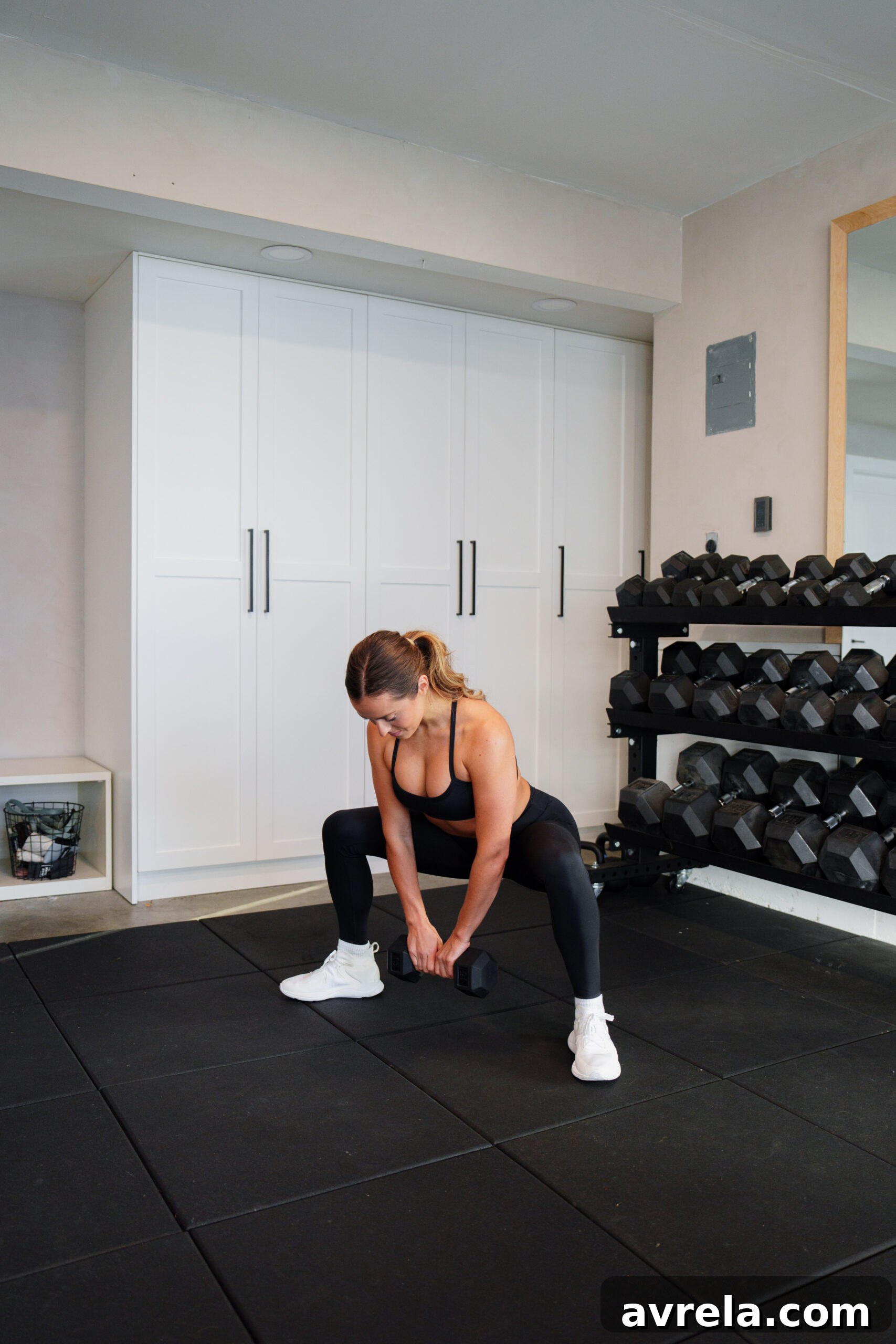
Unlock Powerful Glutes and Stronger Legs: The Ultimate Guide to Sumo Squats and Their Variations
If you’ve ever aimed for sculpted glutes, stronger inner thighs, and a more robust lower body, then the sumo squat is an exercise you simply cannot ignore. Renowned for its unique ability to target specific muscle groups with unparalleled intensity, the sumo squat is a staple in many effective fitness routines, including my own workout guides. Its wide stance allows for a significantly deeper range of motion compared to traditional squats, providing an emphasized engagement in your glutes and adductors – yes, round booties and powerful legs are definitely within reach!
But the sumo squat is more than just a glute builder; it’s a versatile powerhouse that can be adapted to various fitness levels and goals. From foundational movements to dynamic, heart-pumping variations, mastering the sumo squat opens up a world of possibilities for enhancing your lower body strength, endurance, and overall athletic performance. In this comprehensive guide, we’ll delve deep into the mechanics of the classic sumo squat, explore its myriad benefits, pinpoint common mistakes to avoid, and then ignite your workouts with three incredible variations designed to challenge and transform your physique.
Mastering the Classic Sumo Squat
The sumo squat, often seen as a powerful alternative to the conventional squat, truly lives up to its name with its wide, martial arts-like stance. This classic exercise is fundamental for anyone looking to build serious lower body strength, particularly in the glutes and inner thighs. Let’s break down the proper form to ensure you get the most out of every repetition and minimize the risk of injury.
Sumo Squats: Proper Form Breakdown
To execute a perfect sumo squat, begin by taking a significantly wider stance than you would for a traditional squat. Your feet should be pointed out slightly, typically at a 45-degree angle, allowing for natural knee tracking. If you’re using a weight, such as a dumbbell or kettlebell, hold it with both hands in front of your body, letting it hang naturally between your legs. Keep your chest up, shoulders back, and core engaged throughout the entire movement.
Initiate the squat by pushing your hips back and bending your knees, as if you’re sitting into a chair. Crucially, as you descend, ensure your knees track in line with your toes and do not fall inwards. This outward drive of the knees is paramount for activating the inner thigh muscles (adductors) and protecting your knee joints. Lower yourself until your thighs are parallel to the floor, or even deeper if your flexibility allows, maintaining a straight back and engaged core.
From the bottom position, powerfully drive back to standing, engaging primarily through your glutes, inner thighs, and deep core. Imagine pushing the floor away with your feet, actively squeezing your glutes at the top of the movement without hyperextending your lower back. This full-body engagement ensures maximum muscle activation and helps stabilize your spine. Repeat for your desired number of repetitions, focusing on control and mindful movement over speed.
Key Benefits of Incorporating Sumo Squats
- Unmatched Glute Activation: The wide stance and outward rotation of the hips in a sumo squat put your glutes, particularly the gluteus medius and maximus, in an optimal position for maximum contraction. This leads to more pronounced muscle development and a stronger, rounder posterior.
- Targeted Inner Thigh Development: Unlike traditional squats, the sumo squat significantly engages your adductor muscles (inner thighs). This helps in sculpting a more balanced and powerful lower body while improving hip stability and mobility.
- Increased Range of Motion: The wider stance naturally allows for a deeper squat, which translates to greater muscle stretch and contraction, promoting enhanced flexibility and strength through a larger range of motion.
- Improved Core Strength: Maintaining an upright posture and stable torso throughout the movement requires significant engagement from your core muscles, leading to improved abdominal strength and better overall stability.
- Versatility: Sumo squats can be performed with or without weights, making them suitable for various settings, from a fully equipped gym to a home workout with minimal equipment.
Common Sumo Squat Mistakes to Avoid
Even with a seemingly simple movement, certain form errors can compromise effectiveness and safety. Be mindful of these common mistakes:
- Knees Caving In: This is perhaps the most critical mistake. Always ensure your knees track over your toes. If they collapse inward, lighten the weight or reduce your depth until you can maintain proper alignment.
- Rounded Back: A rounded back places undue stress on your spine. Keep your chest lifted and your core tight to maintain a neutral spine throughout the movement.
- Insufficient Depth: To fully activate the target muscles, aim to get your thighs at least parallel to the floor. Shallow squats reduce the effectiveness of the exercise.
- Looking Down: Keep your gaze forward to help maintain a neutral spine and proper posture.
- Lack of Glute Engagement: Don’t just go through the motions. Consciously think about squeezing your glutes as you rise to maximize their activation.
Key Muscle Groups Activated by Sumo Squats
The sumo squat is a compound exercise, meaning it works multiple muscle groups simultaneously, making it highly efficient for lower body development. While its primary focus is on the glutes and inner thighs, it also recruits several other important muscles for stability and power.
- Glutes: The gluteus maximus, medius, and minimus are heavily engaged, particularly the maximus which is responsible for hip extension and external rotation, giving you that powerful, rounded look. The wide stance amplifies this activation.
- Adductors (Inner Thighs): The adductor magnus, longus, and brevis are intensely targeted as they work to pull your legs inward and stabilize your hips during the wide stance, contributing to strong, sculpted inner thighs.
- Quadriceps: The muscles at the front of your thighs (rectus femoris, vastus lateralis, vastus medialis, vastus intermedius) are active in extending your knees as you drive up from the squat.
- Hamstrings: Located at the back of your thighs, the hamstrings (biceps femoris, semitendinosus, semimembranosus) act as synergists, assisting with hip extension and knee flexion, especially in the deeper range of motion.
- Calves: Your gastrocnemius and soleus muscles engage to stabilize your lower legs and assist in the powerful upward drive, particularly as you push through your heels and the balls of your feet.
- Core: Your entire core musculature, including the rectus abdominis, obliques, and erector spinae, works diligently to stabilize your torso and maintain an upright posture throughout the movement, protecting your spine and improving functional strength.
This extensive muscle recruitment makes the sumo squat an incredibly effective exercise for building comprehensive lower body strength, improving athletic performance, and contributing to a well-balanced physique.
Next-Level Sumo Squat Variations to Ignite Your Workout
Once you’ve mastered the foundational sumo squat, it’s time to introduce exciting variations that can elevate your training, break through plateaus, and target your muscles in new, challenging ways. These modifications add intensity, cardiovascular benefits, and dynamic movement to keep your workouts engaging and effective.
1. Weighted Sumo Pulse Squats
The weighted sumo pulse squat takes the intensity of the traditional sumo squat and amplifies it by keeping your muscles under constant tension. This variation is a fantastic way to increase muscular endurance, generate an incredible burn, and deeply fatigue your glutes and inner thighs. It’s especially effective in time-based circuits or as a brutal burnout finisher at the end of a lower-body focused day.
To perform this exercise, start with the traditional weighted sumo squat stance – wide feet, toes pointed out, and holding a weight (dumbbell or kettlebell) with both hands. Lower yourself into your deepest sumo squat, ensuring proper form with knees tracking out and chest up. Once you reach the bottom, don’t return to standing. Instead, perform small, controlled “pulses” – moving just a few inches up and down from the bottom of the squat. The key here is to stay low, maintaining tension in your working muscles. Aim for 30 seconds to start, and don’t be surprised by the intense burn; that’s how you know it’s working! This sustained tension is excellent for hypertrophy (muscle growth) and building incredible endurance in your lower body.
2. Sumo Pulse Squat To Jump Squat
This dynamic variation is a powerful reminder of how incredibly effective bodyweight-only moves can be, especially when combined with explosive elements. Drop your dumbbells and prepare to get your heart rate up with this high-intensity exercise! It’s fantastic for building power, improving cardiovascular fitness, and sculpting your lower body without the need for external weights.
Begin in your standard sumo squat stance, but without holding any weight. Lower into a sumo squat and perform one or two small pulses at the bottom, just like the previous variation. From this pulsed position, instead of just standing up, explode upwards into a powerful jump squat. As you land softly back into your wide sumo stance, immediately transition into another pulse at the bottom. The sequence is: Sumo Squat -> Pulse(s) -> Explosive Jump Squat -> Land softly back into Sumo Squat. The fluid transition between the pulse and the jump is key to maintaining momentum and maximizing the cardiovascular challenge. Focus on a controlled landing to protect your joints and absorb the impact effectively. This move will not only torch calories but also build incredible explosive strength in your glutes, quads, and hamstrings.
3. Sumo Squat Heel Raise + Jump Squat
This advanced sumo squat variation is a true game-changer, adding an unexpected level of burn and dynamic movement that will leave your legs feeling incredibly strong, long, and lean. Once you master the rhythm and coordination, you’ll absolutely love the full-body engagement and unique challenge it offers, particularly for your calves and overall explosiveness.
Start in your wide sumo squat stance, chest up and core engaged. Lower into a deep sumo squat. At the bottom of the squat, rise up onto the balls of your feet, performing a heel raise while maintaining the low squat position. Hold this heel-raised squat for a brief moment, feeling the intense contraction in your calves and glutes. Then, lower your heels back down to the floor, and immediately explode upwards into a powerful jump squat, reaching for the sky. As with the previous variation, land softly back into your sumo squat stance to absorb the impact and prepare for the next repetition. The full sequence is: Sumo Squat -> Heel Raise (while staying low) -> Heels Down -> Jump Squat -> Land softly into Sumo Squat. This complex movement integrates strength, balance, and explosive power, targeting your calves more directly than standard squats while maintaining the intense glute and inner thigh work. It’s a fantastic exercise for improving lower body aesthetics and functional athleticism.
Integrating Sumo Squats into Your Fitness Routine
Sumo squats and their variations are incredibly versatile and can be seamlessly incorporated into various workout styles. For strength training, aim for 3-4 sets of 8-12 repetitions of weighted sumo squats, focusing on progressive overload. When integrating the pulse variations, consider performing them for time (e.g., 30-45 seconds per set) or as a high-rep finisher to completely exhaust your muscles.
The dynamic jump squat variations are perfect for adding a cardiovascular and plyometric component to your routine. Use them in circuit training, as part of a HIIT workout, or as a powerful warm-up for a leg day. Remember to always listen to your body, warm up thoroughly before your workout, and cool down with stretching afterwards. Consistency and proper form are the keys to unlocking the full potential of these powerful exercises.
Fueling Your Results: Nutrition for Muscle Growth and Recovery
To truly maximize the benefits of your sumo squat workouts and achieve those coveted strong, sculpted legs and glutes, your efforts in the gym must be supported by proper nutrition. Muscle growth and recovery rely heavily on a balanced diet rich in protein, complex carbohydrates, and healthy fats. Ensure you’re consuming enough lean protein (chicken, fish, legumes, tofu) to repair and build muscle tissue, ample complex carbs (oats, brown rice, sweet potatoes) for energy during your workouts, and healthy fats (avocado, nuts, seeds) for hormone production and overall health. Hydration is also paramount, so drink plenty of water throughout the day. Fueling your body correctly will not only enhance your performance but also accelerate your recovery, allowing you to hit your next workout stronger and more effectively.
The sumo squat is a truly exceptional exercise, offering a unique blend of glute, inner thigh, and overall lower body development. By understanding its foundational mechanics and embracing its dynamic variations, you can unlock incredible strength, endurance, and aesthetic improvements. Whether you’re aiming for a stronger posterior, more defined legs, or simply a more robust fitness level, these sumo squat exercises are powerful tools to help you achieve your goals. So, embrace the wide stance, feel the burn, and watch your lower body transform!
Looking For More FREE Workout Content?
Don’t stop here! Explore more resources to continue building a strong, healthy body. Check out these additional free workout guides to diversify your routine and keep your fitness journey exciting: