
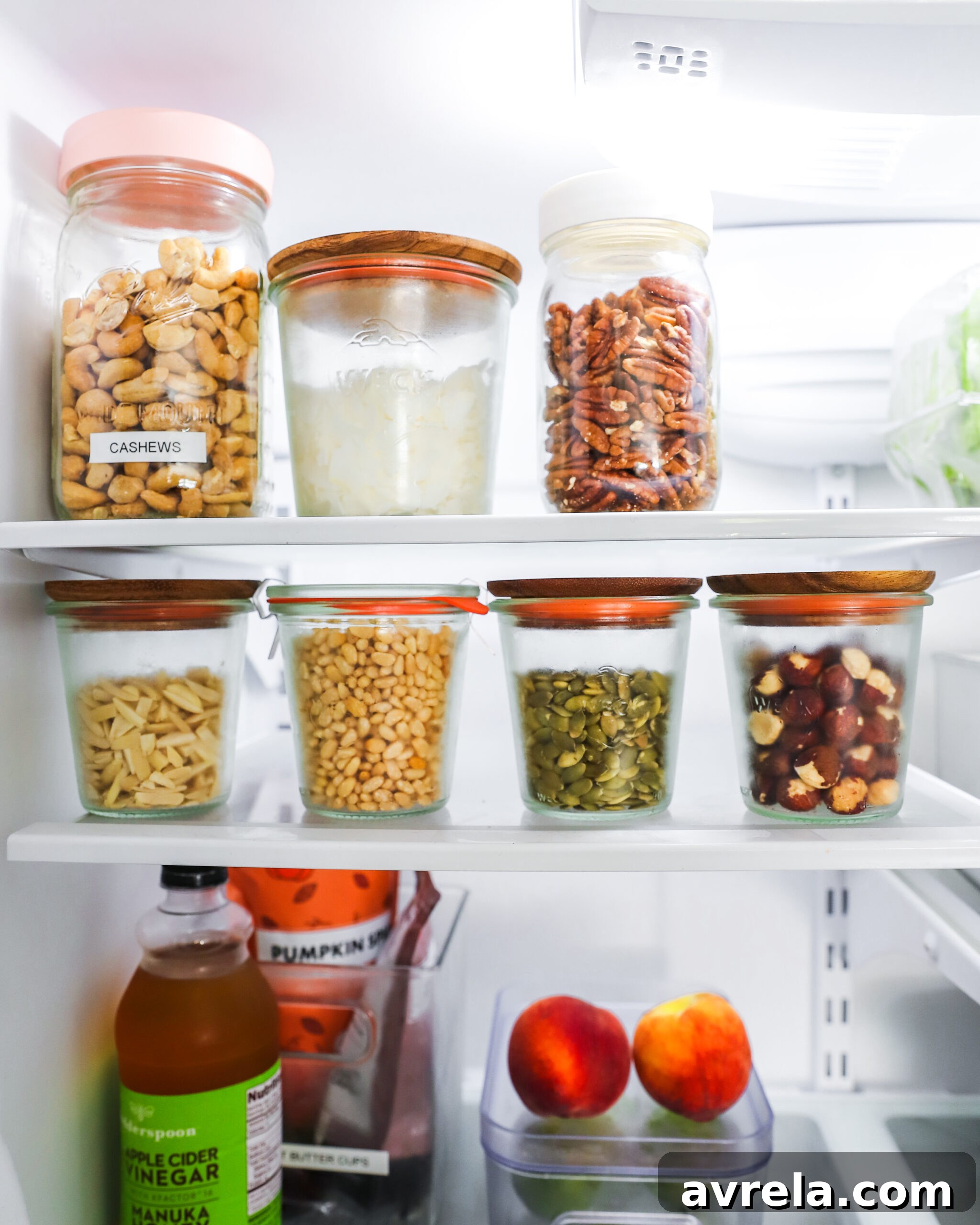
Since moving into our new home and sharing how I’ve been organizing, I’ve received a lot of questions about how I store certain foods—especially nuts and seeds. I’ve also embraced a far more organized approach to the kitchen, which helps when it comes to keeping ingredients fresh and easy to use.
Over the years I’ve learned how to make the most of a kitchen: choosing foods for optimal nutrition and storing everyday staples the right way. Nuts and seeds are full of healthy unsaturated fats, which makes them sensitive to heat, light, and oxygen. When exposed to these elements they can go rancid, developing a bitter flavor and becoming harder to digest.
Because their shelf life is limited, I usually buy nuts and seeds in small amounts or only when I know I’ll use them soon. Refrigerating or freezing them extends their freshness considerably. They’re versatile pantry staples—perfect for snacking, baking, cooking, garnishing, and adding to salads—so it’s worth storing them properly.
SOME TIPS TO KEEP YOUR NUTS SUPER FRESH
Keep in an airtight container: This is the most important step to prevent nuts and seeds from going bad. If you have half-closed bags of nuts gathering dust in your pantry, it’s better to discard them and start fresh. Transfer new purchases into sealable containers—Weck jars, mason jars, or glass food storage work well. A tight lid keeps air and odors out; nuts and seeds readily absorb surrounding smells, which can affect flavor. Always transfer products into airtight containers as soon as you bring them home.
Keep cool—store in the fridge or freezer: In a cool, dark pantry, most nuts and seeds will stay good for about three to four months. In the refrigerator they can last six months or more, and in the freezer even longer. Cold storage slows the oxidation that causes rancidity. If you use certain items quickly—like hemp seeds—I keep those on the counter in a cool, dark spot because I use them often. Hemp seeds are great in smoothies, on salads, and in baking; they’re high in omega-3s and offer around 10 g of plant protein per two to three tablespoons. I also store almond flour in the fridge to preserve freshness.
Buy raw and fresh when possible: Whole, raw nuts and seeds tend to have the longest shelf life. Do any roasting, chopping, or grinding at home—once nuts are chopped, roasted, or ground into flours they’ll go rancid faster. Buying raw items from stores that restock frequently helps ensure freshness; many people find good options at bulk sections or specialty markets. Be mindful that pre-roasted nuts are often processed with vegetable oils like canola, which some prefer to avoid. When you roast or prepare nuts at home, you control the process and ingredients.
Storing nuts and seeds properly makes them easier to incorporate into everyday meals and keeps their flavor and nutritional value intact. Small habits—airtight containers, cool storage, and buying whole raw products—add up to longer-lasting ingredients and less waste in your kitchen.