
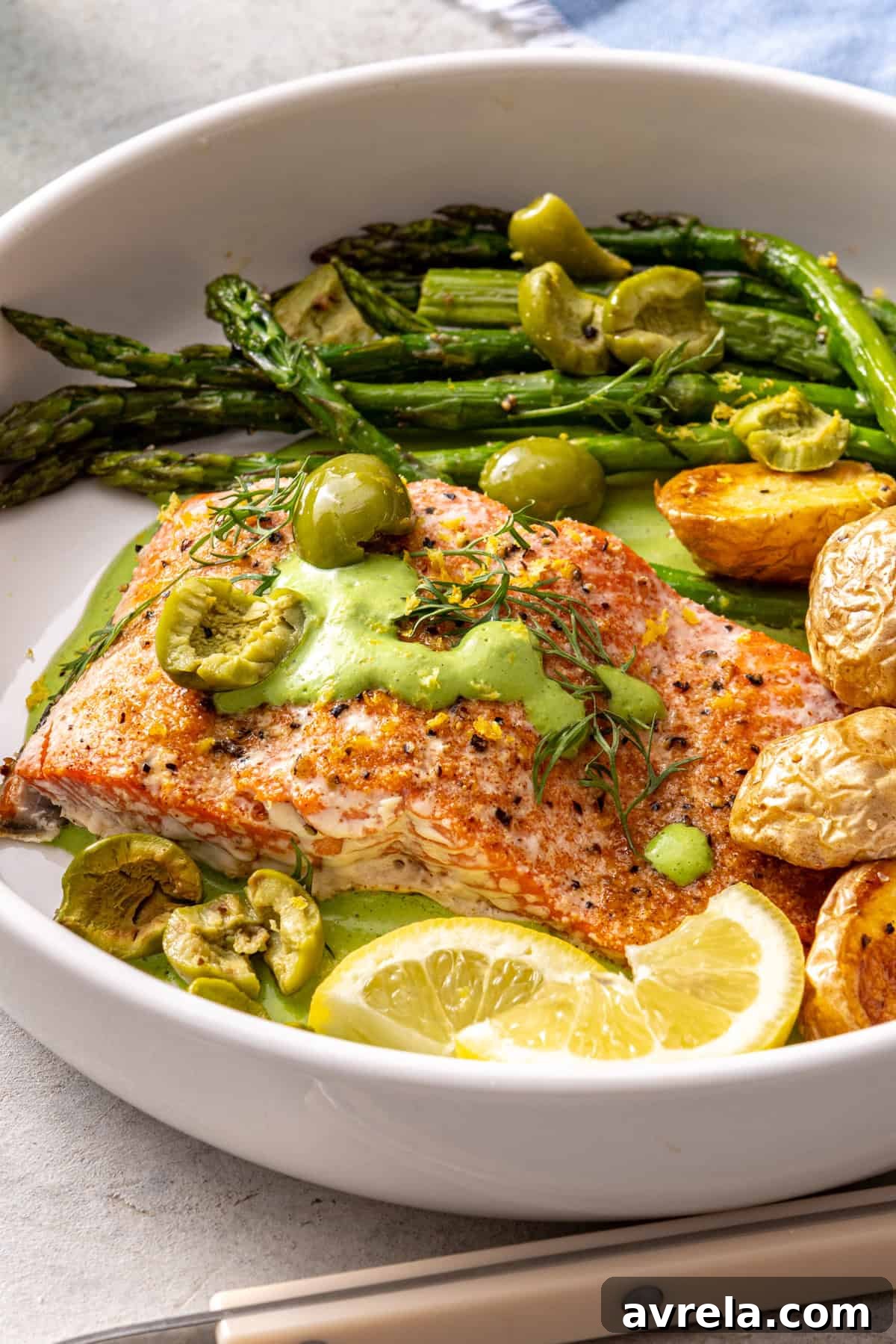
This sheet pan salmon and asparagus is a simple, weeknight-friendly dinner that delivers big flavor with minimal fuss. It’s high in protein, naturally gluten-free, and cooks on a single pan for easy cleanup—perfect for busy evenings.
Roasted wild salmon and tender asparagus pair beautifully with a bright lemon finish and a creamy herb yogurt sauce. The dish feels fresh and satisfying and comes together in about 30–35 minutes, making it ideal for summer meals or any night you want a fast, nutritious dinner.
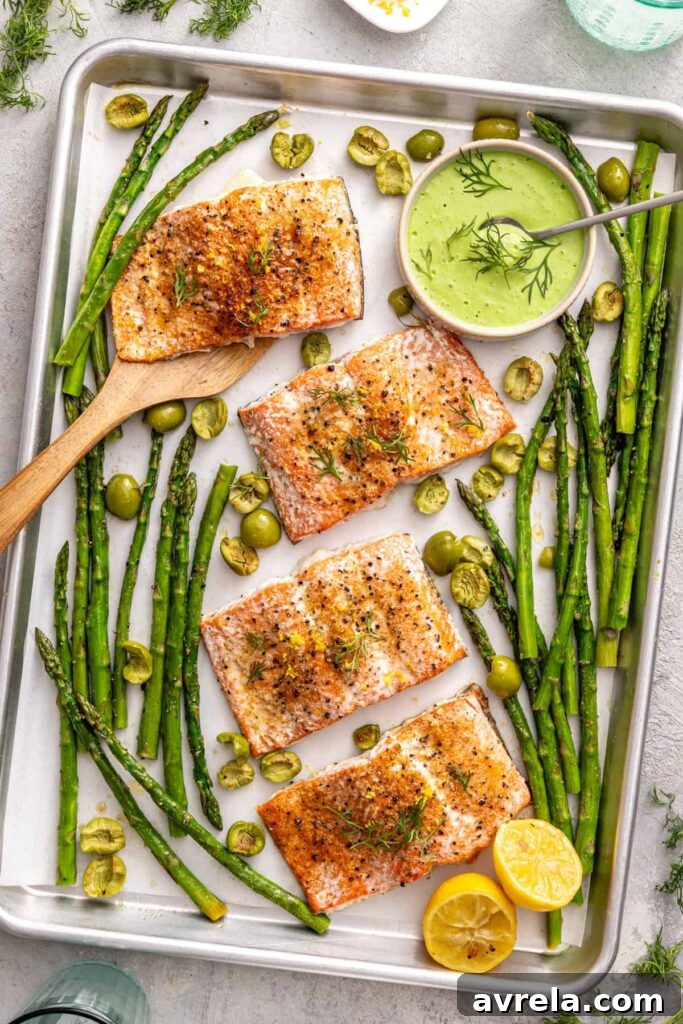
A Simple, High-Protein Sheet Pan Dinner on Repeat
Salmon is one of the best go-to proteins because it’s rich in omega-3 fatty acids and cooks quickly. Paired with asparagus—an easy, fast-roasting vegetable—you get a balanced plate with fiber, vitamins, and satisfying texture.
The olive brine and lemon add brightness and a subtle briny note, while the herb yogurt sauce brings creaminess without heaviness. The sauce, made with fresh herbs and Greek yogurt, provides a vibrant contrast that elevates the whole meal.
Why This Baked Salmon and Asparagus Works So Well
The recipe is flexible and adaptable. Serve it straight from the sheet pan, over roasted potatoes, jasmine rice, or turn it into meal-prep bowls. It’s equally at home as an easy weeknight dinner or a slightly elevated option for guests. The combination of flaky salmon, crisp-tender asparagus, olives, and zesty herb sauce creates a balanced, intentional meal that’s effortless to prepare.
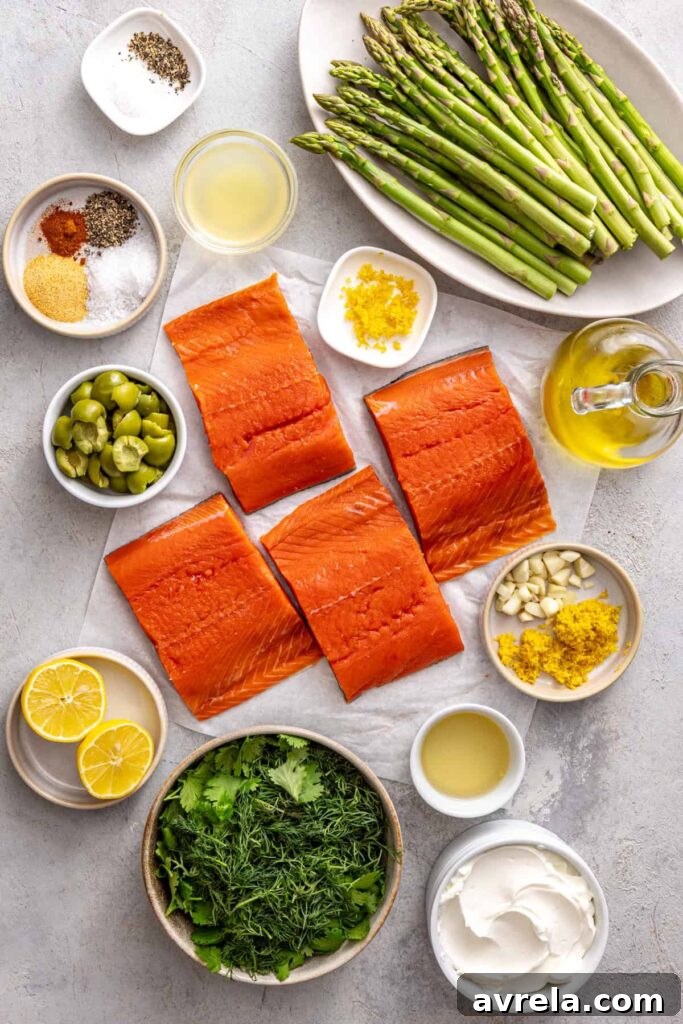
Ingredients You’ll Need:
For the spice blend:
- Kosher salt
- Garlic powder
- Freshly ground black pepper
- Paprika
For the salmon & asparagus:
- Wild salmon fillets (or your preferred salmon)
- Asparagus, trimmed
- Extra-virgin olive oil
- Lemon
- Castelvetrano or other olives
For the herb sauce:
- Loose fresh herbs (cilantro, dill, or parsley)
- Greek yogurt (lactose-free or regular)
- Garlic
- Lemon zest and juice
- Olive brine
- Extra-virgin olive oil
- Salt and pepper
Garnish & serving suggestions:
- Fresh dill or cilantro
- Lemon zest
- Roasted potatoes, jasmine rice, quinoa, or cauliflower rice (optional)
How To Make Baked Sheet Pan Salmon and Asparagus
This one-pan dinner is straightforward and fast. Follow these steps for reliable results:
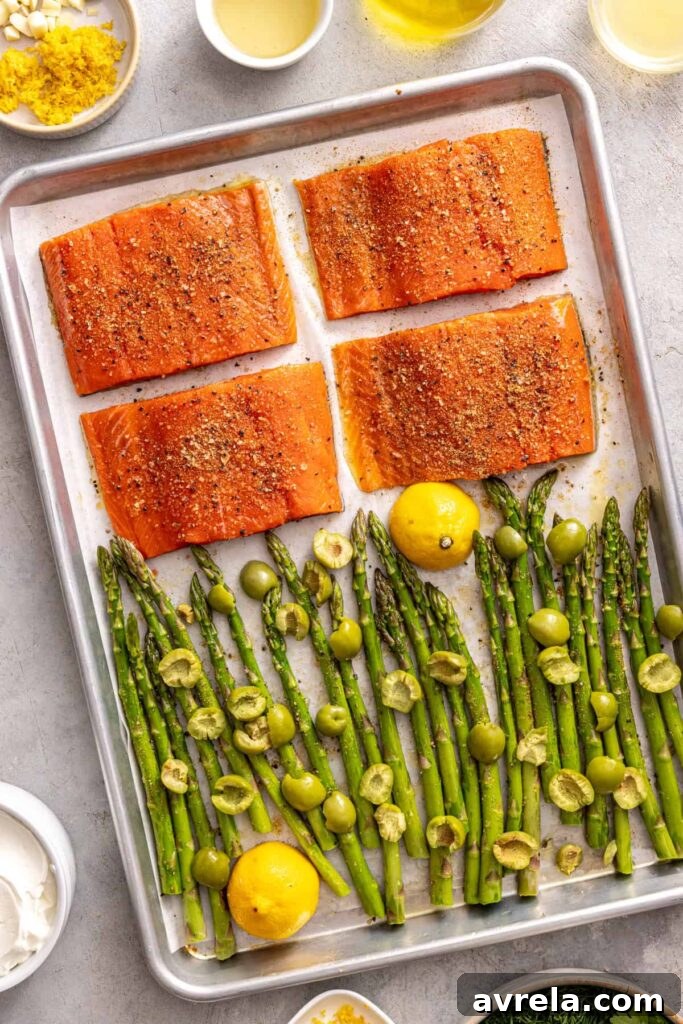
- Prep the pan: Preheat the oven to 400°F and line a baking sheet with parchment. Mix the salt, garlic powder, pepper, and paprika in a small bowl.
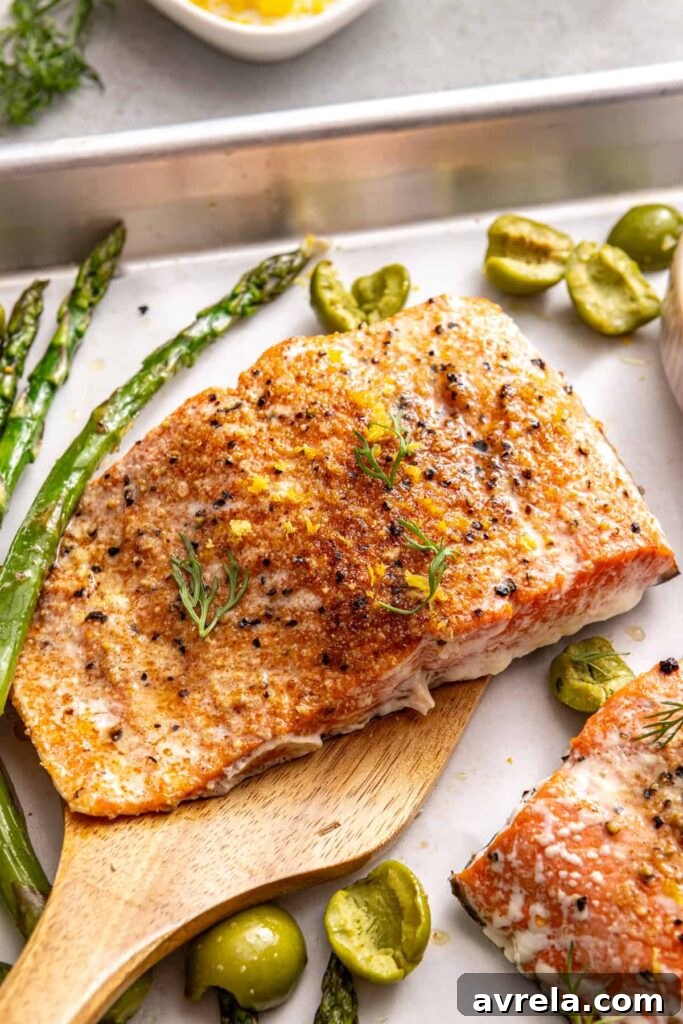
- Season fish and veg: Place salmon fillets on one side of the pan and asparagus on the other. Drizzle generously with olive oil, coating both the fish and the asparagus. Sprinkle most of the spice blend over the salmon and toss the remaining seasoning with the asparagus.
- Add olives and lemon: Arrange asparagus in an even layer, scatter the olives over top, and tuck lemon halves cut-side down on the pan to roast.
- Bake: Bake for about 13 minutes, then check the salmon—if it flakes easily and is opaque through the center, it’s done. Thicker fillets may need an additional 2–4 minutes. The asparagus should be tender.
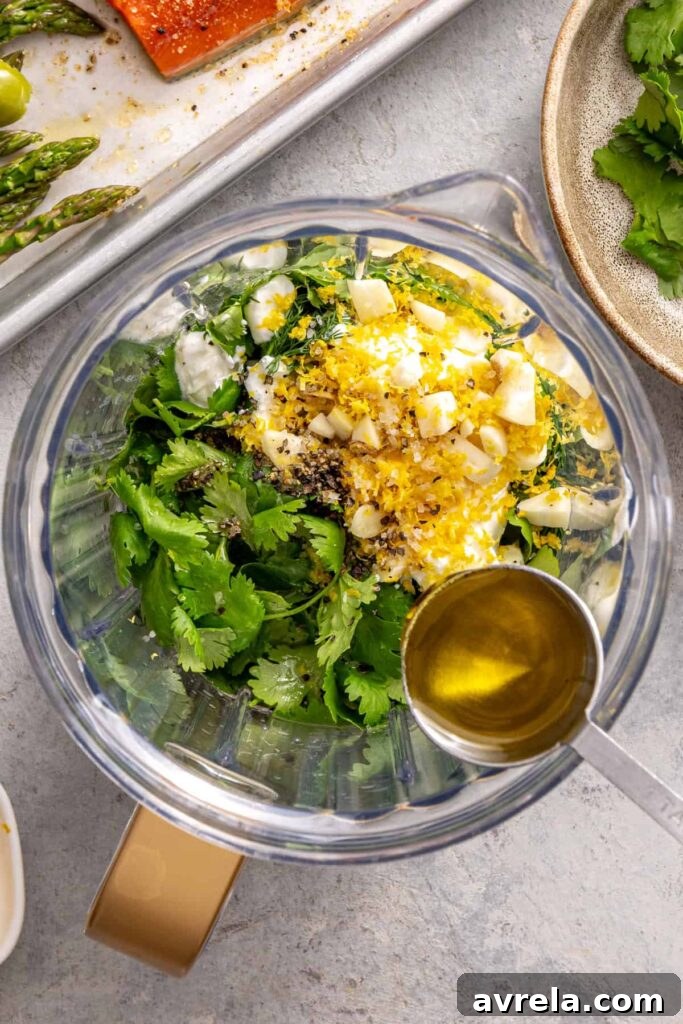
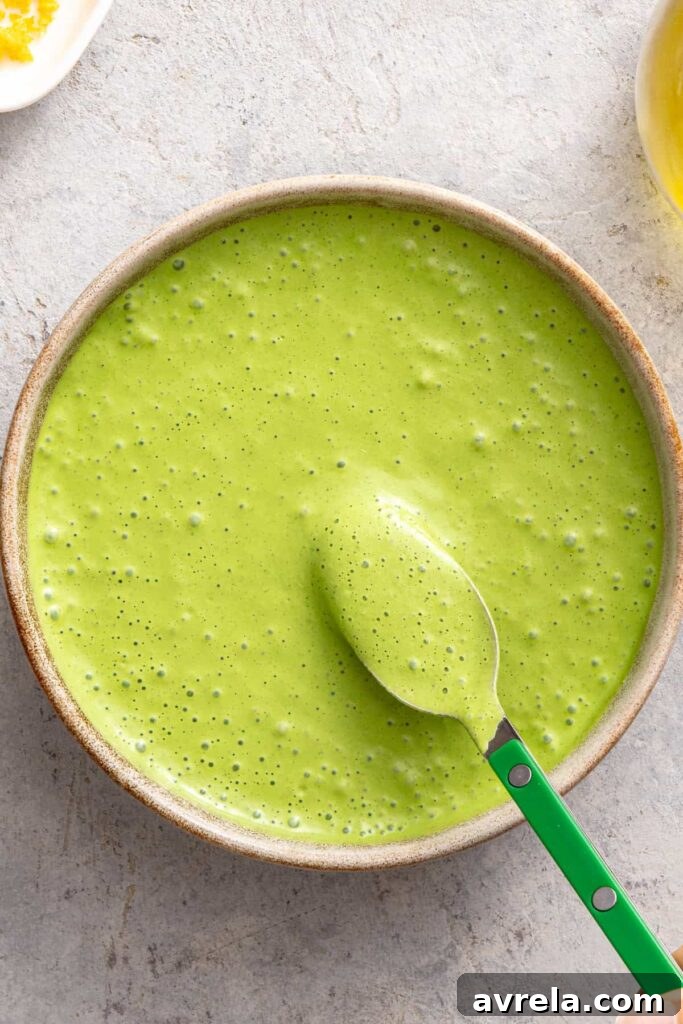
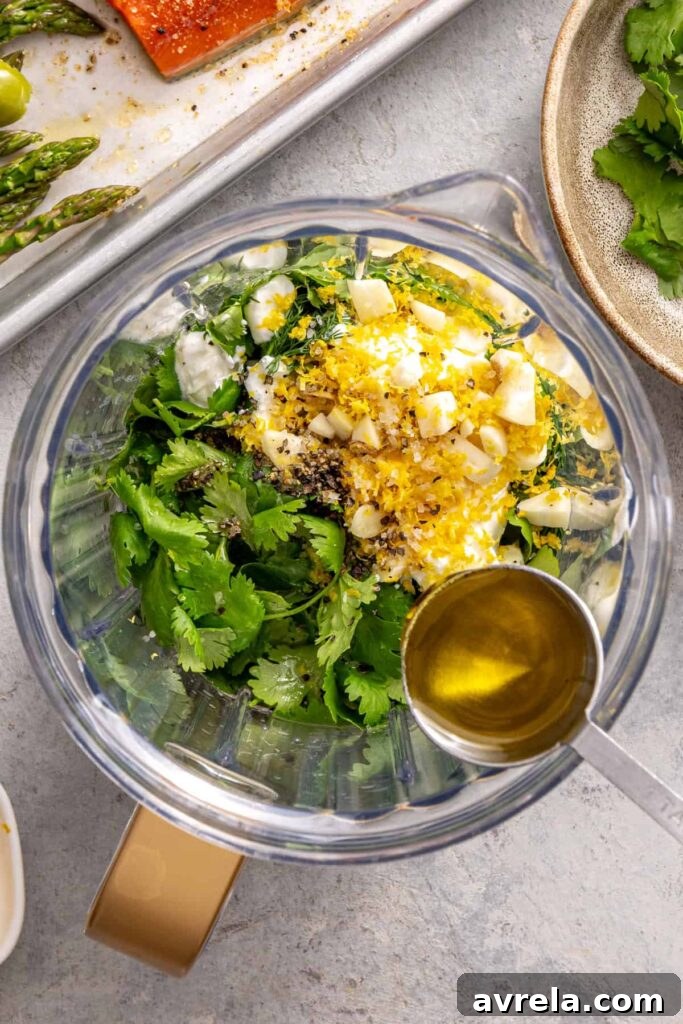
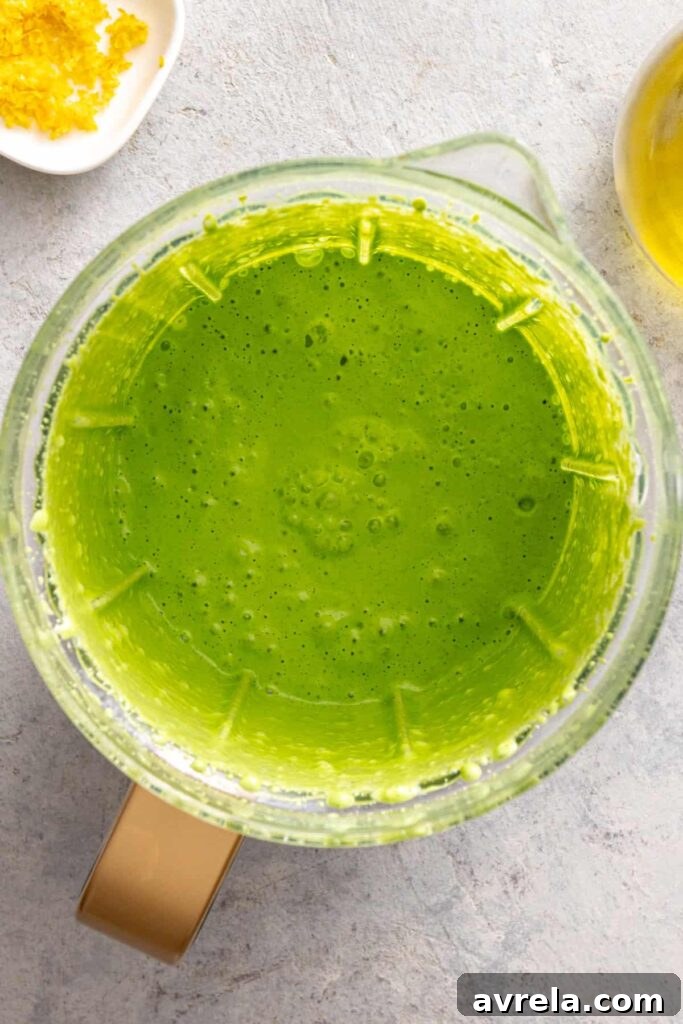
- Make the herb sauce: While the salmon cooks, blend fresh herbs, yogurt, garlic, lemon zest, lemon juice, olive brine, olive oil, salt, and pepper until smooth and vibrant.
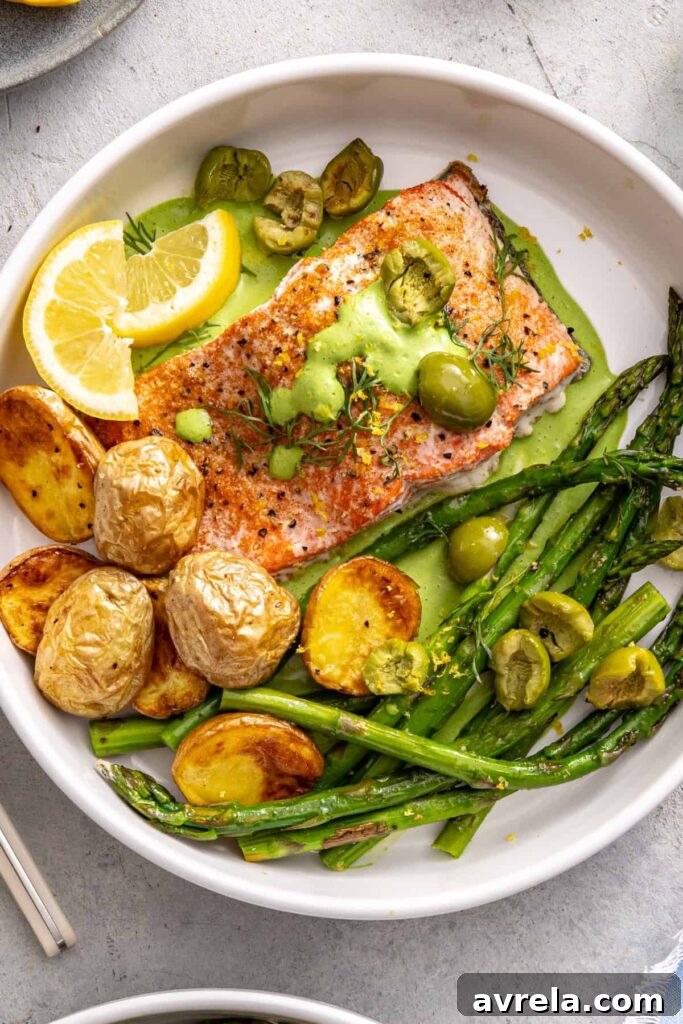
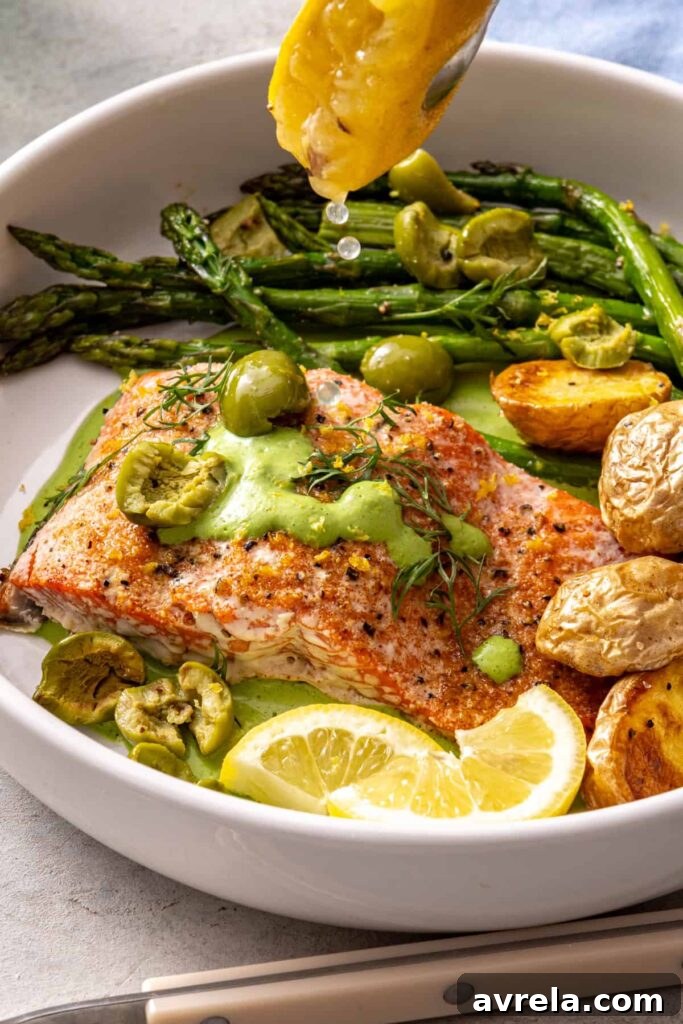
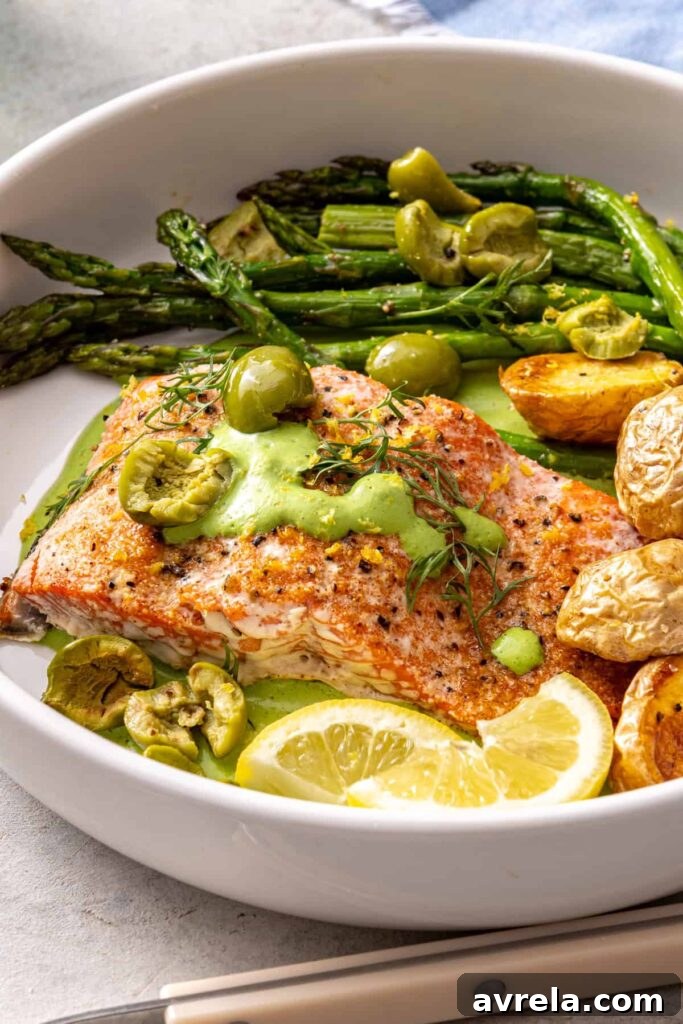
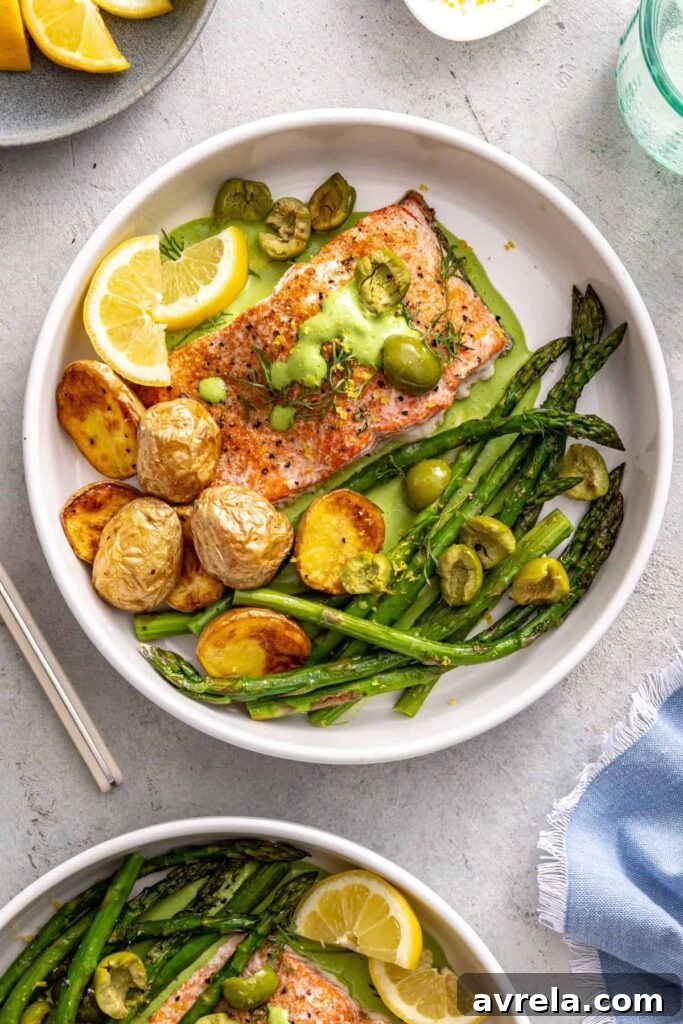
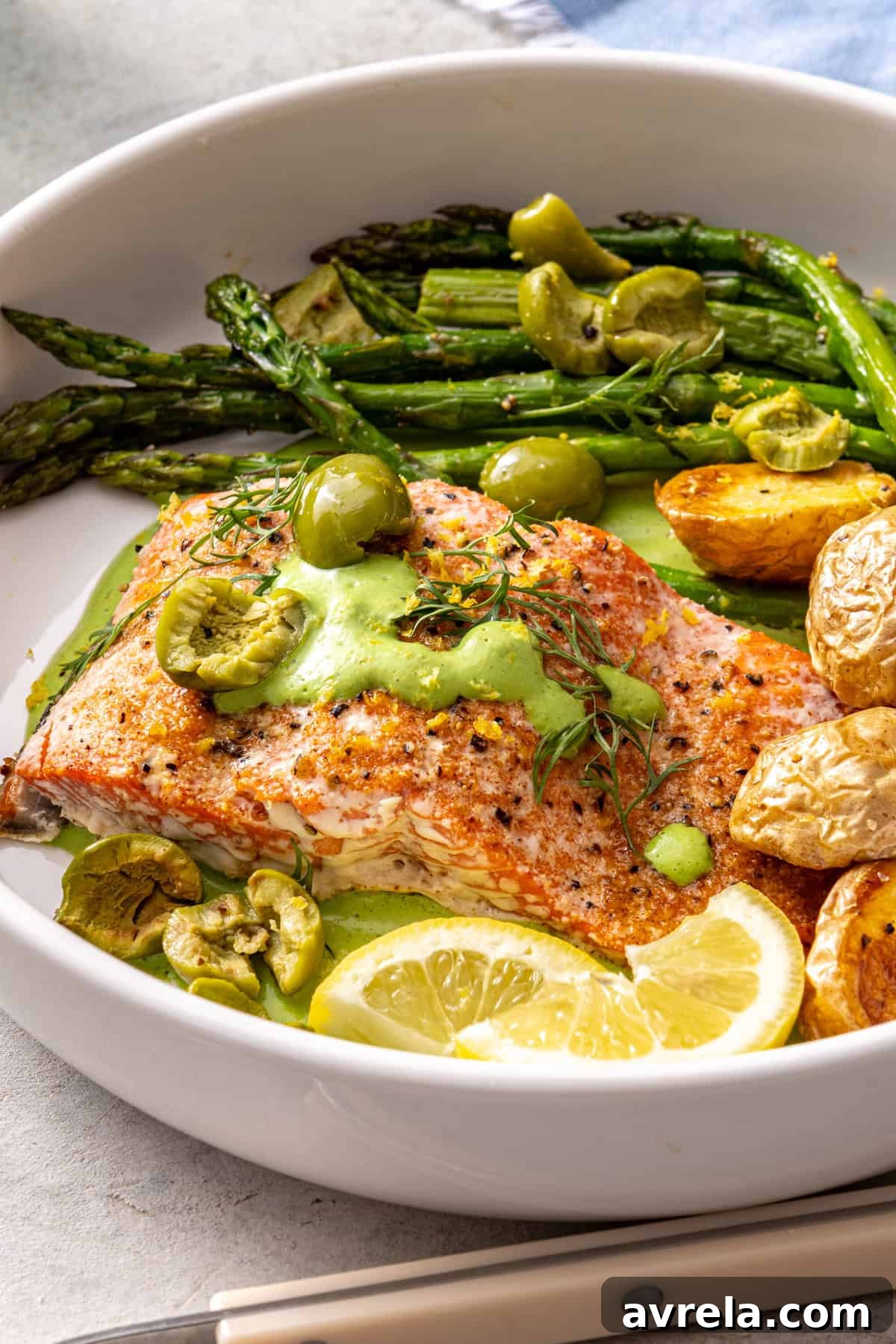
- Serve: Squeeze the roasted lemon over the fish and vegetables. Spoon a bit of the herb sauce into shallow bowls, top with asparagus and a salmon fillet, finish with olives, fresh herbs, lemon zest, and an extra drizzle of sauce. Serve with roasted potatoes, rice, or a grain of choice if desired.
Recipe Substitutions & Tips
- Fish: Swap wild salmon for farm-raised salmon, cod, or halibut—adjust baking time for thicker fillets.
- Vegetables: If asparagus isn’t available, use green beans, broccolini, or zucchini; cooking time may vary.
- Olives: Use kalamata for a stronger briny flavor or omit if you prefer a milder dish.
- Oils & dairy: Avocado oil works in place of olive oil. Use regular Greek yogurt or a plain dairy-free yogurt to suit dietary needs.
- Herbs & brine: Swap cilantro and dill for parsley or basil. If you don’t have olive brine, a splash of extra lemon juice or pickle juice adds similar acidity.
FAQs
Can I use frozen salmon?
Yes—just thaw it completely and pat it dry before baking so it roasts rather than steams. Thaw overnight in the fridge or use a cold-water thaw for a faster option. Fresh asparagus can go straight on the pan.
How do I know when salmon is cooked?
The salmon should flake easily with a fork and be opaque in the center. Start with 13 minutes at 400°F and add 2–4 minutes if needed, depending on fillet thickness.
Can I make this ahead of time?
Yes. Cook ahead and store salmon, asparagus, and sauce separately in airtight containers for up to 3 days. Reheat gently in a 350°F oven for best texture; keep the herb sauce chilled and add it just before serving.
More High-Protein & Sheet Pan Dinners You’ll Love
- Miso-ginger glazed salmon with coconut rice
- BBQ salmon bowls
- Wild salmon Niçoise-style salad
- Sheet pan Greek chicken and chickpea salad
- Air fryer salmon bites with snap pea slaw
Baked Sheet Pan Salmon and Asparagus
This one-pan baked salmon and asparagus is a quick, high-protein meal that’s naturally gluten-free and packed with flavor. A few notes: wild salmon cooks faster than farmed; adjust time by thickness. The recipe is written for fully cooked salmon.
Equipment
- High-speed blender (for the sauce)
Ingredients
For the Spice Blend:
- 1 ½ teaspoons kosher salt
- 1 teaspoon garlic powder
- ½ teaspoon freshly ground black pepper
- ¼ teaspoon paprika
For the Salmon & Asparagus:
- 4 (4–6 oz) wild salmon fillets, boneless and skinless
- 12 oz (1 bundle) wild asparagus, ends trimmed
- 2 tablespoons extra-virgin olive oil
- 1 lemon, halved
- ½ cup torn, pitted Castelvetrano olives
For the Herb Sauce:
- 2 cups loosely packed herbs (cilantro and dill suggested)
- 1 cup lactose-free Greek yogurt
- 3 garlic cloves, roughly chopped
- 2 teaspoons lemon zest
- 2 tablespoons freshly squeezed lemon juice
- 2 tablespoons olive brine
- 2 tablespoons extra-virgin olive oil
- ½ teaspoon kosher salt
- ¼ teaspoon freshly ground black pepper
To Garnish & Serve:
- ¼ cup roughly chopped dill or cilantro
- 1 teaspoon lemon zest
- Roasted potatoes or jasmine rice, optional
Instructions
- Preheat oven to 400°F. Line a baking sheet with parchment.
- Mix the spice blend in a small bowl.
- Place salmon on one side of the pan and asparagus on the other. Drizzle both with olive oil and coat well. Season salmon with about two-thirds of the spice blend and toss the rest with the asparagus.
- Arrange the asparagus evenly, scatter olives, and add lemon halves cut-side down.
- Bake on the middle rack for 13 minutes. Check to see if salmon flakes easily; if not, bake 2–4 more minutes until cooked through and asparagus is tender.
- While the fish cooks, blend herbs, yogurt, garlic, lemon zest, lemon juice, olive brine, olive oil, salt, and pepper until smooth and bright green.
- Squeeze roasted lemon over everything. Serve with a spoonful of sauce in bowls, top with asparagus, a salmon fillet, herbs, olives, lemon zest, and an extra drizzle of sauce. Optionally serve with roasted potatoes or rice.
To Store & Reheat
- Store leftovers separately in airtight containers for up to 3 days.
- Reheat salmon and asparagus gently in a 350°F oven for 8–10 minutes or microwave in short intervals. Keep the herb sauce cold until serving.
Notes
- Swaps: Use farm-raised salmon, cod, or halibut if desired—adjust cook time for thickness.
- Vegetable swaps: Green beans, broccolini, or zucchini work as alternatives.
- Olives: Switch Castelvetrano for kalamata or omit.
- Yogurt: Use regular Greek yogurt or a plain dairy-free alternative.
- Herbs: Substitute parsley or basil if preferred.
- Olive brine substitute: Extra lemon juice or a splash of pickle juice can replicate acidity.