
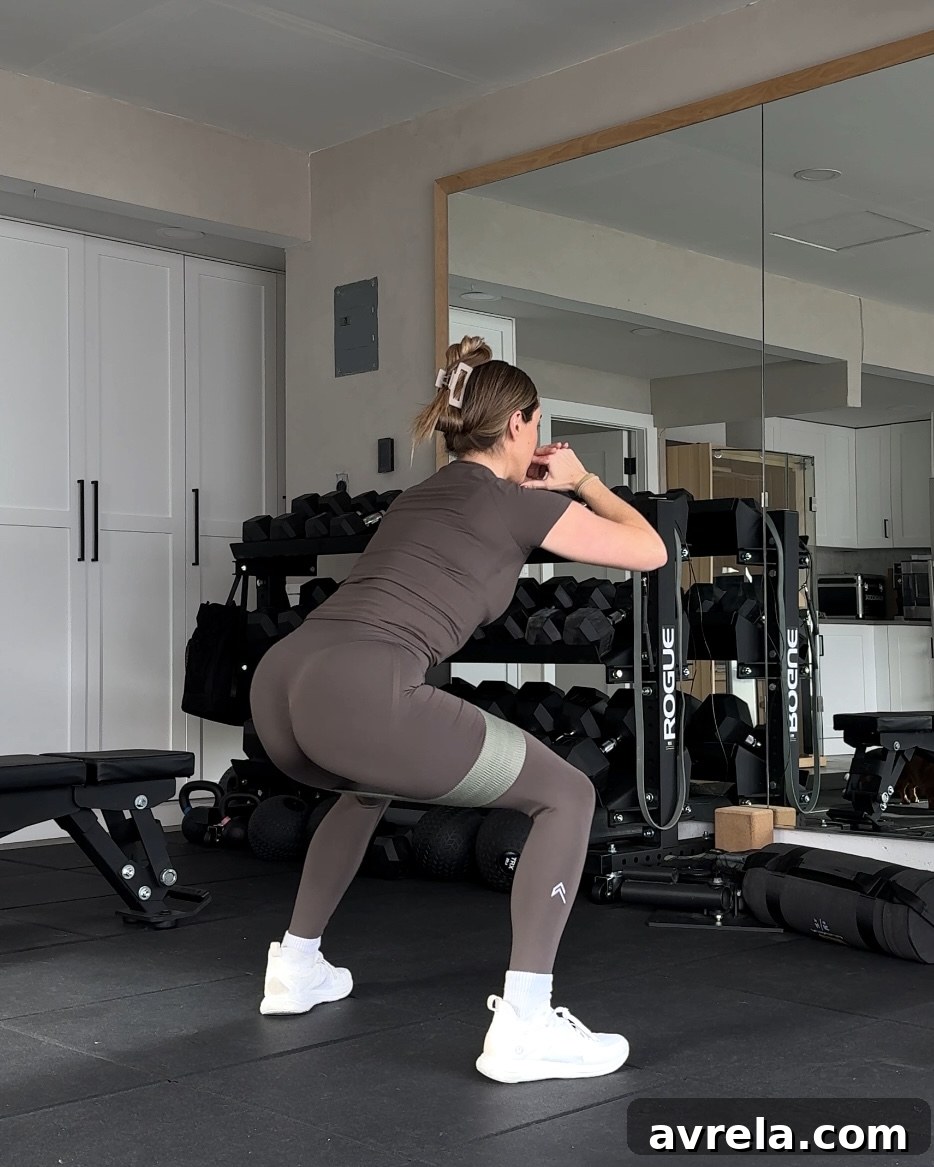
Struggling to keep your chest up in a squat? If you find yourself leaning forward as you descend, you’re not alone. Many lifters experience this, and it can make heavy squats feel harder, increase stress on the lower back, and limit strength gains.
Fortunately, this is a correctable issue. Staying upright in a squat comes down to a combination of mobility, core stability, and proper positioning. Below is a clear, practical guide explaining why your chest drops forward and how to fix it with targeted mobility drills, strength work, and technique adjustments.
Why Does Your Chest Fall Forward in a Squat?
A forward-leaning squat often results from several common limitations: limited thoracic spine (upper back) mobility, restricted ankle dorsiflexion, inadequate core engagement, hip tightness or weakness, or incorrect bar placement and stance. When the upper back is stiff, the chest naturally collapses forward. Limited ankle mobility prevents the knees from tracking properly, which forces the torso to lean to maintain balance. A weak or unbraced core cannot support an upright torso under load. Hip restrictions or weakness shift weight distribution and undermine posture. Finally, your squat style (high-bar versus low-bar) and foot position influence how upright you can stay.
5 Simple Ways to Stay Upright in a Squat
Here are practical steps to correct a forward-leaning squat so you can build confidence and strength under the bar.
1. Improve Upper Back Mobility
A stiff thoracic spine restricts how much you can extend your chest upward. Regular upper-back mobility work improves posture and allows your torso to remain more vertical during the squat.
Exercises to Improve Upper Back Mobility
- Wall Angels – Stand with your back against a wall, ribs down, and sweep your arms up and down like a snow angel. Aim for 2–3 sets of 10 reps to reinforce shoulder and thoracic range.
- Thoracic Extensions on a Foam Roller – Place a foam roller across the mid-back, support your head, and gently extend backward. Hold 10–15 seconds and repeat 5–6 times to open the upper spine.
- Open-Book Stretch – Lie on your side with one knee bent at 90 degrees, then rotate your torso open to stretch the spine and chest. Hold 20–30 seconds per side to improve rotational mobility and chest openness.
2. Increase Ankle Mobility
Poor ankle dorsiflexion (the ability to bring your shin forward over your foot) forces compensations upstream, often causing a forward torso lean. Improving ankle mobility helps you sit back into the squat without tipping forward.
Exercises to Improve Ankle Mobility
- Knee-to-Wall Drill – Stand a few inches from a wall and drive your knee toward the wall without lifting the heel. Perform 10 reps per leg to increase dorsiflexion.
- Banded Ankle Mobilizations – Anchor a band around the ankle and step into a lunge while letting the band glide to promote front-of-ankle mobility. Move gently and repeat for multiple reps.
- Elevated Heel Squats – Temporarily placing small plates under your heels can help you maintain an upright torso while you work on improving ankle flexibility. Use as a training aid, not a permanent fix.
3. Strengthen Your Core for a More Upright Squat
The core is crucial for maintaining torso position under load. A stronger, more stable core helps you resist forward collapse, especially as weights increase.
Core Exercises for a Stronger Squat
- Deadbugs – Lie on your back and extend opposite arm and leg while maintaining a braced core. Perform 2–3 sets of 10 reps per side to build anti-extension control.
- Pallof Press – A powerful anti-rotation exercise that reinforces torso stiffness. Use a band or cable and press straight out while resisting rotation for 10–12 reps per side to develop stability under load.
- Goblet Squats – Holding a kettlebell or dumbbell at chest height encourages an upright posture and provides immediate feedback for torso position. Use them to reinforce technique and depth with load you control.
4. Strengthen and Mobilize Your Hips
Tight or weak hips change how you move through the squat. Enhancing hip mobility and glute strength improves alignment and stability at the bottom of the lift.
Hip Exercises for Better Squats
- Cossack Squats – These lateral squats build hip mobility and strength through a wide range of motion. Start with bodyweight and progress to added load as your mobility improves.
- 90/90 Stretch – Sit with one leg in front at 90 degrees and the other behind at 90 degrees, then lean forward to open the hips. Hold 20–30 seconds to increase external and internal hip rotation.
- Glute Bridges & Hip Thrusts – Target the posterior chain to stabilize the hips and prevent forward collapse. Use a band around the knees to increase glute activation when needed.
5. Adjust Your Bar Position and Stance
Small setup changes can have a big impact on your torso angle and overall comfort during the squat.
- High-Bar vs. Low-Bar – High-bar squats naturally encourage a more vertical torso position. If you consistently tip forward, try high-bar patterns to reinforce upright mechanics. Low-bar squats typically require a slight forward lean and may not be ideal for those with limited mobility.
- Foot Positioning – A slightly wider or more turned-out stance can improve hip tracking for some lifters. Experiment gradually to find the most stable and comfortable foot position for your body.
- Grip and Elbow Position – For back squats, pull the elbows down and slightly inward to create upper-back tension. That tension supports the bar and prevents rounding forward under load.
Final Takeaways for How to Squat With an Upright Chest
Address upper-back and ankle mobility to create the range of motion needed for a more vertical torso. Build core and hip strength to support posture and control throughout the movement. Adjust bar placement and stance to match your anatomy and mobility. Use temporary aids like goblet squats or slight heel elevation while you work on long-term mobility and strength.
With consistent mobility drills, core work, and technique practice, you’ll improve your ability to keep the chest up and squat with greater confidence and efficiency.
Want a Structured Workout Plan?
If you want professionally designed strength programs, look for guides created by certified trainers that include clear progressions and exercise demonstrations. Structured programs can help you build strength, improve movement quality, and develop better squat mechanics through planned progression and consistent feedback.